

Treasury Moves Calming Bond-Struck Equity Slide
Tuesday, August 25, 2026
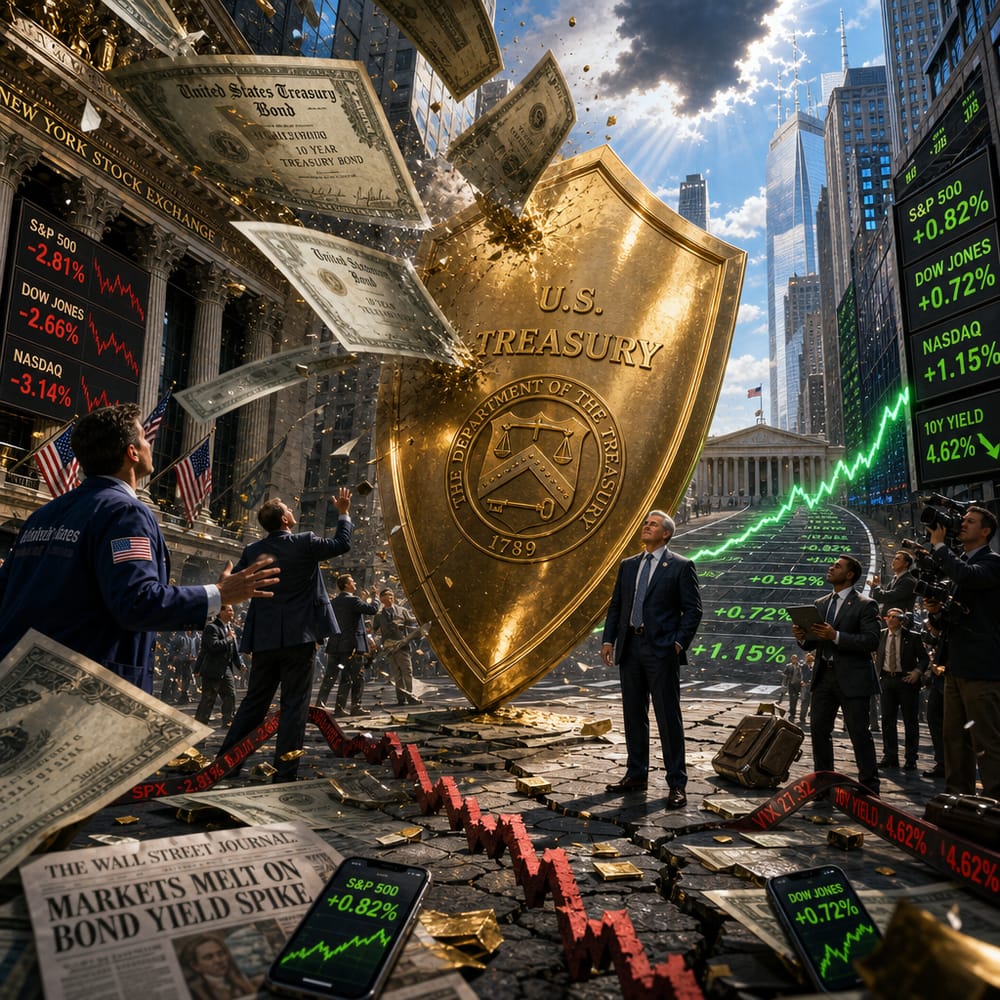
TREASURY MOVES CALMING BOND-STRUCK EQUITY SLIDE
If numbers ruled the world, then the Treasury Department’s recent maneuvers were like unleashing a financial superhero to save the day. The equity market, which had been teetering like a tightrope walker with an inner ear infection, finally steadied its course. But before you start singing "Kumbaya" to your portfolio, let's dive into the nitty-gritty of what went down.
Last week, Treasury Secretary Scott Bessent took a bold step that sent shockwaves through the bond market. He cranked up the government’s debt buyback program—a move that at first seemed as unlikely as your cat suddenly deciding to do the dishes. If you're wondering what a debt buyback is, think of it as the government choosing to buy its own IOUs to ease the pressure. It’s like scooping water out of a sinking boat, hoping to stay afloat a bit longer.
But don't mistake this for a tidal wave of market activity. The buybacks might be more of a drizzle in the grand scheme of the trillion-dollar ocean that is the bond market. Yet, the ripple effect was anything but trivial. The message was clear: Uncle Sam's got a plan.
So, how did Wall Street react to this audacious stunt? Well, for starters, bond yields—the return investors pocket from holding government debt—took a nosedive. The 10-year Treasury yield, which acts as an interest rate crystal ball, slipped to 4.658%. Lower yields mean cheaper borrowing, which is music to the ears of companies and consumers alike.
As bond yields fell, the equity markets breathed a collective sigh of relief. The S&P 500 rose 0.4%, giving investors a reason to be cautiously optimistic. Meanwhile, the Nasdaq, always the enthusiastic kid at the stock market party, bounced up 0.9%. Chip stocks, with Nvidia leading the charge, were the talk of the town, riding the wave of lower borrowing costs and upcoming earnings reports.
But the Treasury’s maneuvers didn’t just bolster stocks—they also sparked an uptick in the so-called "debasement trade." Yes, it's as theatrical as it sounds. Investors flocked to traditional safe havens like gold and cryptocurrencies, hedging against potential inflation and a weaker dollar. The yellow metal hit a three-month high, proving that some things never go out of style, even when Treasury tricks are in play.
Now, you might be pondering the long game. What does all of this mean for the average investor, the one juggling their 401(k) and not just Wall Street lingo? To start, the Treasury's actions could lead to more stable markets, at least in the short term. By curbing bond yields, the government effectively makes it cheaper for companies to borrow and invest in growth. That’s great news for stocks you might be holding—or considering.
Yet, remember: every action has a reaction. While lower yields can invigorate markets, they also come with the risk of inflation creeping back into the economic landscape. If inflation does rear its not-so-pretty head, the Federal Reserve might just swoop in with rate hikes, potentially shaking up the equity markets once more.
In the grand chess game that is financial markets, each move has the potential to shift the board. The Treasury's latest gambit might have bought some time for a stressed-out stock market, but as with any good plot twist, the story is far from over. Investors, both big and small, will need to keep their eyes peeled and their strategies adaptable. Markets are as fickle as ever, and while today might feel like a win, tomorrow's uncertainties are always lurking just around the corner.
So, whether you’re team equity or team bond, keep your seatbelt fastened. This roller coaster ride is far from over, and who knows what the next loop-de-loop the Treasury has in store? For now, enjoy the market's newfound stability, but keep an eye on those bond yields—they might just be the canary in the coal mine of your investment journey.
This article is for informational purposes only and is not investment advice. Always do your own research or consult a licensed financial professional before making investment decisions.
© Copyright 2024. All Rights Reserved.
© Copyright 2024. All Rights Reserved.