

Treasury Intervention Halts Equity Slide
Sunday, August 23, 2026
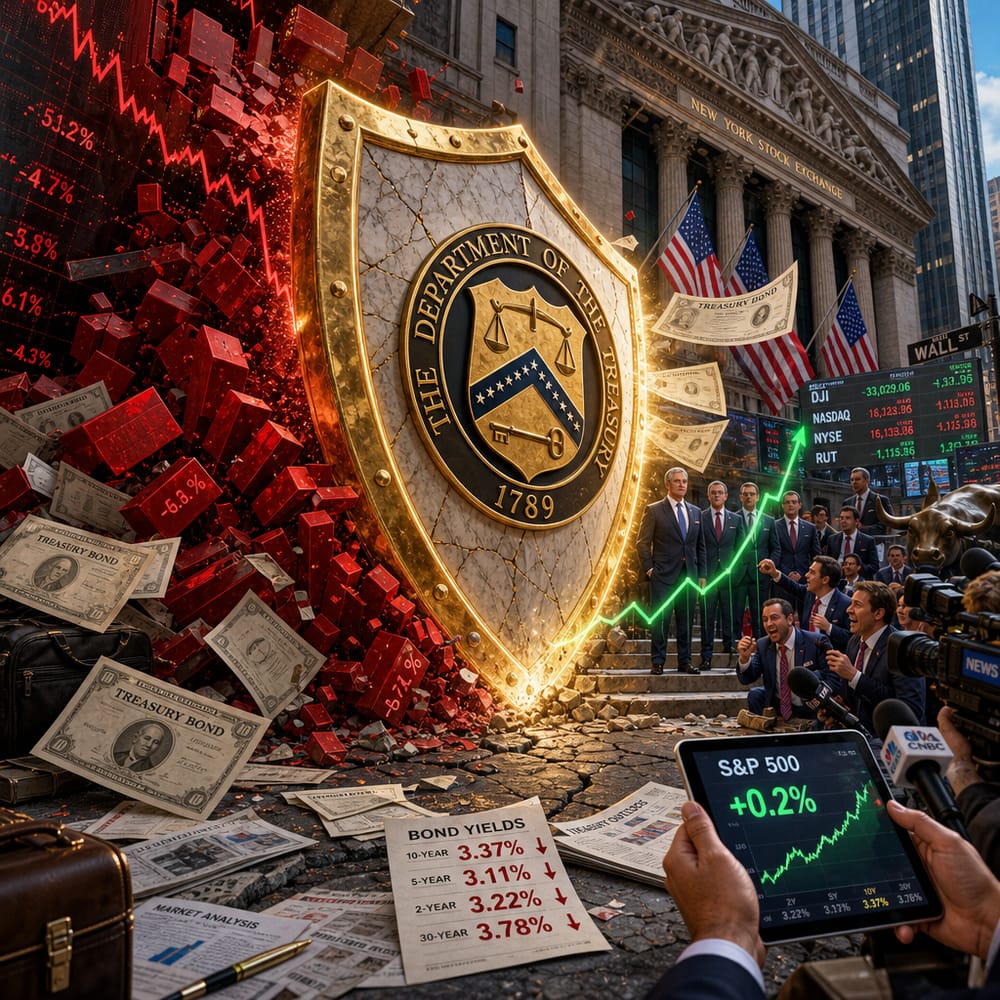
TREASURY INTERVENTION HALTS EQUITY SLIDE
Nobody expects a knight in shining armor to come from the Treasury, but who’s complaining when it saves the day? In the face of a jittery bond market and a four-day stock slide, the U.S. Treasury Department stepped in, and lo and behold, the S&P 500 managed a modest 0.2% climb on August 19. An intervention, they say, is either a sign of the cavalry arriving or an SOS from a sinking ship. So, what’s the real story here?
Forget fancy magic tricks; the Treasury's game was all about buying bonds—a move straight out of the central bank playbook. This time, however, it wasn’t the Fed doing the heavy lifting but Treasury Secretary Scott Bessent, who decided it was time to roll up his sleeves and soothe those frazzled nerves. By purchasing long-term bonds, the Treasury managed to yank yields back down to earth. In plain English, they made borrowing cheaper and kept investors from fleeing as if the market were on fire.
But why the panic in the first place? When the bond market sneezes, stocks catch a cold. Yields were rocketing up like they’d had too much coffee, and that’s bad news because high yields make equities seem like yesterday’s leftovers. Investors were spooked, worried the good times might be stalling out. In came the Treasury's knightly intervention—no white horse, but enough to steady the ship, at least for now.
Of course, the ripples from Treasury's plunge into the bond pool spread out far and wide. Not all sectors bounced back equally. Technology stocks, often the superstars of low interest rates, gave a tip of their hat to the intervention, rallying as though their long-lost love had come home. Financials, on the other hand, were left sulking in the corner. Banks make money from the difference between what they pay in interest and what they earn from loans, and lower yields can trim their margins. Wall Street may have cheered, but it was more of a golf clap from the bankers.
This move by the Treasury underlines an almost delicate dance between bond market stability and the general vibe of the equities market. Think of it as a relationship where one partner can't thrive without the other. The intervention is a glaring reminder of just how intertwined these markets have become. Some might argue that it's less of a relationship and more of a dependency.
But here's the kicker: is this intervention a sign of strength or, as some critics argue, a confession of weakness? Treasury Secretary Bessent, despite his calm demeanor on TV, can't quite hide the shadows of a potential debt crisis looming in the nation's future. The U.S. is tiptoeing around a staggering $40 trillion debt milestone like an elephant around quicksand. And if this intervention signals anything, it’s that things are getting precariously close to something breaking.
A precarious dance indeed, when you consider how investor confidence is like a delicate soufflé—one loud bang, and it deflates. The Treasury’s actions, while temporarily effective, also serve as a reminder of the tightrope the U.S. economy is walking. Though it managed to halt the recent slide, it begs the question: how many more interventions can the market endure without losing its balance altogether?
So, what's the takeaway for retail investors scrolling through this on their smartphones between snack breaks? Keep an eye on how the bond market behaves, as it's increasingly clear that those movements, and the Treasury’s responses, are steering the overall market ship. While this intervention may have been a lifeline, it's also an alert to stay vigilant about how the government maneuvers and maintains its fiscal discipline. After all, the Treasury may have thrown us a life vest this time, but it would be wise to learn to swim before the next wave hits.
This article is for informational purposes only and is not investment advice. Always do your own research or consult a licensed financial professional before making investment decisions.
© Copyright 2024. All Rights Reserved.
© Copyright 2024. All Rights Reserved.