

Treasury Intervention Buys Time—but For How Long?
Saturday, August 22, 2026
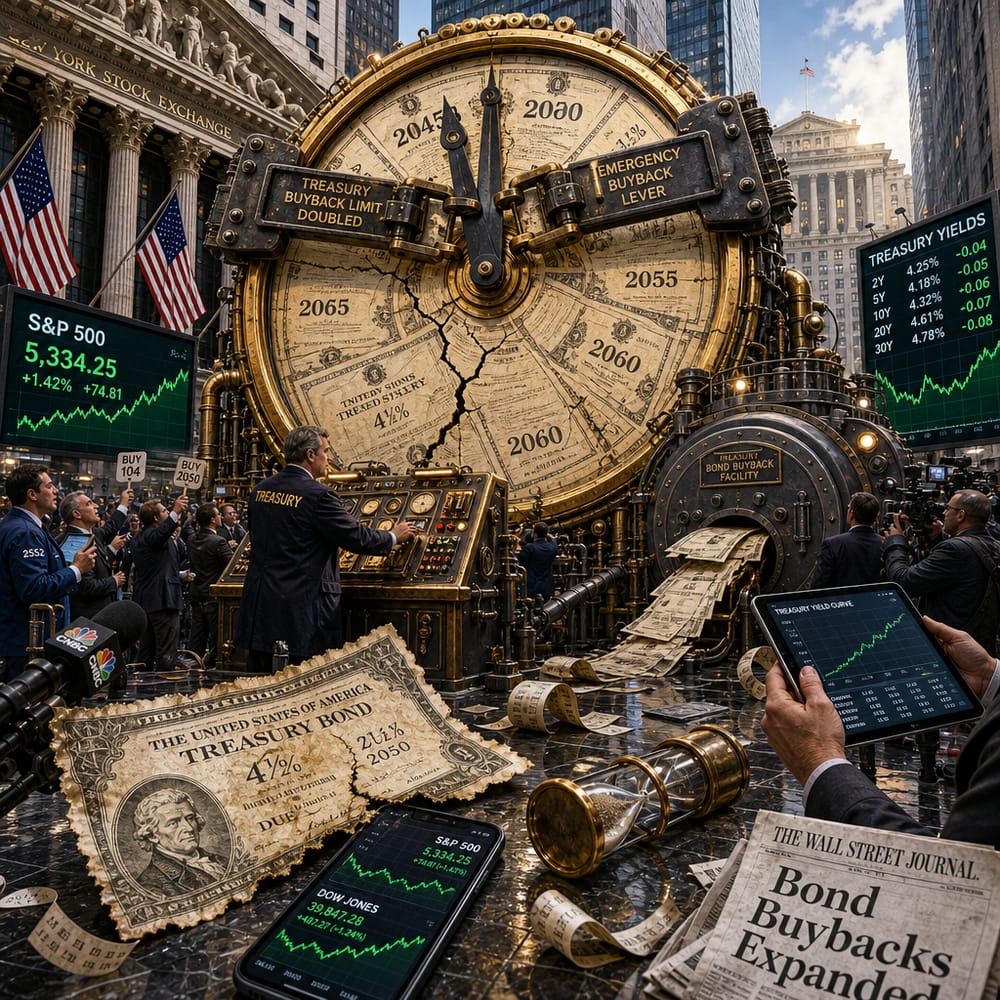
TREASURY INTERVENTION BUYS TIME—BUT FOR HOW LONG?
Money talks, but when it comes with a government lanyard, it sometimes rambles. In a surprise move that felt like a financial plot twist worthy of Wall Street drama, the U.S. Treasury decided to double its limit on long-term bond buybacks. This bold maneuver gave stock markets a much-needed jolt, leaving the S&P 500 and Dow Jones breathing a little easier. But before you start popping champagne corks, let’s dive into why this intervention matters and whether it’s a financial fairy tale bound for a grim ending.
If your eyes glaze over at the mention of "Treasury bonds," think of them as government IOUs. Investors buy them, loaning Uncle Sam cash with the promise of repayment plus interest. Now, by doubling down on buybacks, the Treasury is essentially saying, "We’ll take those back, thank you very much." This move was met with applause on the stock market, as buybacks can help stabilize the market by reducing the supply of bonds and potentially boosting their price.
But here’s the kicker: while this intervention offers temporary relief, like a cool breeze on a scorching day, it doesn’t address the underlying issue. The national debt has ballooned to a staggering $40 trillion. Picture it as a financial Godzilla, trampling over the city of our future prosperity. The Treasury’s actions resemble a band-aid on a bulging dam—helpful in the short run but unlikely to hold forever.
So, what does this mean for the long-term effects of Treasury buybacks? The impact could be as complex as a season finale of "Succession." On one hand, buybacks can send a confidence-boosting signal to investors, suggesting the government is actively managing its debt. On the other hand, continually buying back bonds is like feeding a sugar craving: it satisfies temporarily but isn’t a sustainable diet for financial health.
The stock market may enjoy the sugar high now, but what happens when the rush wears off? The danger lies in dependency. Just as coffee drinkers might dread a morning without their caffeine fix, the market could become too reliant on government intervention. If economic conditions worsen or if the government’s ability to support buybacks wanes, we might find ourselves in a bind—like realizing you’ve run out of coffee filters when you desperately need that morning cup.
How sustainable is this strategy of intervention, you ask? Well, think of it as holding a party with the last of your cash while your credit card bill sits on the counter, growing larger by the day. The more we buy back bonds, the more we potentially nudge the national debt upward, complicating repayment down the road. It’s a classic case of kicking the can down the road, hoping future economic conditions will somehow make repayment easier.
What’s clear is that the Treasury’s intervention buys time—time for markets, time for policymakers, and time for everyone holding their breath waiting for the next chapter in this financial saga. However, with the national debt climbing as if it’s in a race to the moon, long-term sustainability remains questionable. We might be playing a high-stakes game of fiscal Jenga, hoping we can keep pulling blocks from the bottom without the whole tower crashing down.
Ultimately, while the Treasury’s intervention might seem like a silver bullet, it’s more of a shiny Band-Aid over a deep financial wound. The thrill of immediate market stabilization feels good now, but investors should brace for the aftermath. It’s essential to keep an eye on the big picture—because if history has taught us anything, it’s that short-term fixes rarely solve long-term problems.
So, as we wait to see if this intervention strategy will hold or buckle, remember: in the financial world, as in life, nothing is as permanent as a temporary solution. Keep your ears to the ground and your eyes on that ever-growing national debt ticker. After all, the tale of Treasury intervention is far from over, and its final chapters promise to be anything but predictable.
This article is for informational purposes only and is not investment advice. Always do your own research or consult a licensed financial professional before making investment decisions.
© Copyright 2024. All Rights Reserved.
© Copyright 2024. All Rights Reserved.