

Treasury Expands Long-Term Buybacks Amid Bond Market Turmoil
Tuesday, August 25, 2026
TREASURY EXPANDS LONG-TERM BUYBACKS AMID BOND MARKET TURMOIL
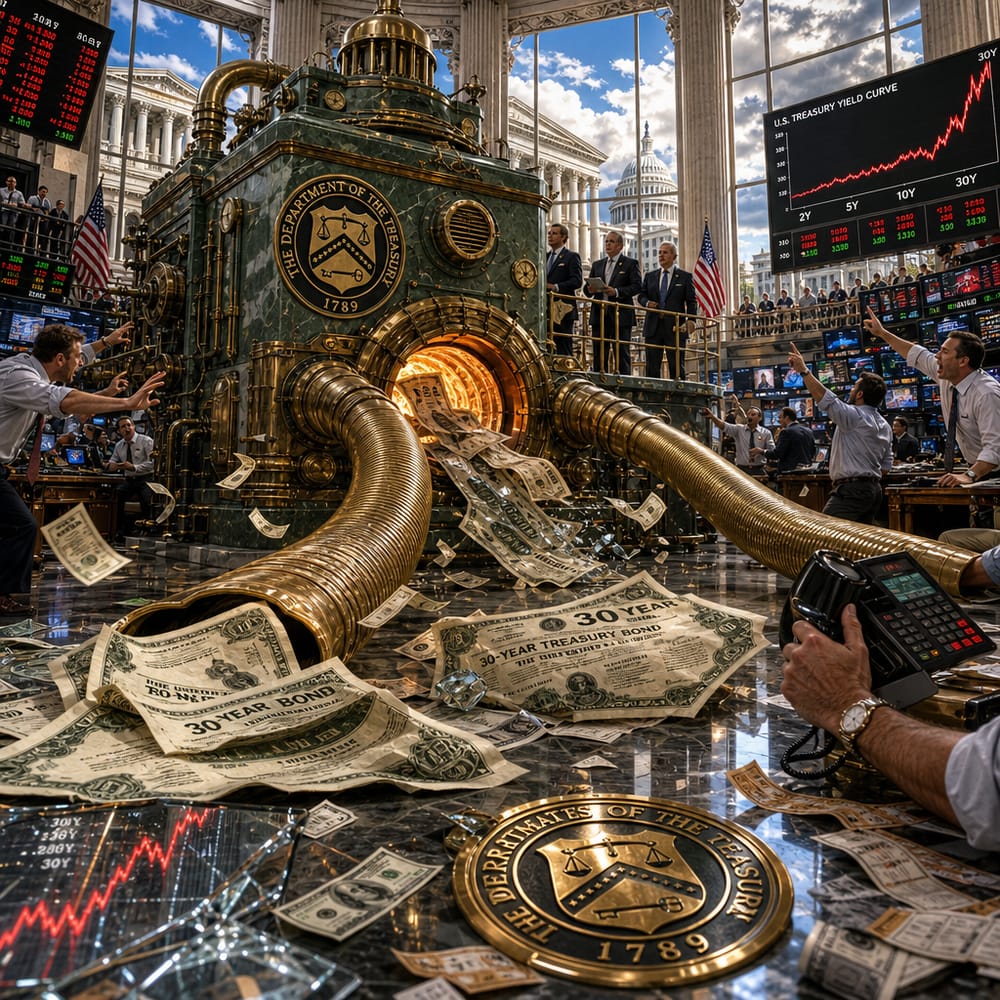
If the bond market were a roller coaster, it’d be the kind that makes even seasoned thrill-seekers queasy. Buckle up because the U.S. Treasury is strapping in for a wild ride, announcing a bold move to increase its long-term debt buybacks. This isn’t just another day at the amusement park. It’s a high-stakes attempt to put the brakes on soaring 30-year Treasury yields that have hit multi-year highs.
Why should you care? Because these high-flying yields affect everything from your mortgage rate to the cost of borrowing for businesses. When the U.S. Treasury steps in to ramp up its debt buyback strategy, it’s like the nation’s financial maintenance crew trying to stabilize a wobbly bridge before it sends tremors through the entire economy.
What’s the Treasury’s game plan? Simple, yet ambitious. By buying back long-term debt, they aim to cool off the red-hot 30-year bond yields. Think of it like a financial ice bath, hoping to soothe the fervor that’s caught the bond market off guard. This move essentially signals to investors that the Treasury is serious about taming the beast of borrowing costs, potentially bringing a bit of calm back to a jittery market.
But how does this all affect the bond market? Picture this: the Treasury’s buyback strategy is akin to a financial pacifier, offering reassurance to nervous investors. With this support, the hope is to see a recalibration in bond prices. And when bond prices rise, yields fall. Lower yields translate to cheaper borrowing costs across the board, from corporate loans to the mortgage you’re eyeing for that dream home.
Yet, it’s not all sunshine and rainbows. Critics argue that while the Treasury’s buybacks are a valiant effort, it’s a bit like using a Band-Aid on a broken leg. The sheer scale of the bond market is staggering, and some skeptics believe the Treasury’s efforts might not be enough to fully calm the storm. However, even a bit of stability is better than none in these turbulent times.
The implications for long-term interest rates are significant. If the Treasury succeeds in nudging those yields down, we could see a ripple effect throughout the economy. Cheaper borrowing costs can ignite investment, spur economic growth, and even give a little love to your 401(k) as companies find it less expensive to finance expansion projects.
So, who’s watching all this with eagle eyes? Pretty much anyone with a stake in the economy, from big shot investors to the average Joe looking to refinance his home. The stakes are high, and investor sentiment is as volatile as ever. With stocks rising or falling on the whims of these long-term rates, everyone’s holding their breath to see how this Treasury move will play out.
In the grand scheme, this isn’t just about numbers and yields on a spreadsheet. It’s about laying the foundation for economic stability. Sure, it’s a daunting task, akin to a tightrope walk with a strong gust of wind, but if the Treasury can toe that line carefully, we might just avoid a nosedive into an interest rate abyss.
In conclusion, the Treasury’s decision to expand long-term buybacks is a strategic maneuver to wrestle control from runaway bond yields. It’s a move that could, if successful, stabilize borrowing costs and nurture economic growth. While there’s no crystal ball to predict its success, one thing is certain: the bond market isn’t the only one watching. We all are, whether we realize it or not, because in a world where the economy’s pulse is felt in every wallet, these moves matter more than ever. Keep your eyes on the prize—or, in this case, the yields. Your financial future might just depend on it.
This article is for informational purposes only and is not investment advice. Always do your own research or consult a licensed financial professional before making investment decisions.
© Copyright 2024. All Rights Reserved.
© Copyright 2024. All Rights Reserved.