

Treasury Expands Long-Bond Buybacks — Market Breathes Easier
Wednesday, August 19, 2026
TREASURY EXPANDS LONG-BOND BUYBACKS — MARKET BREATHES EASIER
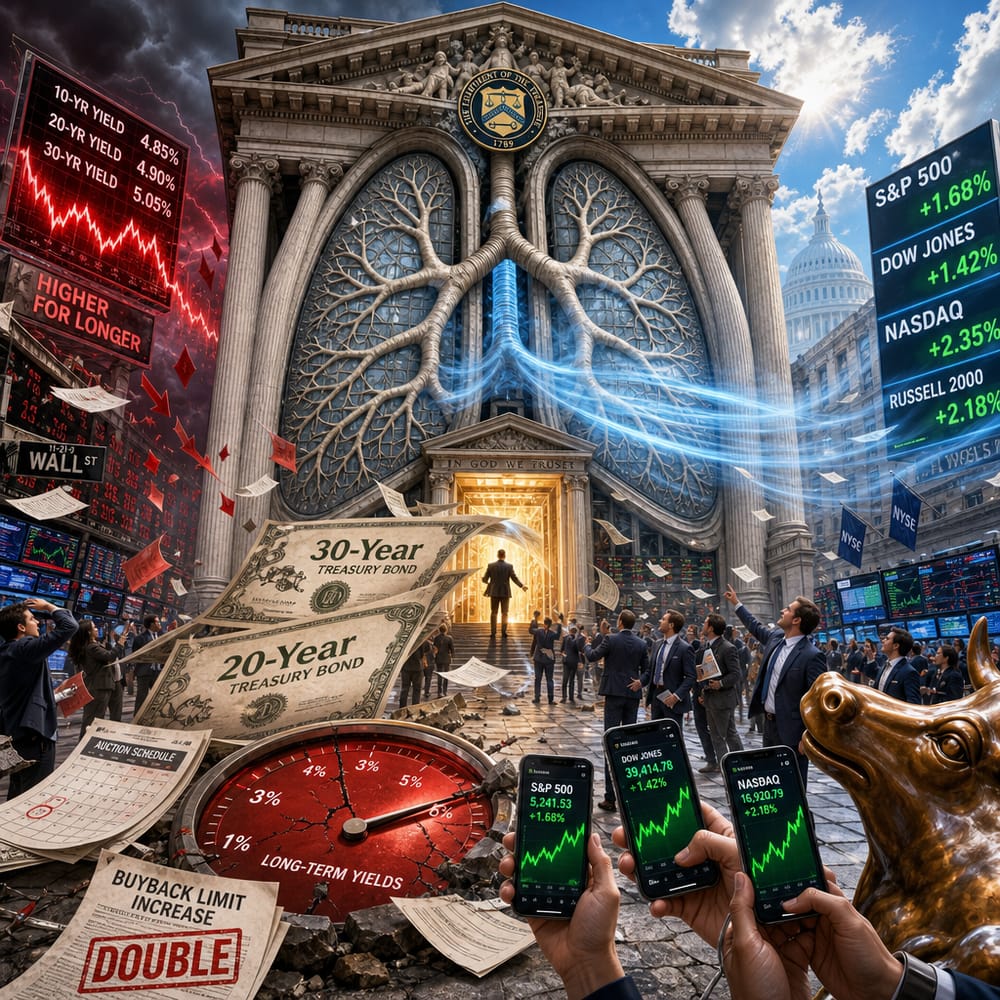
Attention, all market worriers and wallet warriors! Something big just went down in the financial playground, and it’s making waves you don’t want to miss. The U.S. Treasury, in a move reminiscent of your grandma swooping in to calm a game of Monopoly gone awry, has decided to double its long-term bond buyback limit. Why, pray tell? Because those sky-high yields were reaching altitudes that even seasoned mountaineers would find daunting. And when yields climb, markets often take a tumble.
First, let’s talk about what sparked this maneuver. The bond market has been on a rollercoaster lately, with long-term yields flirting with heights not seen in two decades. That, my friends, is finance talk for "things were getting seriously tense." Higher yields mean higher borrowing costs for businesses and the government, which can slow economic growth faster than a teenager slamming the brakes on a learner’s permit exam.
Enter Treasury Secretary Jenna Bessent, the financial market's latest superhero. By upping the ante on bond buybacks, she’s essentially saying, “Calm down, everyone. We got this.” The Treasury’s buyback strategy is like pulling a reverse Uno card on those runaway yields. By buying back more bonds, they can ease the supply in the market, pushing prices up and yields down. It’s a classic case of supply and demand, where the action taken helps decrease borrowing costs across the board.
So how did the bond market react? Like a kid who just realized Santa was real after all. Investors breathed a collective sigh of relief as the yield curve decided to simmer down. This was no magic wand moment, but it came pretty close — a welcome reprieve for those fearing the relentless climb of borrowing costs.
As for the immediate reaction from equity markets, it was as if someone had turned the lights back on. The S&P 500, the Dow, and the Nasdaq all bounced back, snapping a two-day losing streak. Even the Russell 2000, often the moody teenager of the stock family, perked up. Investors, having seen the Treasury's reassuring intervention, checked their pessimism at the door and backed the idea that maybe, just maybe, the storm wasn’t as fierce as it seemed.
Now, what about the long-term impacts? This move has more implications than a reality show finale. For one, it could signify a more active role for the Treasury in managing market stability, which could influence future monetary policies. With yields potentially kept in check, companies can plan their expansions without fearing ballooning interest costs, and consumers might not have to dread their mortgage rates creeping into nightmare territory.
But let’s not get ahead of ourselves — this isn’t a cure-all. The U.S. is still staring down a $40 trillion debt mountain, which makes the national budget look like a financial horror story. The Treasury's buyback move is a tactical play, not a solution to the underlying fiscal challenges. It might pave the way for more coordinated efforts between fiscal and monetary policy-makers down the line, but it doesn’t erase the debt or the economic tightrope we’re walking.
In the meantime, retail investors should keep their eyes peeled. With the Treasury showing its willingness to intervene, there might be more plays like this one if market conditions demand it. It's a reminder that in this high-stakes game, nothing is set in stone, and government tools still have some tricks up their sleeves.
For now, sit back, sip your coffee, and enjoy the fleeting calm. Because if there’s one thing we know for sure about the markets, it’s that the game is always on, and tomorrow’s play is anyone’s guess. Until then, keep those trading apps handy — who knows what the next big move might bring?
This article is for informational purposes only and is not investment advice. Always do your own research or consult a licensed financial professional before making investment decisions.
© Copyright 2024. All Rights Reserved.
© Copyright 2024. All Rights Reserved.