

Treasury Eases Bond Sell-Off Pressure, Stocks Stabilize
Saturday, August 22, 2026
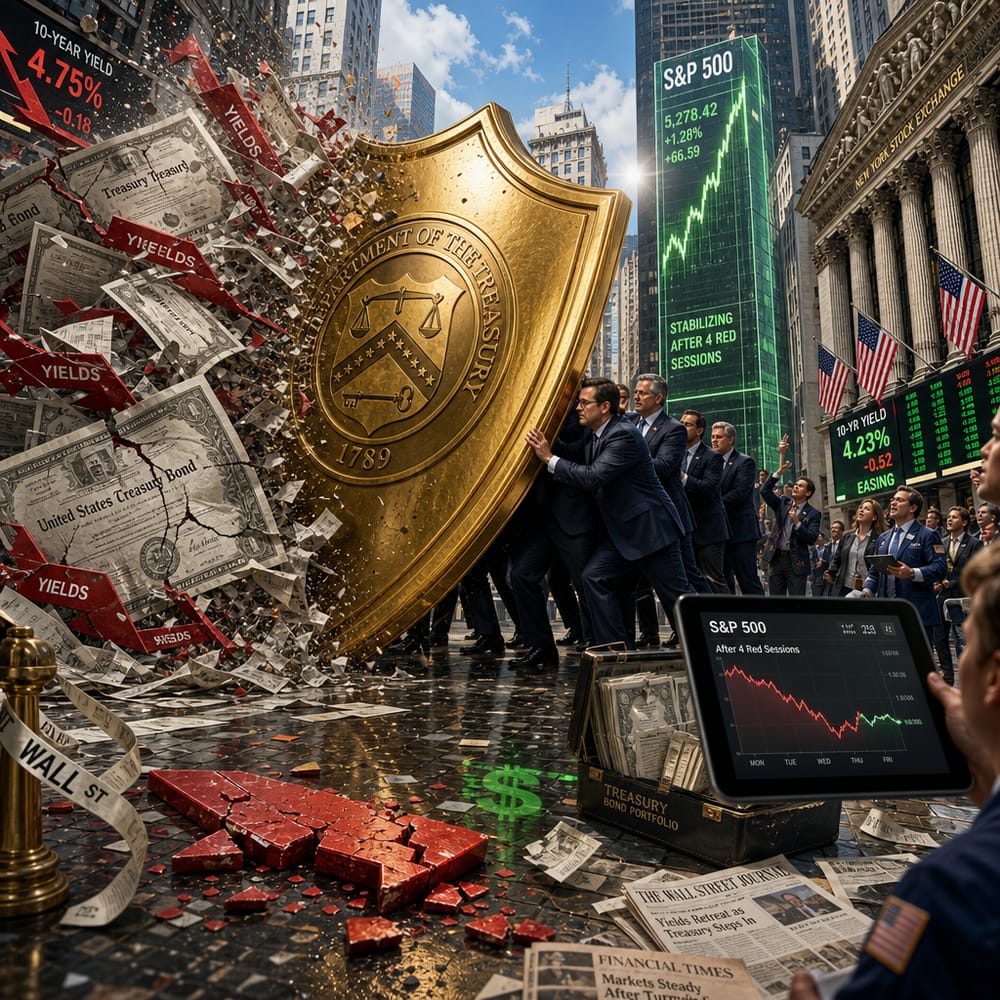
TREASURY EASES BOND SELL-OFF PRESSURE, STOCKS STABILIZE
Here's a fun fact: The U.S. Treasury just pulled off a market magic trick. No, they didn't pull a rabbit out of a hat, but they did stabilize the stock market and end a four-day losing streak for the S&P 500. There's no wand-waving required here—just a good old-fashioned intervention in the bond market.
Last week, if you were brave enough to peek at your investment portfolio, you might have noticed stocks were doing their best impression of a rollercoaster, heading down with no end in sight. Thanks to rising yields on long-term bonds, investors were dodging stocks like they had just been asked to attend a surprise Monday morning meeting. But then, almost like an overzealous parent stepping in at a little league game, the Treasury decided it was time to intervene.
So, what exactly did the Treasury do? Essentially, they pulled a page from their own playbook, buying back longer-dated bonds to inject some much-needed calm into the financial markets. We're talking about those bonds that mature in 10 years or more—the same ones that had recently been causing investors to sweat.
By purchasing these long-term bonds, the Treasury effectively provided some reassurance, helping to lower long-term yields. In everyday English, this means borrowing money for a decade or more just got a tad cheaper. And with that, investors found a reason to smile again and dip their toes back into the stock market waters.
Now, let's talk about why this matters. The bond market might seem like the domain of seasoned investors or those who find interest rates endlessly fascinating (bless their souls), but in reality, it has ripple effects that touch everyone. Long-term yields influence everything from mortgage rates to the cost of business loans. When those yields shoot up, borrowing costs can make even the most optimistic business person wince.
This intervention by the Treasury didn't just stop the bleeding in the stock market; it also underscored the important role the Treasury plays in managing market volatility. It's like having a referee in a particularly heated game, blowing the whistle to keep things from getting out of hand.
But before we start handing out gold stars, it's worth asking: What could possibly go wrong with the Treasury playing market maestro? For starters, there's the risk of creating a dependency. If markets know the Treasury will step in whenever things get shaky, it could encourage riskier behavior among investors—a little something called "moral hazard." Remember the kid who kept jumping off the swing set because they knew their parent would catch them? Yeah, it's kind of like that.
Moreover, there's the concern of potential inflation down the road. By buying back bonds, the Treasury is essentially pumping more liquidity into the market. While this can be an effective short-term fix, too much liquidity sloshing around could eventually lead to higher inflation—something no one wants to bite into, like a overcooked steak.
And, let's not forget the historical precedents. The Treasury and Federal Reserve have played the intervention card before, most notably during the 2008 financial crisis and the early days of the COVID-19 pandemic. While these moves have been celebrated for stabilizing markets, they're also reminders of just how complex and interconnected the financial system is. It's a delicate dance, and one misstep can send shockwaves across the globe.
For now, though, the immediate effects are evident. The S&P 500 is back on its feet, and the stock market seems to be breathing a collective sigh of relief. Retail investors, like you and me, can rest a little easier knowing that the Treasury is keeping an eye on the market's pulse. But as with all things financial, staying informed and keeping an eye on the horizon is key. After all, who knows what plot twists the market has in store next?
In the meantime, let's enjoy this rare moment of market stability. Maybe the next time you check your investment app, you can do so with a bit less trepidation. And remember, whether you're a seasoned investor or a newbie just dipping your toes in, the market is as much about patience as it is about strategy. Keep your eyes peeled, and your wits about you—because in the world of finance, that's just good sense.
This article is for informational purposes only and is not investment advice. Always do your own research or consult a licensed financial professional before making investment decisions.
© Copyright 2024. All Rights Reserved.
© Copyright 2024. All Rights Reserved.