

Treasury Doubles Debt Buybacks, Driving Bond Yields Down Sharply
Wednesday, August 19, 2026
THE TREASURY’S BIG BUYBACK: WHAT IT MEANS FOR INVESTORS AND THE BROADER ECONOMY
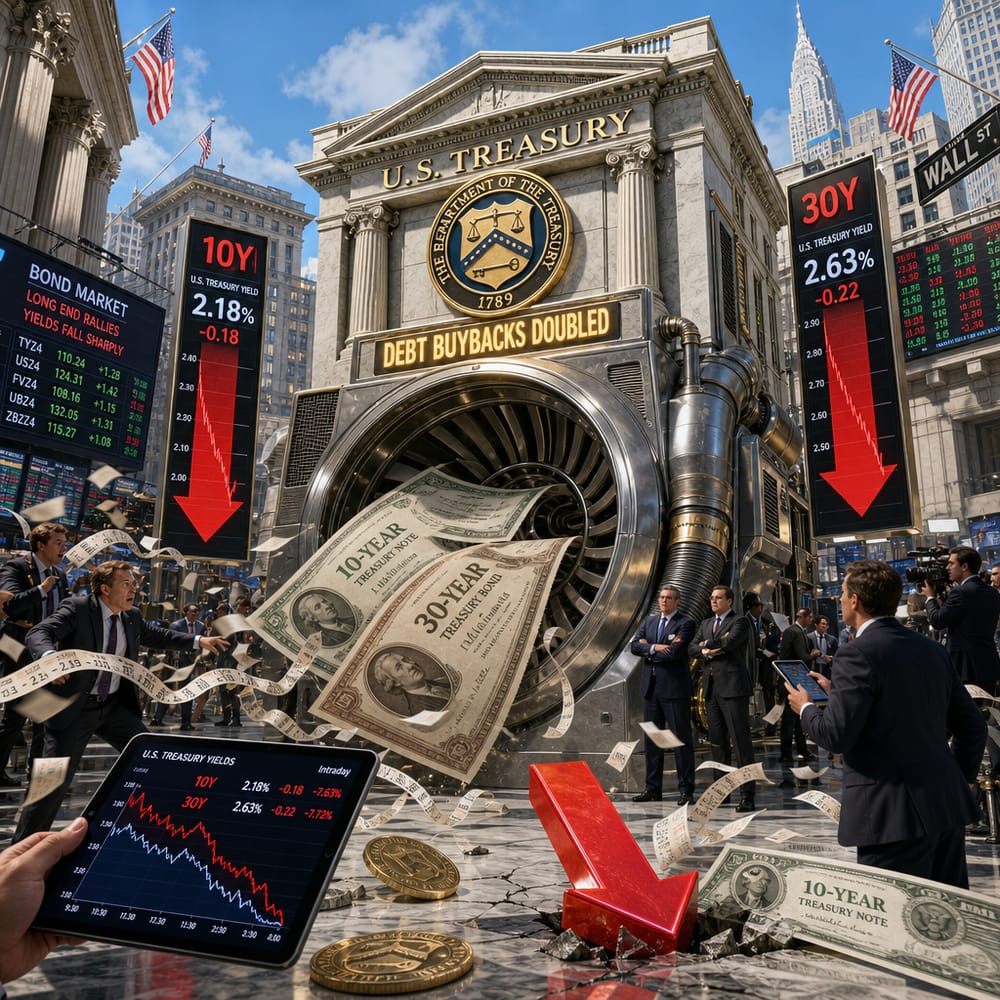
If you thought the bond market was a snooze-fest, think again. The U.S. Treasury just doubled down on its debt buybacks, sending long-term bond yields for a nosedive and waking up anyone with a stake in fixed-income investments. You might be wondering why the Treasury decided to play Santa Claus in the middle of August, and more importantly, what this means for your portfolio and the broader economy. Buckle up, because we're diving into the why, what, and how of this bold move.
WHY TREASURY DECIDED TO GO BIG
First, let’s talk about why the Treasury is flexing its financial muscles. In the face of rising yields, which hit highs not seen since the era of flip phones and MySpace, the Treasury saw a market looking a little too stressed. Enter Secretary Scott Bessent and his decision to double the buybacks—from a modest $2 billion to a hefty $4 billion. Think of it as a big, soothing balm for a market that’s been feeling the burn of high yields.
This operation targets those longer-dated 10-to-30-year Treasuries. Why? Because buyers have been on strike since June, and the market could use some love. The result? Yields on the 10-year note slid by more than 5 basis points to 4.647%, and the 30-year bond dropped by 9 basis points to 5.196%. In case you're wondering, a basis point is just finance-speak for 0.01%. Bottom line, bond prices up, yields down. And as we all know, in finance, what goes down, eventually must come up. Or so they say.
INVESTORS: THE WINNERS AND LOSERS
For U.S. Treasuries, this is like a makeover reality show. Suddenly more attractive, these lower yields might catch the eye of foreign investors. Why? Because lower yields can stabilize U.S. bond prices, making them a safer bet for countries looking to park their money somewhere less risky. If the dollar follows the trend and softens a bit, foreign buyers might find U.S. Treasuries a delicious investment snack again.
But what about pension funds and retirees? They rely heavily on the steady income from bonds. Lower yields mean less income. For those sipping on their morning coffee and counting on consistent returns, this Treasury move might feel like a surprise twist in a soap opera. It could push funds to look for riskier investments that promise higher returns—a thrilling but nerve-wracking prospect for anyone playing it safe.
BROADER ECONOMIC RIPPLE EFFECTS
Now, what does this mean for the economy at large? Lower yields often signal lower borrowing costs. Think mortgages, car loans, and even business loans. Cheaper borrowing can spur spending and investment, juicing up economic growth—a welcome boost in any economy. The stock market got the message loud and clear, with futures jumping at the good news.
But here’s the twist: the economy, much like your favorite TV drama, is full of plot twists. Cheap borrowing might drive up spending, but it could also fan the flames of inflation—a worry that’s been keeping central bankers up at night. If inflation rears its ugly head, the Federal Reserve might feel the itch to raise interest rates to cool things down, putting us right back at square one.
SO, WHERE DOES THIS LEAVE US?
The Treasury's buyback plan is undeniably bold, and it’s a game-changer for market watchers. For retail investors, it’s a new chapter in navigating the complexity of fixed-income investment strategies. Whether you’re a seasoned portfolio manager or just someone with a 401(k) getting a little more colorful, this is a financial plot to watch.
As with any plot twist, stay tuned. The bond market’s narrative is far from over, and its next chapters will hold surprises that could impact portfolios and economic outlooks alike. So keep your eyes peeled and your investment strategies nimble. The Treasury just set the stage; it’s up to the financial players to see how this drama unfolds.
This article is for informational purposes only and is not investment advice. Always do your own research or consult a licensed financial professional before making investment decisions.
© Copyright 2024. All Rights Reserved.
© Copyright 2024. All Rights Reserved.