

Treasury Doubles Bond Buybacks: Moves to Cap Yield Surge
Sunday, August 23, 2026
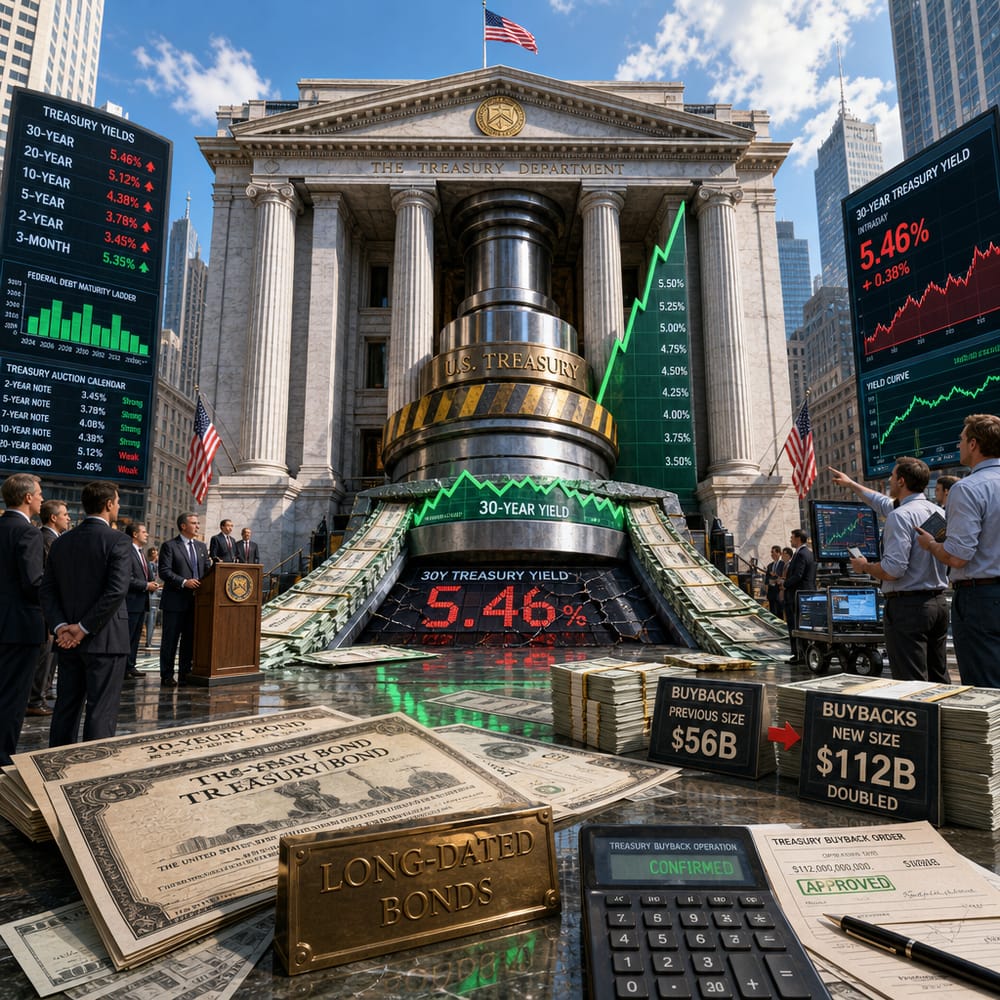
THE TREASURY'S DOUBLE TAKE: CAN BOND BUYBACKS REALLY TAME SURGING YIELDS?
Imagine running around in a firestorm with nothing but a Super Soaker. That's the U.S. Treasury right now, trying to douse the flames of rising bond yields by doubling down on buybacks of long-term bonds. Perhaps not the most conventional approach, but when yields are acting like they just chugged a Red Bull, the Treasury is left with little choice but to act — and fast. So, what’s with this financial high-wire act, and should we all be biting our nails or breathing a sigh of relief?
First things first: what are bond yields, and why is everyone so worked up about them? Simply put, bond yields are the returns investors get on bonds — which are basically IOUs issued by the government when it needs to borrow money. And when these yields climb, so do the costs of borrowing money. Not just for Uncle Sam, but for you, me, and anyone hoping to snag a mortgage under a million percent interest.
Now, when the Treasury starts buying back its own bonds, it's like giving these prices a steroid shot, which ideally pushes yields down. Think about it like this: more buybacks mean fewer bonds floating around the market, which should make the existing ones more valuable. More value equals a lower yield. Voilà! Or so the financial textbooks say.
However, doubling these buybacks is akin to King Kong trying to plug holes in the Titanic. It’s a bold move, sure, but is it effective enough to really make those yields simmer down? There's skepticism. For one, buybacks can ease some pressure, but they can't magically zap away the factors juicing up those yields in the first place — like inflation tags, a jittery stock market, or geopolitical love triangles causing global economic heartburn.
And then there are the long-term repercussions. Flooding the market with more buybacks could risk a bigger bubble than your kid's birthday party. By pushing bond values up artificially, the Treasury might be setting itself up for a mean hangover once the buyback party ends. The concern? When the buybacks stop, yields could bounce back with a vengeance, leading to more volatility than a teenager’s mood swings.
But let’s not overlook the ripple effects on us mere mortals, particularly when it comes to those mortgage and loan rates. If the Treasury gets its way and yields tiptoe down, it could keep mortgage rates from going, well, through the roof. Picture this: a stabilized bond yield helps anchor those pesky 30-year fixed rates. That makes buying a home a bit less like selling your soul to the bank.
For the average Joe and Jane investor, all eyes should be on how effective these buybacks really are. If they manage to squelch some of the flames licking at our wallets, great! We can all sleep a little easier knowing our mortgage doesn't come with a side of financial indigestion.
Yet, with a national debt rocketing past a staggering $40 trillion, doubling down on buybacks raises eyebrows — and not just the heavily penciled-in kind. The Treasury is playing an expensive game of monetary chess, which could have serious fiscal implications if it doesn’t pay off.
So, what's a savvy investor to do? Keep your eyes peeled, folks. Watch those yield numbers like a hawk. If the buybacks work and yields drop, it could be a sweet spot for bonds. But they're far from a slam dunk. If you’re thinking of locking in a mortgage rate, now might be a prudent time before the market decides to throw another curveball.
In the wild world of finance, the Treasury's strategic play might just keep the bond beast in check. But whether it’s a winning hand or a desperate bluff remains to be seen. Stay informed, stay alert, and maybe keep a little room under the mattress for safekeeping — just in case.
This article is for informational purposes only and is not investment advice. Always do your own research or consult a licensed financial professional before making investment decisions.
© Copyright 2024. All Rights Reserved.
© Copyright 2024. All Rights Reserved.