

Treasury Doubles Bond Buybacks Amid Yield Rebound
Saturday, August 22, 2026
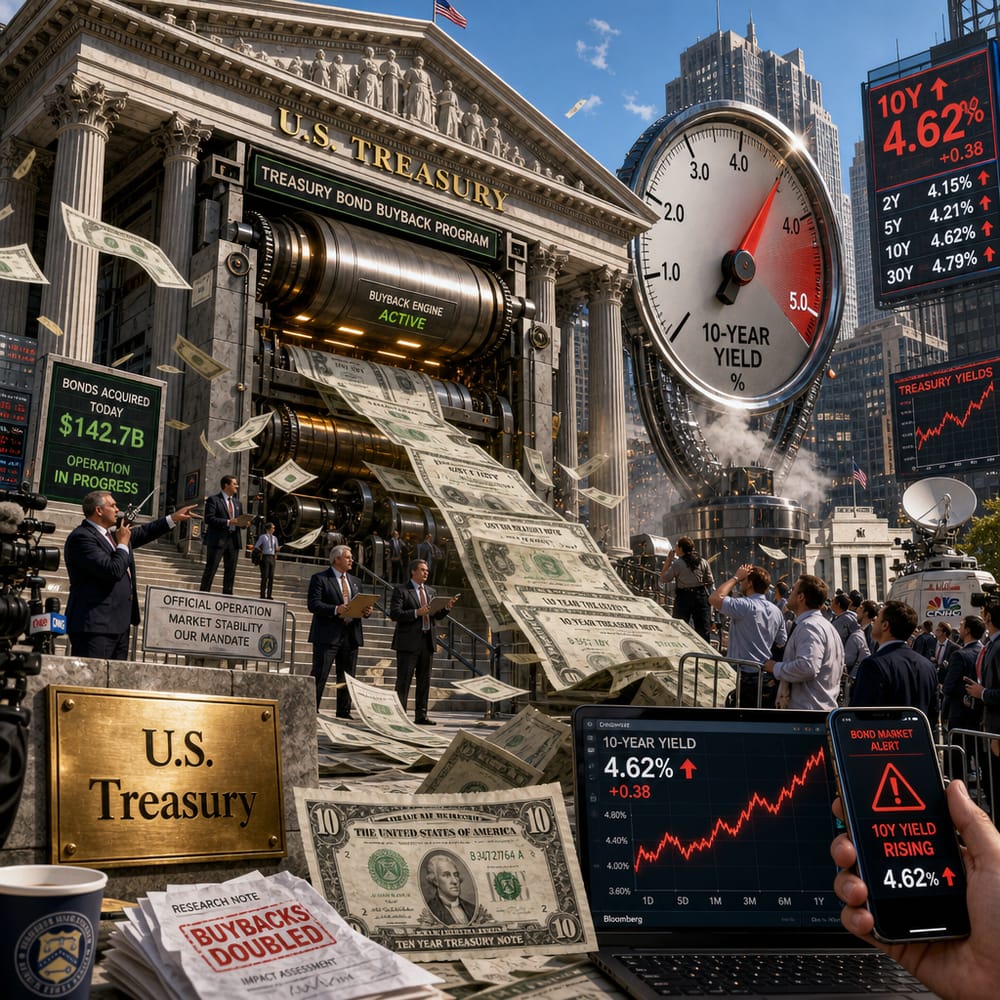
TREASURY DOUBLES BOND BUYBACKS AMID YIELD REBOUND
Hold onto your hats, folks—the bond market roller coaster is cranking up again. Just when you thought it was safe to check your portfolio, the U.S. Treasury swoops in with a bold move, doubling its bond buybacks in a bid to tame those unruly yields. But instead of the soothing lullaby the markets had hoped for, it’s more like an alarm clock blaring at 5 a.m. Yes, bond yields are back on the rise and investors, economists, and your uncle who pretends he’s George Soros are all scrambling to make sense of it.
For those of us not fluent in financial speak, let's break it down: bond yields are essentially the interest rates that investors demand to loan their money to Uncle Sam. When these yields go up, it means investors are asking for higher returns, which usually happens when they're feeling a bit skittish about the economy’s future. Cue the Treasury, stepping in to buy back bonds like a savvy bidder at an auction, trying to signal, “Hey, no need to panic!”
But here we are, watching the 10-year yield do the financial equivalent of the Harlem Shake. So, why are bond yields rebounding despite the Treasury’s best efforts to play the hero?
THE YIELD REALITY CHECK
First off, let’s face it—bond markets are like your moody teenage cousin. They don’t always respond to authority figures the way you’d expect. Despite the Treasury's intensified buyback efforts, inflation fears and economic uncertainties are casting long shadows, making investors demand higher yields. Who can blame them? With persistent inflation lurking like a bad penny and global economic pressures, the bond market is nervously eyeing the horizon.
Then there’s the Federal Reserve's stance on interest rates. The Fed has been dropping hints about potentially keeping rates higher for longer to curb inflation. This just fuels investor speculation, leading to the expectation that yields won’t be dropping anytime soon. It’s a chain reaction—higher expected rates in the future lead to higher yields today.
IMPLICATIONS OF SKY-HIGH YIELDS
So, what does this yield rebound mean for the economy? For one, rising bond yields are a bit like a sneakily rising tide—they can increase borrowing costs across the board. When yields go up, so do the interest rates on everything from mortgages to business loans. That means your next trip to the bank could leave you with less cash for your weekend splurges.
High yields can also spell trouble for the stock market. As bond yields rise, the appeal of stocks diminishes because investors can snag decent returns from bonds with seemingly less risk. This could lead to more volatility in the stock market, giving your retirement fund a bumpy ride.
WHAT’S NEXT FOR THE TREASURY?
The big question now is what the Treasury will do next. One option could be to ramp up its buybacks even more aggressively. But there’s a catch—it’s kind of like trying to cool down with a paper fan in the middle of a heatwave. The Treasury can only do so much if broader economic fears continue to push yields up.
There’s also talk about the Fed stepping up its game. If the central bank signals a potential pivot or starts actively buying long-term bonds, we might see some calm return to the market. But that’s a big “if” and one that’s wrapped up in a lot of economic forecasting and political theater.
For now, investors should brace themselves for more market swings and stay tuned to every word from the Treasury and the Fed. It’s a game of patience and strategy, not unlike a high-stakes chess match where each move is closely watched.
Ultimately, while the Treasury’s actions haven’t calmed the markets yet, it’s clear they’re not ready to fold their hand. Instead, they’re doubling down, hoping that persistence—and perhaps a bit of luck—will get the job done. But until then, we might as well enjoy the ride, because it looks like the bond market thrill show is far from over.
This article is for informational purposes only and is not investment advice. Always do your own research or consult a licensed financial professional before making investment decisions.
© Copyright 2024. All Rights Reserved.
© Copyright 2024. All Rights Reserved.