

Treasury Buybacks Temper Bond Market–Driven Equity Weakness
Wednesday, August 19, 2026
TREASURY BUYBACKS TEMPER BOND MARKET–DRIVEN EQUITY WEAKNESS
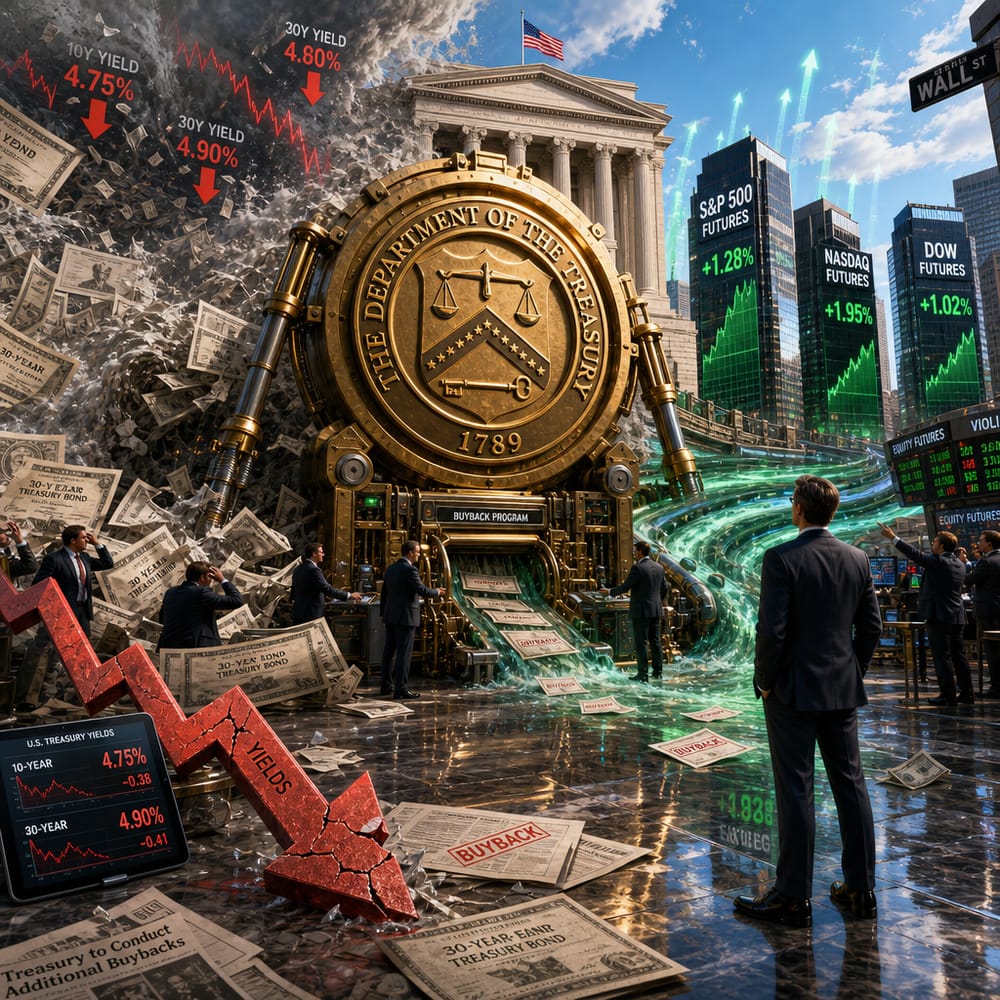
Hold onto your stocks, folks, because the U.S. Treasury just pulled a rabbit out of its hat. In a market that’s recently been more roller coaster than merry-go-round, the Treasury's latest trick is doubling its buyback operations of long-dated government bonds. And trust me, this isn’t just another bureaucratic snooze-fest—it's a move shaking up both bond yields and equity futures in ways that could reshape your portfolio more than your morning coffee shake.
Why should you care? Let me break it down. When the Treasury goes on a bond shopping spree, snatching up long-dated bonds faster than a sneakerhead at a limited-edition drop, it lowers yields. In layman's terms, buying these bonds makes them more expensive, which in turn reduces the interest investors can earn (a.k.a. the yield). And what happens when yields dip? Equity markets breathe a sigh of relief, and stock futures start doing a little happy dance.
So, how exactly does this financial wizardry affect us mere mortals? Let's dive into the bond market's subterranean labyrinth. Long-term bond yields are crucial for setting expectations about future interest rates and economic prospects. Lower yields mean borrowing money gets cheaper—great news if you're a business owner with dreams of expansion or a homeowner with an eye on refinancing that pesky mortgage.
Now, you might be thinking, "Cool, but how does this impact my stock portfolio?" Good question. Lower bond yields often make stocks look more attractive. Why park your money in a bond offering peanuts when you could potentially earn more through the stock market? This shift in sentiment drove up equity futures for the S&P 500, Nasdaq, and Dow Jones faster than you can say "buy low, sell high."
But wait, there’s more. This move could also signal a subtle shift in the Federal Reserve's crystal ball gazing. Markets are always on the lookout for clues about the Fed's next move—are they going to hike rates, hold steady, or stage a grand pivot? With the Treasury's buyback injection, investors might start recalibrating their expectations, perhaps anticipating a more dovish approach from the Fed. After all, easing long-term borrowing costs dovetails nicely with a central bank looking to stimulate economic growth without flashing the green light to inflation.
Of course, the bond market isn't all sunshine and rainbows. It's been under pressure, with yields recently flirting with levels not seen since your favorite early 2000s boy band was on tour. Elevated oil prices and inflation fears have been fueling this fire, and the Treasury’s intervention is like throwing a bucket of cold water onto the blazing inferno—or at least trying to.
So, what’s the take-home? If you're sitting on a pile of U.S. Treasury bonds, you might want to rethink your strategy. The rising bond prices (and falling yields) mean less return on your investment. And if you're in the stock market game, this could be your chance to ride the wave of buoyant equities, especially in sectors that are particularly sensitive to interest rates—think tech and growth stocks, which thrive when borrowing costs are lower.
Ultimately, this isn't just a story about bonds and yields; it's about how the interplay between different market forces can create opportunities—and risks—for investors. Whether you're an index fund enthusiast or a stock-picking maven, keep an eye on these moves. As with any market shake-up, there will be winners and losers.
In the end, the Treasury's buybacks have opened a new chapter in the ongoing saga of market volatility. It's a reminder that in the financial world, the only constant is change. So, keep your portfolio nimble, your strategy flexible, and maybe—just maybe—you’ll emerge on top of the market's next roller coaster turn.
This article is for informational purposes only and is not investment advice. Always do your own research or consult a licensed financial professional before making investment decisions.
© Copyright 2024. All Rights Reserved.
© Copyright 2024. All Rights Reserved.