

Treasury Buybacks Temp Calm Long-Term Yields—But Fragile
Saturday, August 29, 2026
TITLE: Treasury Buybacks Temp Calm Long-Term Yields—But Fragile
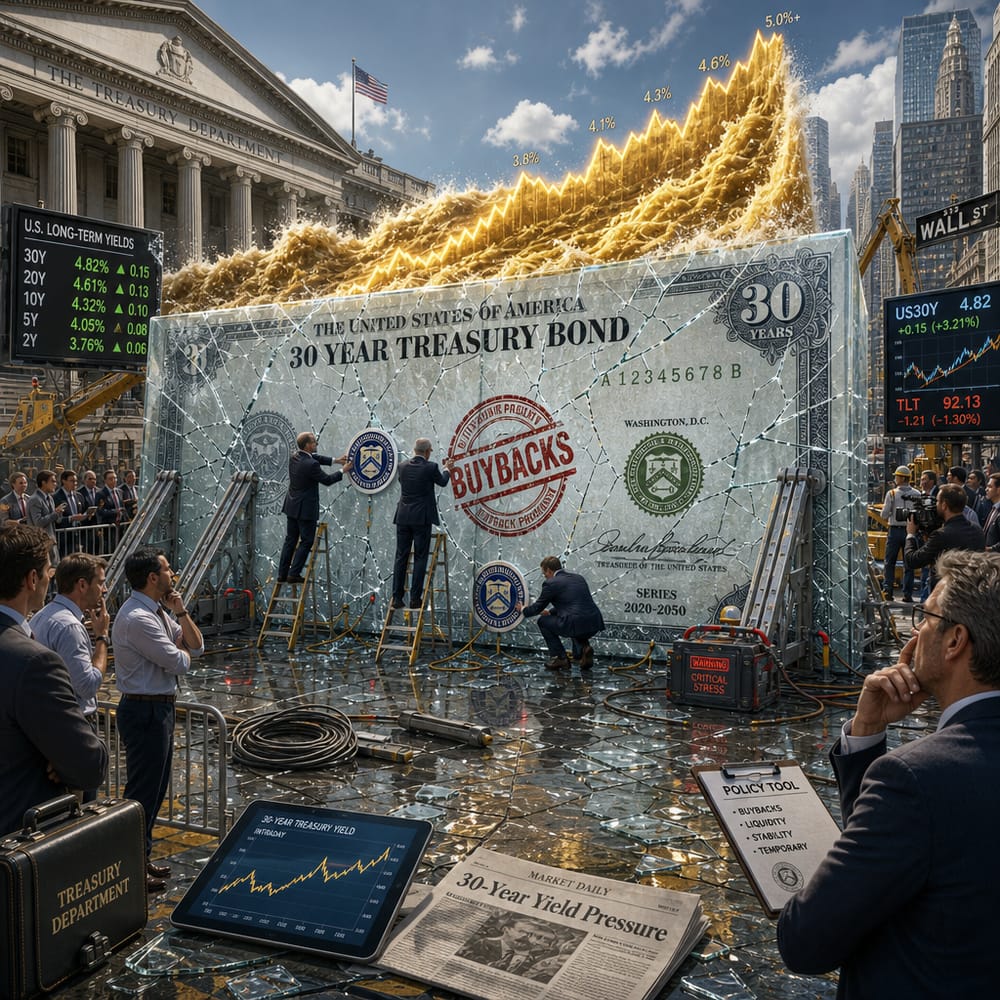
The Treasury Department is trying to be the cool parent at a teenager's party—keeping things calm without really understanding what chaos is brewing. Their trick? An expanded bond buyback program that’s aimed at soothing the nerves of jittery long-term yields. But much like those inevitable party shenanigans, there’s skepticism about how long this calm can last.
Let's break down the scene. Imagine long-term Treasury yields as the awkward tall kid at the dance: they’re crucial to the music of our economy, setting the rhythm for borrowing costs, mortgages, and the rolling beat of financial markets. But when they stand too tall, they cast a long shadow on economic growth. Enter Uncle Sam, swooping in with a plan to bring down the vibe—buying back bonds to ease the tension.
HOW EFFECTIVE HAS THE BUYBACK PROGRAM BEEN?
So far, the Treasury's expanded buyback program has done its job, albeit temporarily. By snapping up bonds, they’ve managed to coax long-term yields to shimmy downwards. This has untangled some of the financial knots, reducing borrowing costs for now and offering a breath of relief to those with an eye on mortgage rates and future loans. It’s a neat trick, but like any good magician’s act, it’s got its limits.
THE RISKS OF RELYING ON BUYBACKS
Here’s where the plot thickens. Relying on buybacks to tweak market conditions is a bit like using a band-aid on a leaky dam—it might work for now, but it’s not a permanent solution. Critics warn that this approach could mask underlying issues, like a sluggish economy or waning investor confidence. If the Treasury keeps sweeping issues under the rug, it could be setting up for a bigger mess down the road—a skepticism that’s fueling some head-scratching among market watchers.
Imagine a financial market as a dance floor: too much interference from the DJ, and dancers might just walk off, unsure of the beat they’re supposed to follow. The Treasury's buyback program, while calming yields for now, might actually be contributing to a lack of clarity in the long run. The fear? Investors might start demanding higher yields in the future, doubting the government’s fiscal choreography.
HOW MIGHT THIS IMPACT FUTURE BORROWING COSTS?
With the short-term success of the buyback program comes a looming question: what happens when the music stops? If yields decide to spike again, the cost of borrowing could dance its way upwards, making everything from government projects to home loans pricier. The ripple effects could slow economic growth, making it harder for consumers and businesses to get the credit they need without paying through the nose.
The program's temporary fix might keep the boogeyman of inflation at bay for a while, but it doesn’t address the root issues. Think of it as putting a band-aid on a broken leg. Sure, the surface looks better, but it doesn't solve the problem beneath. If the economy remains out of step with its growth potential, we might see yields creeping back up, making loans and mortgages as popular as a broken record.
THE BIGGER PICTURE
While the spotlight is on the Treasury's buyback efforts, it’s crucial to keep an eye on the larger economic stage. Factors like inflation, global economic conditions, and policy decisions from the Federal Reserve play their own roles in this intricate dance. With inflation still considered "concerning" by Fed Chairman Kevin Warsh, according to recent remarks, the financial party is far from over.
For retail investors, the Treasury's buyback program is worth a watch but not worth betting the farm on. It’s an interesting play in an ongoing saga, but investors should be prepared for some unexpected plot twists. In the end, the Treasury might be able to calm the waters for now, but the tides of the financial market have a way of crashing the party, bringing everyone back to reality.
So, as you sip your morning coffee and scroll through the latest financial headlines, remember: while the Treasury’s buyback program may have temporarily soothed long-term yields, the calm remains fragile. Keep your eyes on the market pulse, and perhaps hold off on an extravagant long-term commitment. You never know when the music might just change.
This article is for informational purposes only and is not investment advice. Always do your own research or consult a licensed financial professional before making investment decisions.
© Copyright 2024. All Rights Reserved.
© Copyright 2024. All Rights Reserved.