

Treasury Buybacks Soften Yields—but Only Temporarily
Sunday, August 30, 2026
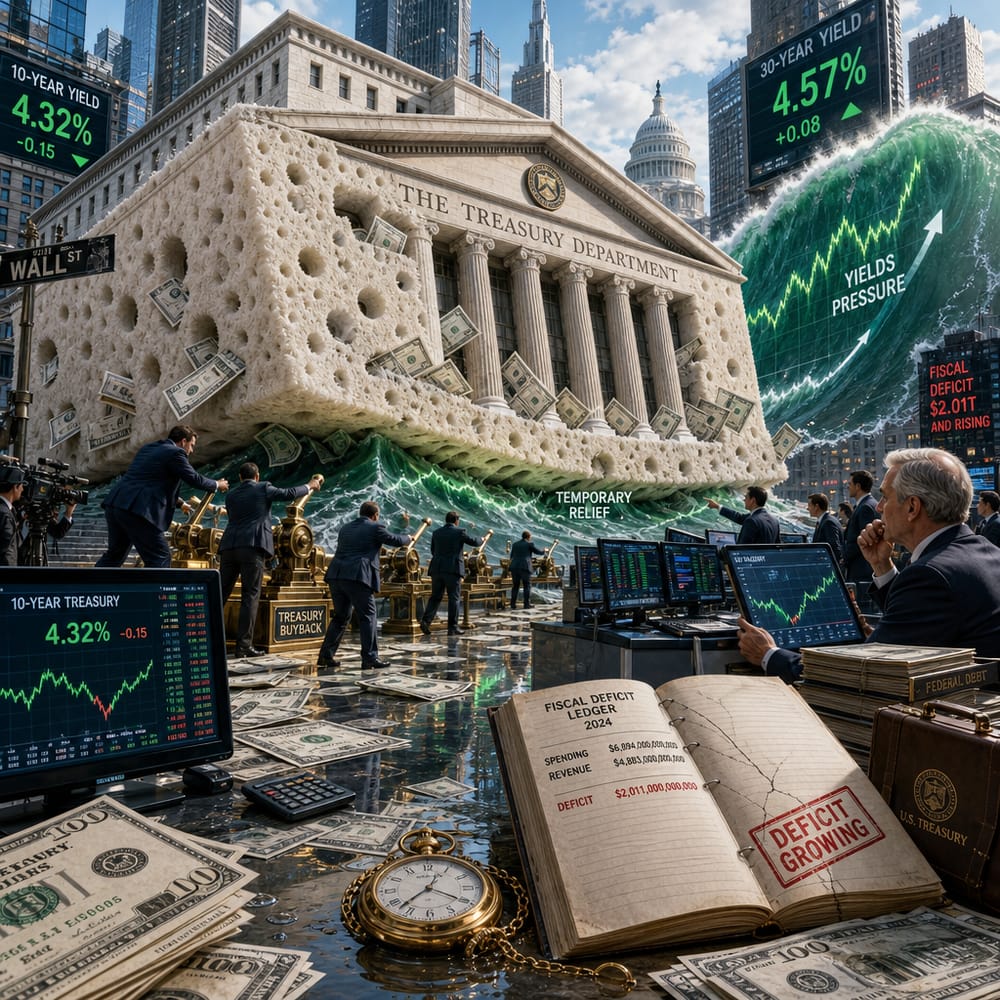
TREASURY BUYBACKS SOFTEN YIELDS—BUT ONLY TEMPORARILY
Ever been coaxed into a one-day-only sale, only to find the same item sitting on the shelf at a discount just a week later? The U.S. Treasury's recent bond buyback strategy is a little like that—not exactly the permanent bargain it first appears to be. While it sprinkles a bit of fairy dust on long-term yields, the magic seems to fade faster than you can say "fiscal stability."
Let's break it down. The U.S. Treasury has rolled up its sleeves and dipped into bond buybacks. This is where they snag existing bonds off the market, aiming to ease the pressure and reduce yields, much like stuffing a leaking pipe with putty. And hey, it works! Long-term yields did pause their climb momentarily, like a sprinter catching their breath. But here's the kicker—it’s a fleeting reprieve, not a permanent fix.
Is this temporary pause in yield hikes sustainable? In market terms, that's like asking if a sugar rush will fuel you through a marathon. The bond market is vast and complex, with its own rhythm and pace, and it won't be tamed by a single maneuver. The Treasury's strategy may take the edge off borrowing costs temporarily, but it's not a long-term solution. Investors know this, and like that savvy shopper eyeing a soon-to-be clearance item, they're remaining cautious.
Now, let’s talk real-world impact. What does all this financial wizardry mean for the person looking to buy a home or start a business? Long-term yields have a direct influence on mortgage rates and corporate financing. When yields drop, borrowing costs can decline, offering a brief window of opportunity for homebuyers and companies looking to finance projects. So if you’re mortgage shopping, keep those eyes peeled for any fleeting deals.
But while lower yields might sound like music to a homeowner's ears, the Treasury's maneuvers don't address the broader fiscal challenges the U.S. faces. Picture it like skipping a mortgage payment—you’ve got a break for now, but that bill isn't going away. The buybacks are a patch on a much larger quilt of national debt and fiscal policy. The fiscal implications are as deep as they are wide, impacting everything from government spending to interest payments.
This brings us to the core question: What’s really going on with Uncle Sam's checking account? Short-term solutions like buybacks don’t address the elephant in the room—how to manage rising national debt. It's a topic that could fill more than a few chapters in an economics textbook, but suffice to say, the Treasury's flashy tricks are no substitute for a solid plan to ensure fiscal stability. The nation is still staring down significant budget deficits and potential future interest rate hikes, which could make today's borrowing costs seem like a Black Friday sale.
For now, the bond market remains on its toes, cautiously optimistic yet aware of the undercurrents of fiscal uncertainty. Investors are keenly watching the dance between the Treasury's short-term tactics and the long-term challenges that loom on the horizon.
In the grand scheme of things, the Treasury's buybacks are a reminder that markets respond to more than just monetary moves—they’re also watching the broader fiscal picture. The strategy might dampen yields for now, but without addressing the root issues, it's like putting a Band-Aid on a broken leg.
So, what's the takeaway for us, the retail investors scrolling through this on our phones? Stay sharp and informed. Understand that while the Treasury might offer a short-lived easing of yields, the broader fiscal challenges remain. And always be on the lookout for those moments when financial gymnastics create opportunities, however brief they may be. Because in the world of finance, the more things change, the more they stay the same—until, of course, they don’t.
This article is for informational purposes only and is not investment advice. Always do your own research or consult a licensed financial professional before making investment decisions.
© Copyright 2024. All Rights Reserved.
© Copyright 2024. All Rights Reserved.