

Treasury Buybacks: Impact on Equity Markets
Saturday, August 22, 2026
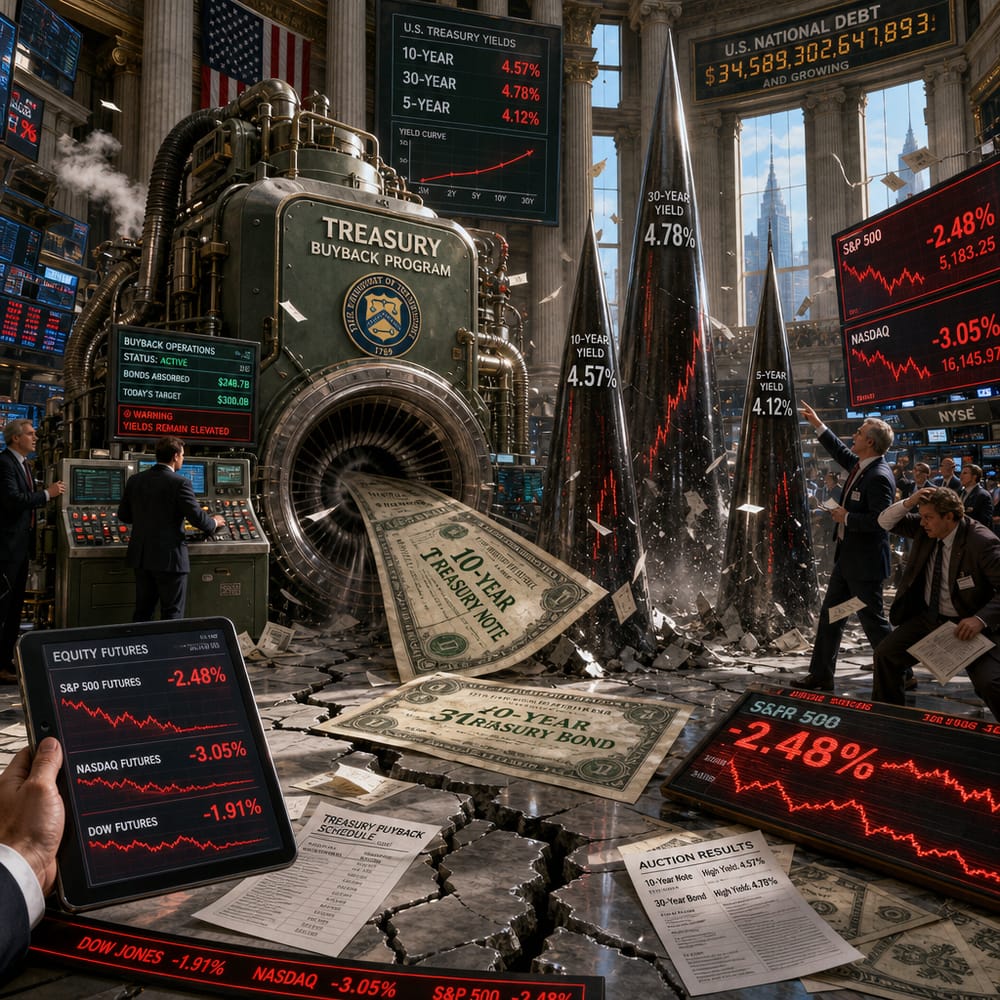
TREASURY BUYBACKS: A DROP IN THE YIELD OCEAN
If you thought solving a Rubik's Cube was tough, try being the U.S. Treasury Secretary right now. You're caught between a rock and a hard place, or better yet, skyrocketing yields and a plummeting market. The latest trick up the Treasury's sleeve? A buyback of long-term bonds. But this magic move has turned out to be more of a vanishing act than a grand illusion.
With the Treasury's buyback spree, you'd think they'd have yields tied in a nice little bow by now, right? Instead, we're left with a knotty mess that refuses to untangle. So, what's the deal with these buybacks barely budging yields? Let’s peel back the layers of this financial onion.
THE BUYBACK BLUES
The Treasury's strategy was as bold as wearing white after Labor Day. The plan? Snap up those long-term bonds and bring yields to heel. In theory, reducing the supply of these bonds should push up prices and push down yields. But theory and reality are sometimes like oil and water—they just don't mix.
Persistent inflation and soaring debt seem to have crashed this bond party. It’s a bit like expecting an ice cream truck in the desert—you're chasing refreshment, but it's nowhere in sight. The market is more focused on the elephants in the room: rising interest rates and ballooning fiscal spending.
IMPACT ON EQUITY MARKETS
Alright, let's talk about the domino effect. When yields refuse to come down, the stock markets start sweating bullets. High yields mean bonds look a little spicier to investors compared to stocks. And when bonds start looking like a better deal, people might just swap out their equities for the safety of a fixed income.
Equity markets are the party that might get gate-crashed. Higher yields can make borrowing more expensive for companies, potentially squeezing profits. Plus, if you're an investor, you're probably feeling like a contestant on a game show, being forced to pick between the safety of treasuries and the potential growth of stocks.
That puts pressure on those hefty valuations we've seen in the stock market. It’s like a Jenga tower with too many blocks missing—a little wobbly. Persistent high yields are the gust of wind that could send it all crashing down.
THE STRATEGY SHIFT
So, how should investors navigate these choppy waters? Diversification might be the name of the game. It’s like spreading butter on a slice of bread—nice and even so you don't end up with a dry bite. Balancing your portfolio with a mix of equities and bonds could be the safety net you need, given the current market dynamics.
Some experts suggest hedging your bets with a mix that includes short-term treasuries, much like Warren Buffet's famous 90/10 strategy. It's all about harnessing the power of stability while keeping a toe dipped in the potential growth pond.
CONCLUSION
So, there you have it. The Treasury's buyback initiative was supposed to be the fairy godmother to our market Cinderella story, but it looks like the fairy dust is still in the mail. Until we see a material drop in yields, the equity markets may remain on edge, treading carefully along the tightrope of high valuations and potential interest rate hikes.
For now, investors are left with a conundrum: to stick with equities and ride out the turbulence or to pivot towards the relative safety of treasuries. And while the Treasury might not have hit the bullseye just yet, this financial juggling act is far from over. Stay tuned; this show is just getting started.
This article is for informational purposes only and is not investment advice. Always do your own research or consult a licensed financial professional before making investment decisions.
© Copyright 2024. All Rights Reserved.
© Copyright 2024. All Rights Reserved.