

Treasury Buybacks Boost Equities, End Market Losing Streak
Friday, August 21, 2026
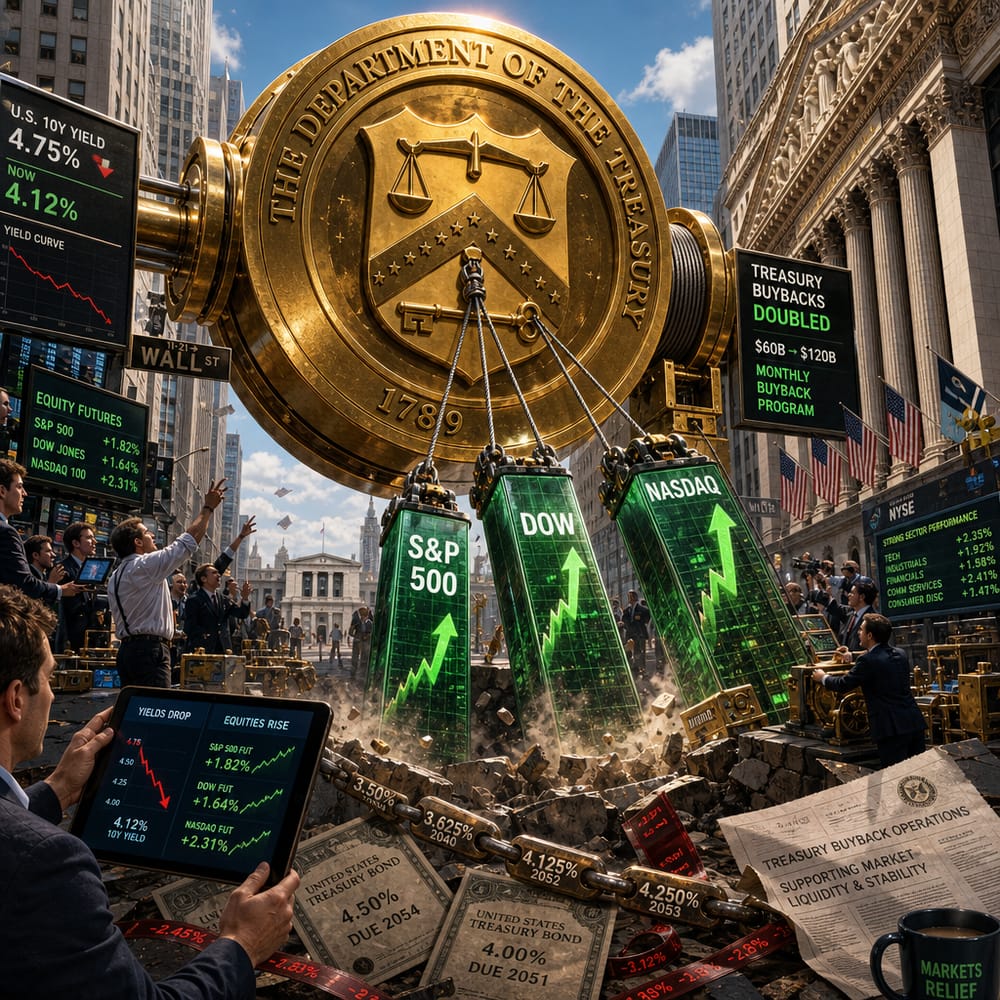
TREASURY BUYBACKS BOOST EQUITIES, END MARKET LOSING STREAK
If you caught Wall Street's vibe this past Friday, you probably noticed an air of celebration—one not fueled by free drink coupons at the Nasdaq's corner bar. Instead, it was the U.S. Treasury Department coming through with a much-needed power play: doubling its buybacks of long-dated government debt. One could almost hear the collective sigh of relief echoing across financial districts as bond yields eased and stocks made a triumphant rebound.
Picture this: The S&P 500 ticking upward by 0.43%, the Nasdaq by the same margin, and the Dow Jones strutting its stuff with a hefty 517.80-point gain. Even if stocks were nursing a hangover from a rough session earlier in the week, this move from the Treasury was like the aspirin we didn't even know we needed.
So, what's the big deal with these Treasury buybacks, and why did they get equities all hyped up like a kid in a candy store? Let's break it down.
HOW TREASURY BUYBACKS INFLUENCE BOND YIELDS AND STOCK PERFORMANCE
In plain English, when the Treasury buys back long-dated debt, they're essentially saying, "We've got this under control." By purchasing these bonds, the government increases the demand, which in turn pushes up the price of the bonds. And when bond prices go up, their yields—the return investors get on their investment—go down. Lower yields make bonds less attractive compared to stocks, so investors often shift their money into equities. It’s like when your old favorite movie with the outdated special effects is playing at the same time as a new blockbuster—you'll probably opt for the latter.
This tweak in bond yields is what sparked a bid-up in the markets, allowing equities to brush off the blues of a preceding losing streak. The financials and materials sectors, in particular, enjoyed the ride. Crypto-related stocks were practically moonwalking thanks to Bitcoin's strong showing during the week.
WHAT ARE THE POTENTIAL LONG-TERM EFFECTS OF INCREASED BUYBACKS ON THE MARKET?
Now, while this immediate boost injected some vitality back into the market, it's not all sunshine and rainbows. The Treasury's move raised several eyebrows among market watchers wondering about the long-term implications. Could this be a case of putting a Band-Aid on a bullet wound?
The thing is, constantly relying on buybacks could mean we’re headed into risky territory. This could create a false sense of stability, leading investors to become complacent. It’s like inflating a hot air balloon with a slow leak—you’ll get lift-off, but it might not last forever. Moreover, if such buybacks become a frequent rescue operation, it could signal underlying economic weaknesses that need addressing beyond the band-aid feel-good fix.
For now, though, the equity markets are relishing the relief. Whether you’re invested in blue-chip giants like Merck and Johnson & Johnson, or you have a penchant for more volatile crypto plays like Robinhood and Coinbase, the Treasury's maneuver seems to be delivering the goods.
THE BIGGER PICTURE
Ultimately, government actions like these underscore the interconnectedness of bond and equity markets. They reveal just how much market sentiment can be swayed by policy shifts, reminding us that sometimes, even the sturdy ship of the U.S. market needs a little tug in the right direction.
As we enjoy this upward tick, it’s a reminder to stay vigilant. While the Treasury’s buyback has served up a platter of gains today, it’s smart to keep a close watch on the broader economic indicators around inflation and national debt levels. After all, in the wild world of investing, only one thing is certain: change is always on the horizon.
This article is for informational purposes only and is not investment advice. Always do your own research or consult a licensed financial professional before making investment decisions.
© Copyright 2024. All Rights Reserved.
© Copyright 2024. All Rights Reserved.