

Treasury Buybacks Attempt to Stabilize Long-Term Yields
Sunday, August 30, 2026
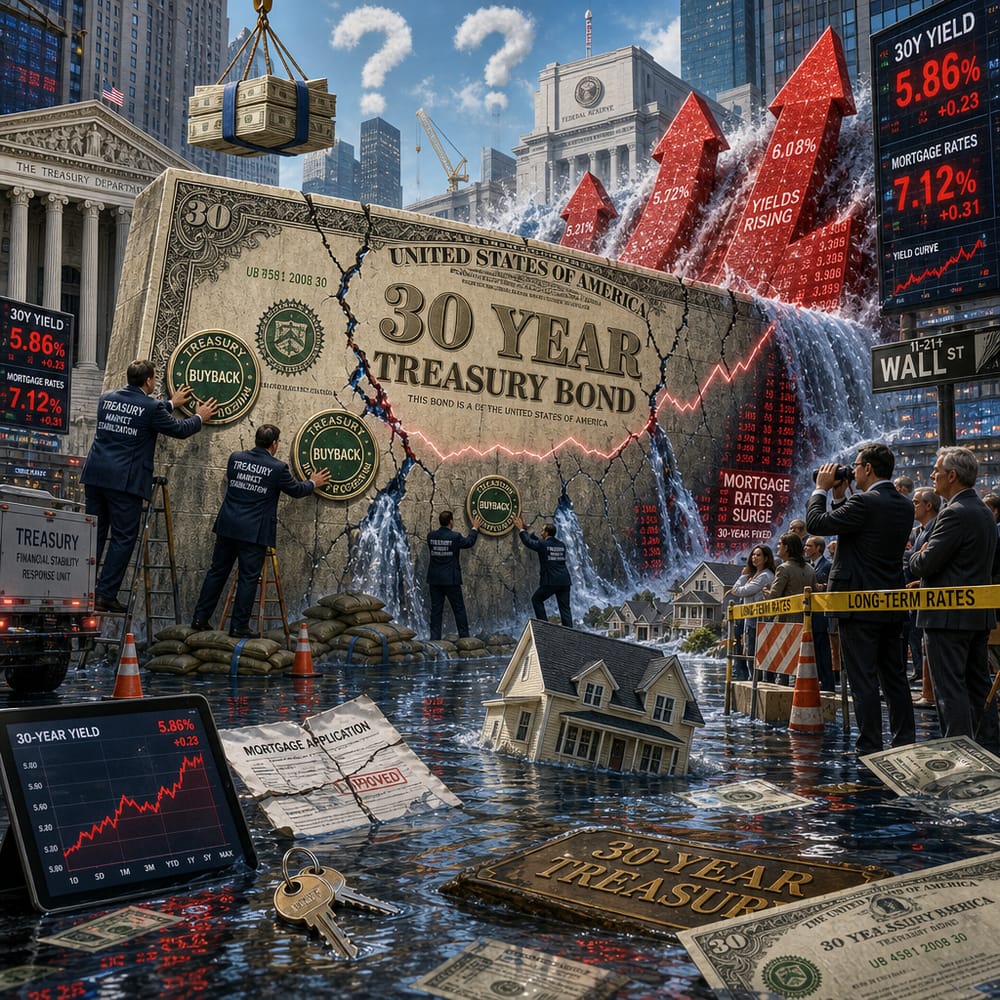
THE TREASURY’S BUYBACK GAMBIT: CAN IT TAME RUNAWAY YIELDS?
If you’re eyeing those mortgage rates and wondering if they’ll ever stop climbing, you’re not alone. Lately, the Treasury Department is playing a game of high-stakes Jenga with long-term yields, and it's all about buybacks. But will this clever ploy stabilize those wobbly blocks of economic tension? Or will it just send the whole tower tumbling down?
Let’s set the stage: Long-term Treasury yields have been behaving like an over-caffeinated squirrel, bouncing all over the place and causing jittery nerves among investors. To calm these financial jitters, the Treasury is stepping in with a plan to buy back some of those long-term bonds. This might sound like a financial magic trick, but the only rabbits coming out of this hat are some very real implications for your wallet.
WHAT ARE TREASURY BUYBACKS?
Think of buybacks as the Hogwarts' spell to reduce the supply of existing bonds in the market. The Treasury hopes that pulling back some of these long-term securities will lower the yields, which are essentially the interest rates the U.S. government pays to borrow money over a long period. Lower yields mean cheaper borrowing costs not just for Uncle Sam, but also potentially for you and me when it comes to things like loans and mortgages.
THE BROADER FINANCIAL RIPPLE
In theory, lower yields could be the fairy godmother investors have been waiting for. When yields drop, it generally makes borrowing cheaper across the board. Mortgages could become less of a financial burden, and corporations might jump at the chance to finance new ventures at lower rates. This ripple effect could, in turn, trigger more spending, more investment, and possibly more job creation. But hold your applause – it’s not all Cinderella stories and happy endings.
RISKS IF THE BUYBACKS BACKFIRE
Here's the potential dark side: What if the buybacks fail to soothe the yield beast? If Treasury buybacks don’t work as intended, high yields could persist or even rise, throwing cold water on economic growth. Mortgage rates would continue their climb, and that dream home might start looking more like a pipe dream. Corporate borrowing could become more expensive, putting a damper on business expansion plans. In other words, it’s a risky bet with a lot on the line.
LONG-TERM IMPLICATIONS
Even if this buyback maneuver successfully lowers current yields, the long game remains uncertain. The Treasury is walking a tightrope, trying to balance its debt management with economic stability. Regular buybacks might signal to the market that the Treasury is concerned about financial stability – not exactly a confidence booster. Plus, if this approach becomes a regular tool, it could distort the market’s natural supply and demand dynamics, leading to unintended consequences down the road.
SO, DOES THIS JENGA TOWER STAND OR FALL?
The Treasury’s buyback strategy is akin to threading a very fine needle. If it works, it could be a masterstroke of financial wizardry, bringing some much-needed tranquility to the bond markets. If it doesn’t, we might find ourselves in a financial quagmire with little room for maneuver.
As retail investors and everyday folks keeping an eye on our wallets, the key takeaway is to stay informed and be prepared for a variety of scenarios. Whether you’re a hopeful homebuyer or an investor with a keen eye on the stock market, understanding the implications of these Treasury moves can help you navigate the potentially turbulent waters ahead.
In the meantime, keep your eyes peeled, your investments diversified, and your dose of economic caffeine at the ready. You never know when the next big move will shake things up again.
This article is for informational purposes only and is not investment advice. Always do your own research or consult a licensed financial professional before making investment decisions.
© Copyright 2024. All Rights Reserved.
© Copyright 2024. All Rights Reserved.