

Treasury Buybacks as Market Stabilizer
Wednesday, August 19, 2026
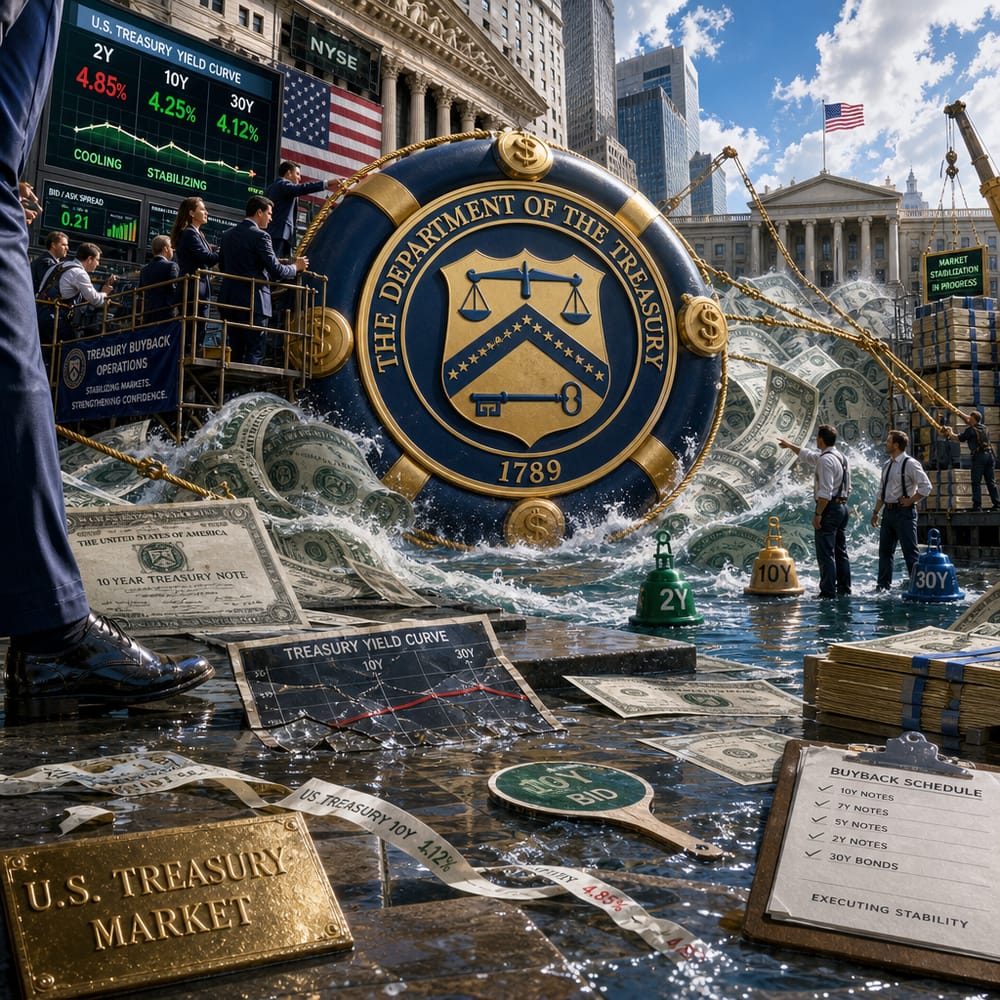
THE TREASURY'S BIG BUYBACK: A FIX OR FIASCO FOR BOND MARKETS?
In the topsy-turvy world of finance, the U.S. Treasury's latest move to expand its bond buyback program might just be the caffeine jolt the market didn't know it needed. But will this intervention stabilize the market or trigger a whole new set of caffeine jitters?
For those not fluent in financial lingo, a bond buyback is like a government yard sale in reverse. The Treasury is corralling its own bonds back from the market in an effort to stabilize the wobbly knees of government debt markets and take some pressure off those pesky rising yields.
WHY IS THE TREASURY DOING THIS?
Think of yields as the interest rate investors demand for lending money, and right now, they're climbing like interest rates after a Federal Reserve meeting. High yields can spook markets, making borrowing more expensive for everyone from Uncle Sam to the smallest startup. By buying back bonds, the Treasury hopes to reduce the supply, and theoretically, calm the yield storm.
THE GOOD, THE BAD, AND THE POTENTIALLY UGLY
Here's the scoop on the potential benefits. By stepping in to gobble up bonds, the Treasury could lower the yields, making borrowing cheaper and giving a nudge to both the economy and jittery markets. A little less pressure on yields might even spark a rally-thon from stocks and bonds alike.
But hold the applause: there are a few more sides to this financial Rubik's Cube. For one, this maneuver might signal to investors that the government debt market is under stress—potentially adding to the jitters rather than soothing them. It's also a bit of a gamble on how the Federal Reserve reacts. The Fed, ever the watchful monetary father figure, will have its policy compass out, evaluating whether to steer interest rates based on this new intervention.
THE RIPPLE EFFECT: YIELDS AND FED POLICY
Let's talk shop. If the buyback does its job, yields could decrease, which might shift the Fed's strategy on interest rates. Lower yields could mean less pressure for the Fed to hike rates, even if the inflation boogeyman is lurking under the bed. But a misstep here could make the Fed have second thoughts, especially if they see the buyback as a sign of underlying market weakness.
WHAT'S IN IT FOR INVESTORS?
If you're a retail investor, you're probably wondering what all this means for your hard-earned cash. Here's the quick and dirty: lower yields can make bonds less attractive compared to stocks. So, your portfolio might look different depending on how this plays out. An effective buyback could breathe some life into stocks, especially those sensitive to interest rate changes like tech and growth sectors.
THE BIG QUESTION
The Treasury's buyback is a high-wire act without a net. Will it stabilize the market and ease borrowing costs, or are we looking at a short-term sugar rush with a potential crash? And how might the Fed, that ever-cautious economic referee, adjust its playbook?
All eyes now are on the Treasury and its buyback ambitions. Investors, economists, and your friendly neighborhood financial journalists will be watching this space closely. At the end of the day, whether this intervention is a hero's tale or a cautionary note will depend on its execution and its unforeseen ripple effects across the broader economy. Grab your popcorn—it’s going to be a thrilling watch.
This article is for informational purposes only and is not investment advice. Always do your own research or consult a licensed financial professional before making investment decisions.
© Copyright 2024. All Rights Reserved.
© Copyright 2024. All Rights Reserved.