

Treasury Buyback Program Fails to Curb Yields: 10-Year Treasury Hits Around 4.69%
Friday, August 21, 2026
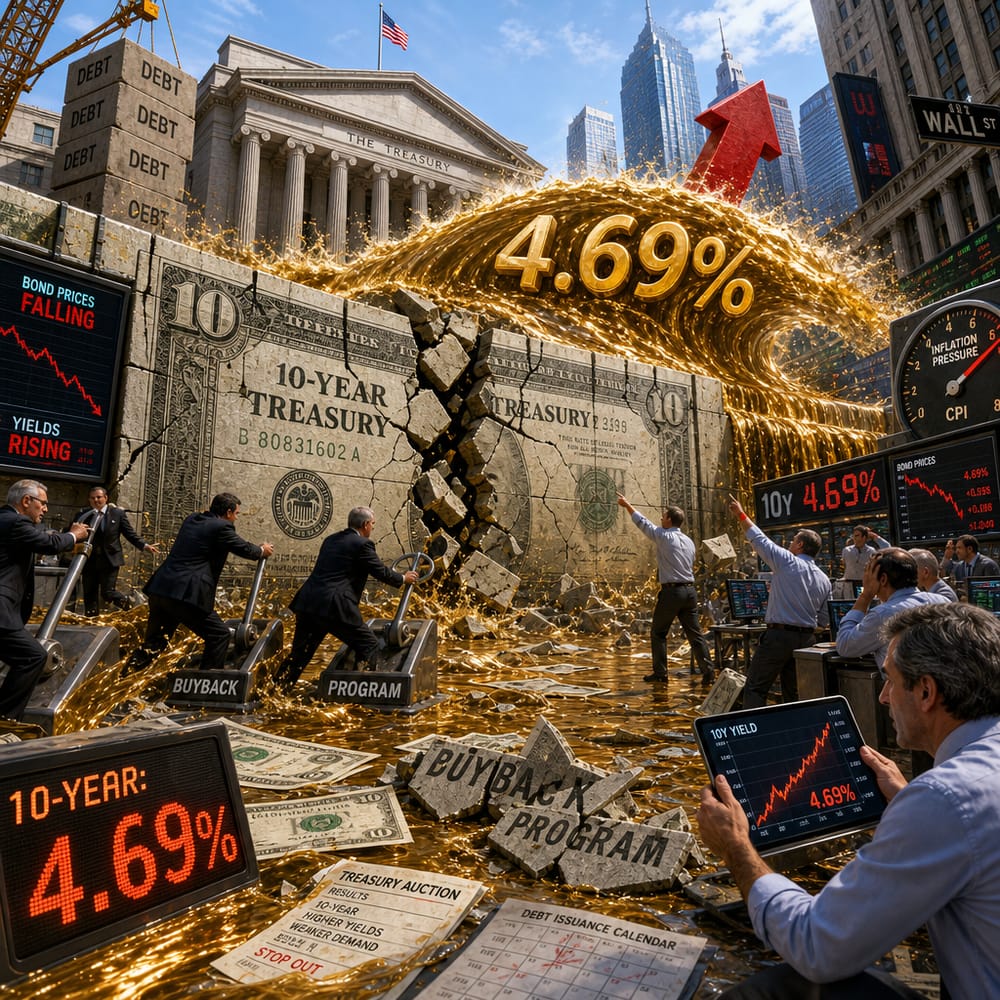
TREASURY BUYBACK PROGRAM FALLS SHORT: WHY 10-YEAR YIELDS KEEP CLIMBING
Forget dodging raindrops; it seems the U.S. Treasury is trying to play catch with a tornado, and its attempts might be too little, too late. Despite doubling down on bond buybacks, the 10-year Treasury yield has risen to a dizzying 4.69%. Why this matters? Well, imagine borrowing costs shooting up like a house of cards in a windstorm—it's not just the government that might feel the pinch; it's your everyday credit card interest, mortgage rates, and the broader economy on the line.
If the Treasury's goal was to calm the markets with its bond buyback blitz, it seems the memo got lost somewhere over Wall Street. Rising yields are generally a market red flag indicating concern about the nation's bloated debt levels and inflation gorging on too much stimulus diet. Despite the Treasury Secretary’s well-meaning intervention, the market's reaction suggests investors are far from convinced that all is well in fiscal paradise.
So why are bond yields rising like a sourdough starter on steroids? First off, let's talk inflation. It's not just the ghost of Christmas past, but a very present reality. Rising oil prices have hit the scene, and with it, the fear of inflation has returned to haunt investors like a bad horror movie sequel. Yields, which inversely relate to bond prices, have risen as bonds get sold off by investors seeking better returns elsewhere. It's as if everyone has decided that the bond party’s DJ just played the wrong track, and they’re heading for the exits.
Cue the Treasury Department's maneuver—buy back those bonds, attempt to reduce supply, and hopefully calm investor nerves. But despite a ramp-up in buybacks, fears over debt make this a tough sell. Even financial heavyweight Ray Dalio thinks the Treasury’s got its work cut out, likening the situation to a prelude to an economic crisis where debts stack up like a game of Jenga that's about to topple.
But what does this mean for fiscal policy and the broader economy? Rising yields translate into higher borrowing costs. Uncle Sam might have a tougher time financing infrastructure projects or other initiatives without forking over extra in interest. And it’s not just the government. The domino effect could impact businesses and consumers with pricier loans and mortgages, potentially slowing economic growth.
For policymakers, it's a real bind. Do they tighten the belt and risk economic slowdown, or keep spending and compound the debt woes? The Treasury's buyback attempt is a clear sign they're aware of the stakes, but it's uncertain whether they can steady the ship in turbulent waters.
Investors are keeping their eyes peeled for the next big cue—the Federal Reserve. If the Fed steps in with rate hikes or other measures to stabilize the economy, it might just be the lifeline the market needs. But until then, it’s a waiting game, with every tick of the yield adding a note of urgency.
The rising yields phenomenon is a reminder that the economy, much like a game of Jenga, requires balancing acts. One wrong move and the whole stack can come tumbling down. For now, the Treasury's doubling down on buybacks hasn't been the magic trick it hoped, but it's a step in acknowledging the challenges head-on.
In the meantime, keep your eyes on those yields, because they’re more than just numbers on a screen— they’re the pulse of the economy, dictating the tune to which every borrower, investor, and policymaker must dance.
This article is for informational purposes only and is not investment advice. Always do your own research or consult a licensed financial professional before making investment decisions.
© Copyright 2024. All Rights Reserved.
© Copyright 2024. All Rights Reserved.