

Treasury Buyback Program: Bond Market Struggle Continues Despite Expanded Fed Intervention
Friday, August 21, 2026
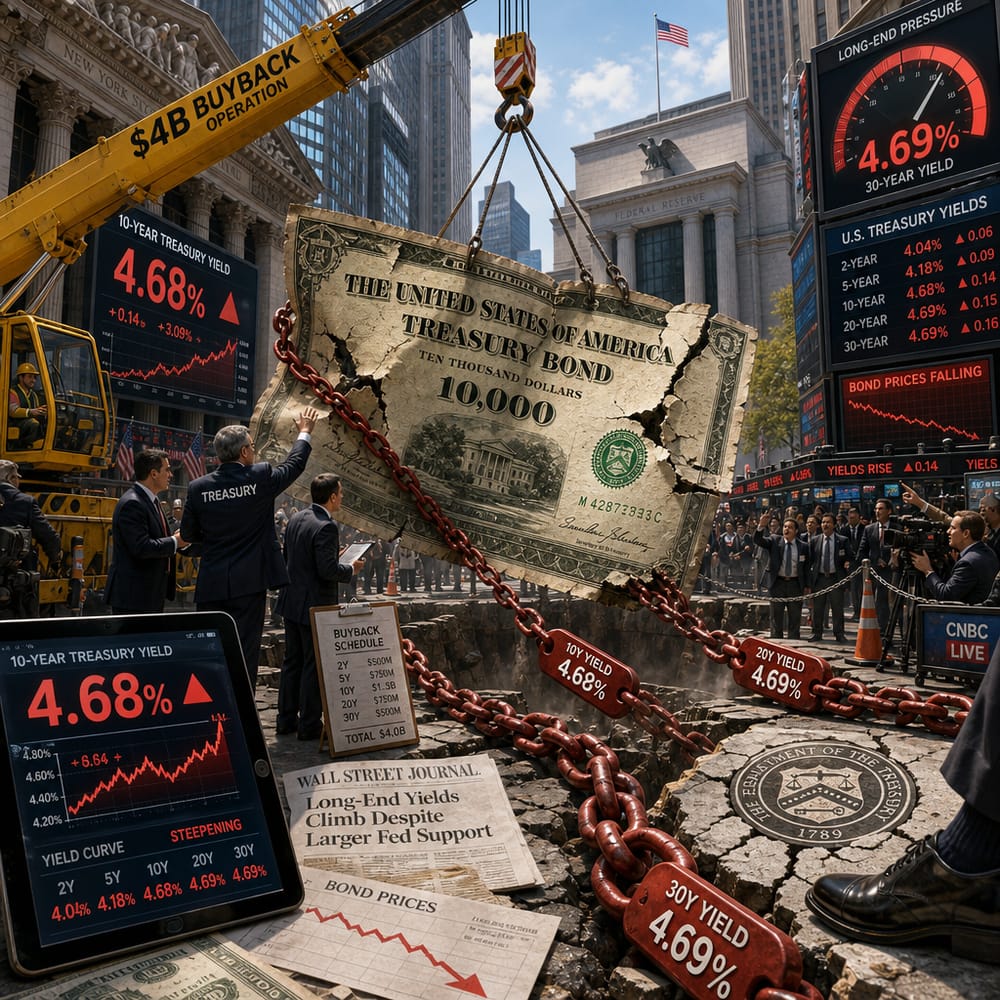
TREASURY BUYBACK PROGRAM: BOND MARKET STRUGGLE CONTINUES DESPITE EXPANDED FED INTERVENTION
If there's one thing that can make investors' hair stand on end faster than a Tesla on ludicrous mode, it's a spike in Treasury yields. And boy, have Treasury yields been doing their best impression of a SpaceX launch lately. Despite Uncle Sam's best efforts to throw money at the problem — doubling the size of its long-term bond buyback to at least $4 billion a pop — those pesky long-end yields have thumbed their noses at intervention, stubbornly climbing back to the 4.65%-4.69% zone.
The U.S. Treasury, in an attempt to soothe frayed nerves, thought doubling down on its bond buybacks would act like a financial pressure valve. But instead of being the hero in this bond market saga, it's looking more like a background extra, barely making a dent in the rising yield drama. So, what gives?
WHY DID THE TREASURY'S INTERVENTION FAIL?
Think of it like this: the Treasury's intervention was supposed to be the financial equivalent of a Netflix release — lots of hype and a big splash. But investors are treating it more like a rerun of an old sitcom, no matter how much the Treasury pumps up the volume. The main issue is that inflation fears are still bubbling away on the back burner, despite the Treasury's efforts to play firefighter.
The bond market, much like a cat that doesn't want to be corralled, is skittish about persistent inflation and the possibility that the Fed might keep interest rates higher for longer. Investors are demanding higher yields to compensate for inflation risks, and no amount of Treasury buyback wizardry seems capable of conjuring those fears away.
ONWARD, UPWARD: THE YIELDS' RISE AND SHINE
Let's break down the implications of those rising yields a bit more. Rising yields might sound like a song reserved for finance nerds, but they have a very real impact on everyday folks. When Treasury yields climb, they raise the cost of borrowing all around. Mortgages, car loans, even those pesky credit card rates can start to creep upward in sympathy.
And in the grand symphony of the economy, this can slow down consumer spending and corporate investment, acting like a financial wet blanket on economic growth. Plus, with borrowing costs once again on the rise, it seems like the proverbial can has finally hit the wall, leaving no more road for kicking.
LOOKING AT THE BIG PICTURE
So, where do we go from here? Rising yields, while a bit like your annoying alarm clock on a weekend morning, serve an important purpose. They're a wake-up call for the economy. They impact not just borrowing costs, but also the stock market, which tends to do the jitterbug whenever yields jump.
For the retail investor scrolling through their phone, this means staying alert. The bond market is sending signals that the economy might need to slow its roll, which could mean more volatility ahead in stocks, bonds, and beyond. It's a reminder to keep an eye on the broader picture, even if it means wading through some economic weeds.
FUTURE POLICY MEASURES: WHAT'S NEXT?
With the Treasury's intervention failing to have the desired effect, the ball is now back in the Fed's court. Will they step up their game and take more aggressive measures to curb these relentless yield hikes? That remains the $64,000 question.
The long-term effects of persistently high yields could push the Fed to consider other tools in its monetary policy toolbox. These might include further interest rate cuts — if inflation cooperates — or even more unconventional policy measures if the situation becomes dire enough.
As retail investors, the key takeaway is to stay informed and flexible. The bond market might seem like a distant, complex entity, but its ripples are felt across the entire financial landscape. So, as you enjoy your weekend latte, remember to keep one eye on those Treasury yields. They're more than just numbers—they're a lens into the economic future.
This article is for informational purposes only and is not investment advice. Always do your own research or consult a licensed financial professional before making investment decisions.
© Copyright 2024. All Rights Reserved.
© Copyright 2024. All Rights Reserved.