

Treasury Bond Yields Rise
Thursday, August 20, 2026
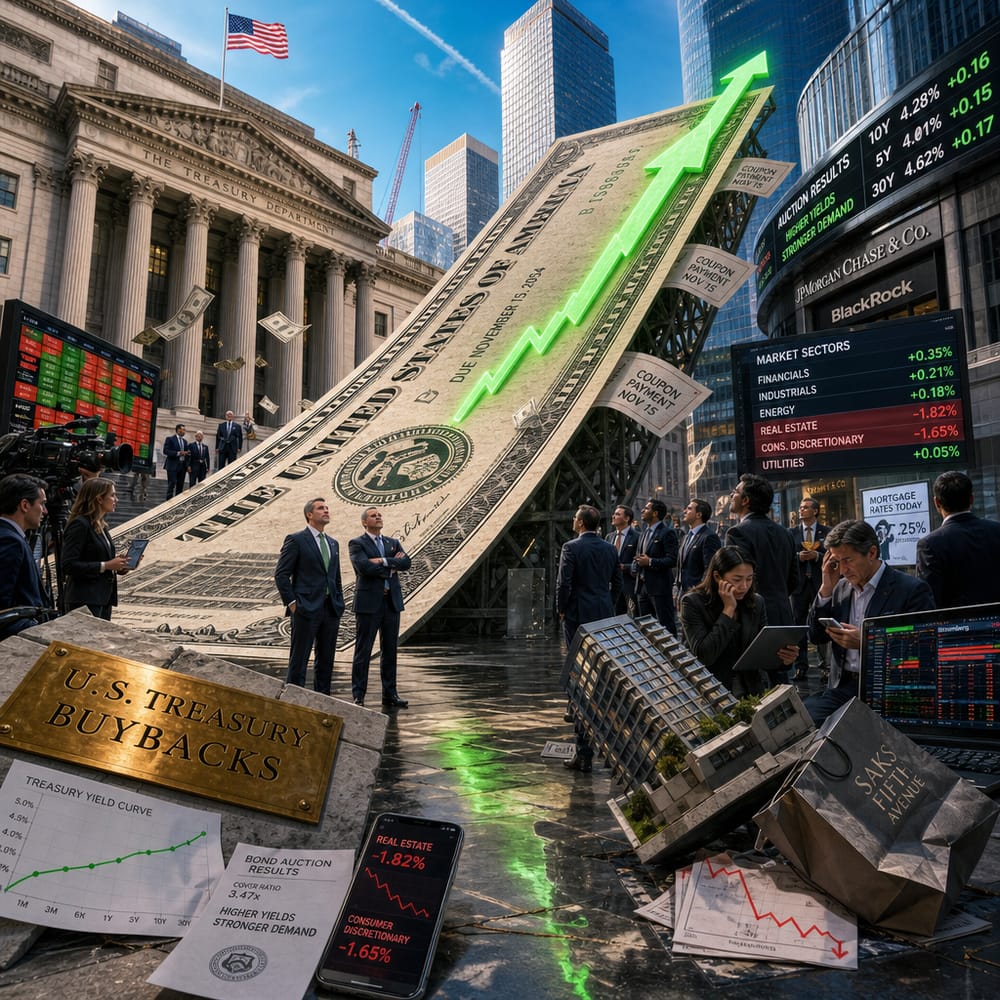
WHY TREASURY YIELDS ARE SENDING THE STOCK MARKET INTO A TAILSPIN
What goes up must come down, or so they say. But when it comes to Treasury yields, what goes up can send stock investors scrambling for cover. If you're wondering why your portfolio's been acting like it drank a triple shot of espresso this week, it's time to talk Treasury bond yields. They've been climbing faster than a cat up a tree, and the ripple effects are shaking things up across the market.
THE BIG BOND BUMP
So, what's got bond yields on the rise? On Wednesday, the Treasury Department decided to up the ante on its bond buyback program. We're talking about doubling down on long-term debt repurchases like it's a blackjack game. Long story short, yields on those 10-year and 30-year Treasurys jumped back up within a day, erasing any pullbacks they had after the announcement. And when bond yields go up, they bring a whole circus of consequences with them.
Rising yields have a classic move—sending interest-rate sensitive sectors like financials, real estate, and consumer discretionary stocks into a nosedive. The Dow Jones didn't take kindly to the news, dropping a whopping 337 points. And it wasn't just the Dow; the tremors were felt across the S&P 500 and Nasdaq too. Why? Because higher Treasury yields often mean higher borrowing costs, which can be a real pain in the pocket for these sectors.
SECTOR SHAKE-UP
Let's break it down. Financial stocks, for instance, generally love a good yield hike—they get to charge more on loans. But there's a catch: When yields rise too fast, it can trigger fears of an economic slowdown, and that's bad news for banks. Then there's the real estate sector. Higher yields mean higher mortgage rates, which typically cools the housing market faster than you can say "open house." And don't even get me started on consumer discretionary stocks. Higher interest rates mean consumers have less disposable income to splurge on non-essentials.
THE INVESTOR'S DILEMMA
With the yield storm brewing, investors might need to rethink their game plan. Typically, higher yields make those shiny Treasury bonds more attractive. Why bother with risky stocks when you can score a decent return with government bonds? It’s like choosing a guaranteed bag of potato chips over a mystery box of cookies—comfort food for the cautious investor.
But it’s not just about shifting to bonds. Investors might also be eyeing shorter-duration assets. These are investments that mature sooner and are less sensitive to interest rate changes. Think of them as the express lane at the grocery store—quick in, quick out. They’re appealing because they minimize interest rate risk when long-term yields are climbing.
LONG-TERM MARKET MUSINGS
Now, before you bolt to your broker, let's chew over the potential long-term impacts. Rising yields have a way of pushing the 'pause' button on the stock market's party. Stocks that have enjoyed the low-rate punch bowl might see valuations shrink as investors recalibrate expectations for growth and profitability.
Financial pundits often debate whether rising yields suggest a healthy economy or a harbinger of doom. Some argue it's the former—a sign that inflation is under control and the economy is chugging along. Others warn it could stunt growth if rates rise too fast, spurring fears of a recession.
SO, WHERE TO NEXT?
How should a savvy retail investor navigate these choppy waters? Stay informed, stay agile. Diversification is key—spread your bets across sectors and asset classes. Keep an eye on earnings reports and economic data, which could give clues about which direction rates—and by extension, the market—are headed. And remember, while rising yields might seem like a headache now, they’re part of the market's natural ebb and flow.
In the meantime, go ahead and pour yourself that extra cup of coffee. It's going to be a wild ride, but who said investing was supposed to be boring?
In the rollercoaster world of finance, nothing stays the same for long. Keep your seatbelt fastened, and enjoy the ride.
This article is for informational purposes only and is not investment advice. Always do your own research or consult a licensed financial professional before making investment decisions.
© Copyright 2024. All Rights Reserved.
© Copyright 2024. All Rights Reserved.