

Treasury Bond Volatility Amid Buyback Efforts
Friday, August 21, 2026
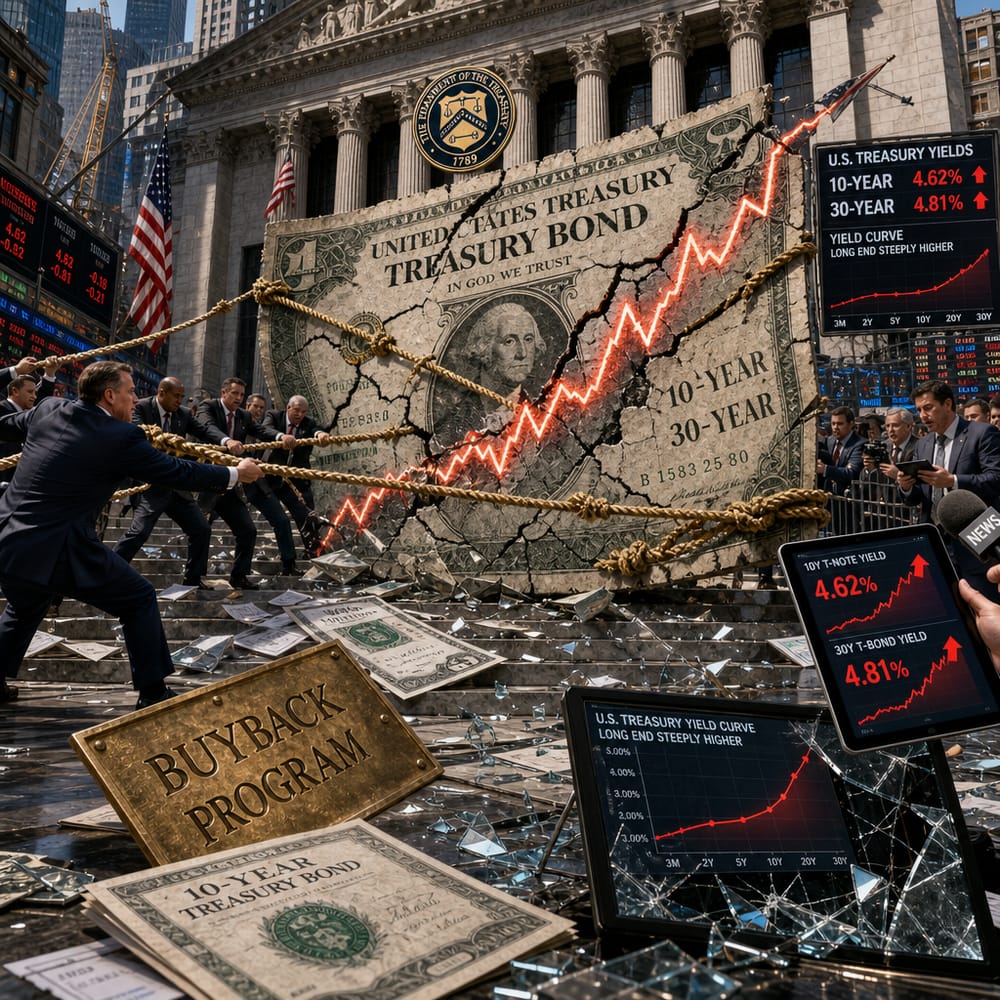
TREASURY BOND VOLATILITY AMID BUYBACK EFFORTS
Ladies and gentlemen, gather 'round, because the U.S. Treasury market is serving up more drama than your favorite reality TV show. Despite Uncle Sam pulling out his wallet for a bond buyback spree, long-term Treasury yields are pulling a diva move, saying, "Thanks, but no thanks," and continuing their climb. If you think this doesn’t affect you because you’re not a bond trader, think again. This volatility is shaking up borrowing costs, dropping questions like confetti about how well these government interventions really work.
WHY ARE LONG-TERM YIELDS RISING?
Normally, when the government buys back bonds, it’s like a love letter to the bond market, saying, "We’ve got your back, we want you to feel special, so here, let’s reduce some supply." Less supply usually means higher prices and lower yields. But this time, bond investors are acting like they’ve seen this movie before, and they’re not impressed.
One reason could be the fear of inflation. With oil prices marching upward like they’ve got a vendetta, investors are worried the cost of living is going to follow suit. This inflation anxiety makes those long-dated bonds seem about as appealing as last year’s holiday fruitcake. So, yields go up as prices go down, because investors demand more return for the risk they’re taking.
Another reason? The massive U.S. debt load. The market's worried that the government’s borrowing binge could lead to a debt parade that no one wants to watch. Bigger debt could mean higher future interest rates, and investors are adjusting to this "new normal" by demanding higher yields now.
IMPACTS ON BORROWING COSTS
So, what happens when these yields are doing the cha-cha up the chart? Well, think of the 10-year Treasury yield as the marathon runner that sets the pace for a relay team. It’s the benchmark for everything from mortgages to student loans. As it rises, so do those interest rates. Homebuyers might find their dream house slipping just out of reach if their mortgage rates go from a leisurely jog to a brisk sprint. That white picket fence might need to wait another year.
And let's not forget corporate borrowing. Businesses that were eyeing expansion like an eager kid with a lemonade stand might suddenly find themselves looking at higher costs to fund their growth. Those increased costs might get passed down the line — to you, the consumer.
WHAT ABOUT THE HOUSING MARKET?
The U.S. housing market is already walking a tightrope, and rising yields are the gusts of wind threatening to knock it off balance. Mortgage rates are tied to Treasury yields, specifically the 10-year note. As yields rise, so do mortgage rates, which could cool a red-hot housing market faster than a bucket of ice water.
For potential buyers, this means higher monthly payments, which could sideline some from entering the market. For current homeowners, it might mean reconsidering that refinance they were hoping for. Real estate agents? They might see fewer bidding wars and more price reductions. The whole market might just downshift from ludicrous speed to a more reasonable cruise, which isn't necessarily bad but could have spillover effects across the economy.
SO, IS THIS ACTUALLY WORKING?
The million-dollar question: Are these buyback efforts doing their job, or is the Treasury just spinning its wheels? It's a bit of a mixed bag. The buyback program is a sign that the government is attentive and willing to act, but the effectiveness is being overshadowed by other macroeconomic factors like inflation fears and the looming debt ceiling drama.
Long-term bond yields are like that stubborn kitchen drawer that won’t close because it’s full of all the world’s problems. The Treasury is trying to tidy things up, but it seems they might need a bigger broom — or a new strategy.
In the end, whether you’re a homeowner, a business owner, or just someone trying to figure out how to manage your budget, keep your eyes open. The government’s bond market gymnastics are more than just numbers on a screen; they’re ripples that touch the shorelines of everyday life. So, as the yields and bonds continue their wild ride, stay informed, stay sharp, and maybe, just maybe, keep an eye on what's next on the financial stage. Because in the world of money, there's never a dull moment.
This article is for informational purposes only and is not investment advice. Always do your own research or consult a licensed financial professional before making investment decisions.
© Copyright 2024. All Rights Reserved.
© Copyright 2024. All Rights Reserved.