

Treasury Bond Sell-Off Undoes Calm: Rising Yields Reignite Equity Weakness
Friday, August 21, 2026
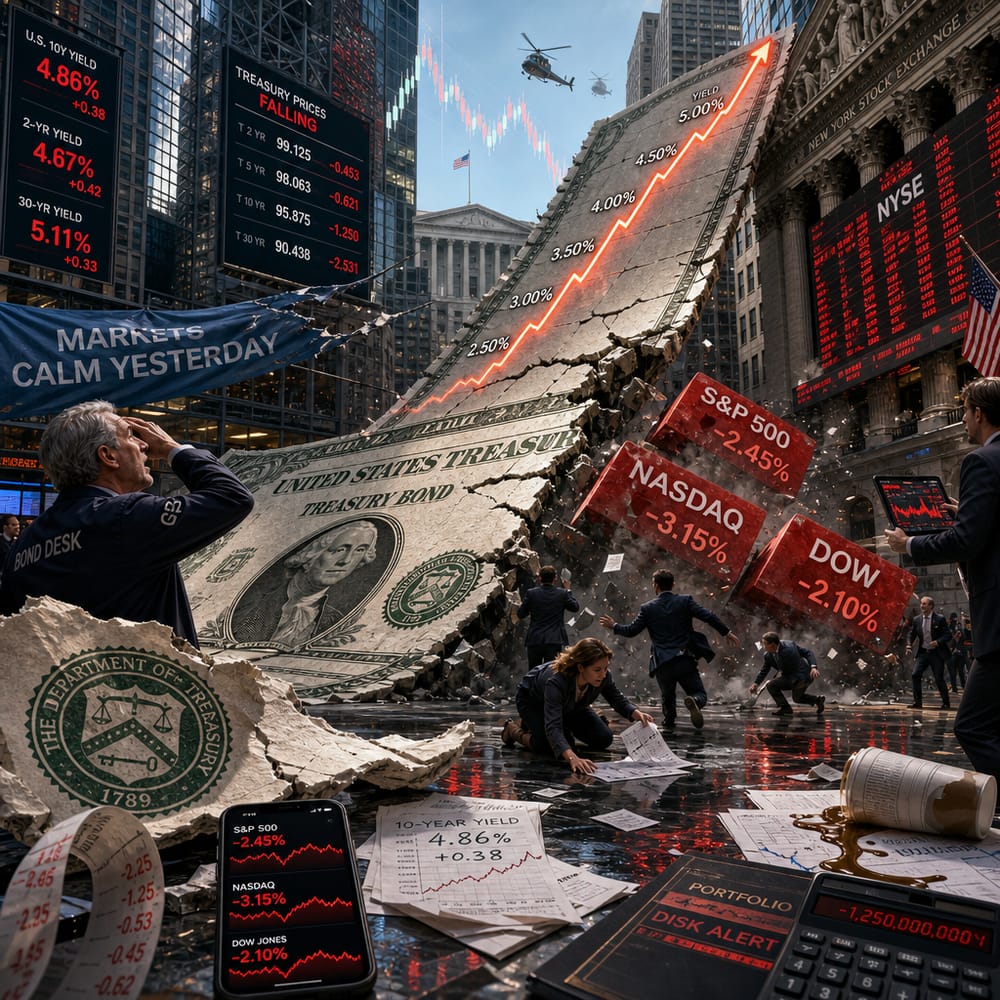
THE YIELD THAT ROARED: TREASURY BONDS SHAKE UP WALL STREET
You know things are getting serious when even the word "yield" grabs headlines. On August 20, Treasury yields jumped like a cat on a hot tin roof, shivering the timbers of equity markets everywhere. Gone was the fleeting relief investors felt just the day before. Instead, Wall Street braced itself as rising yields unleashed a bearish bite into the S&P 500, the Nasdaq, and the Dow. All three indices took a nosedive, like a trio of synchronized divers hitting a pool of icy uncertainty.
So, what's the big deal with these yields anyway? Picture this: yields are like the interest rate candy that Treasury bonds give to investors, and when that candy gets sweeter, it suddenly tastes more appealing than a bland stock market salad. Rising yields can cause borrowing costs to shoot up faster than a bottle rocket on the Fourth of July. It makes it pricier for companies to fund expansions, and it puts a dampener on stock valuations, particularly for high-growth sectors like tech, which have been riding high on a wave of low rates.
For the S&P 500, it was a rough day at the office, dropping by 0.9% and leaving investors clinging to last week’s gains like a toddler clutching a favorite toy. The Nasdaq didn't fare any better, dipping 1% as tech stocks got caught in the yield crossfire. And then there's the Dow—down 1.8% for the week, it’s now on track for two weeks of consecutive losses. If you’re wondering why your portfolio's been acting like a seesaw lately, you can thank those jittery yields for the roller coaster ride.
But why do these yields feel like the sky is falling? Well, here's the tea: rising yields suggest that investors expect higher interest rates in the future. That forecast can send shivers down the spine of growth stocks, which rely heavily on cheap borrowing costs to fuel expansion and innovation. Higher borrowing rates can quickly turn those blue-sky growth projections into storm clouds.
Fed watchers, take note. Rising yields might just make the Federal Reserve reconsider its plans. The Fed's been in a tug-of-war with inflation, trying to decide whether to raise or lower interest rates in an economic trifecta that includes employment, inflation, and market stability. Higher yields could push the Fed to ease off on rate hikes, a decision that would have ripple effects across the economy like a pebble thrown into a still pond.
In the grand chess game of finance, every move comes with its own set of consequences. As investors shift their focus from stocks to bonds, the pressure cooker heats up for equities, especially the tech giants who find themselves cornered by rising financing costs. If the bond market continues to flash its high-yield signal, the Federal Reserve might just be asked to step into the ring and call a temporary halt to rate hikes.
But let's not ring the doomsday bells just yet. The market is a resilient beast, adapting and evolving, ever ready to bounce back. Just as quickly as yields can rise, they can also fall, and with them, the fortunes of the stock market may turn once more.
Investors, keep your eye on the Fed, and maybe hold off on that yacht purchase until the storm passes. In the meantime, remember that turbulent times on Wall Street often contain a silver lining—opportunities for those who stay informed and nimble. So, keep your wits about you, because in this market, today's turmoil can become tomorrow's triumph.
This article is for informational purposes only and is not investment advice. Always do your own research or consult a licensed financial professional before making investment decisions.
© Copyright 2024. All Rights Reserved.
© Copyright 2024. All Rights Reserved.