

Treasury Bond “Lifeline” Halts Market Slide
Saturday, August 22, 2026
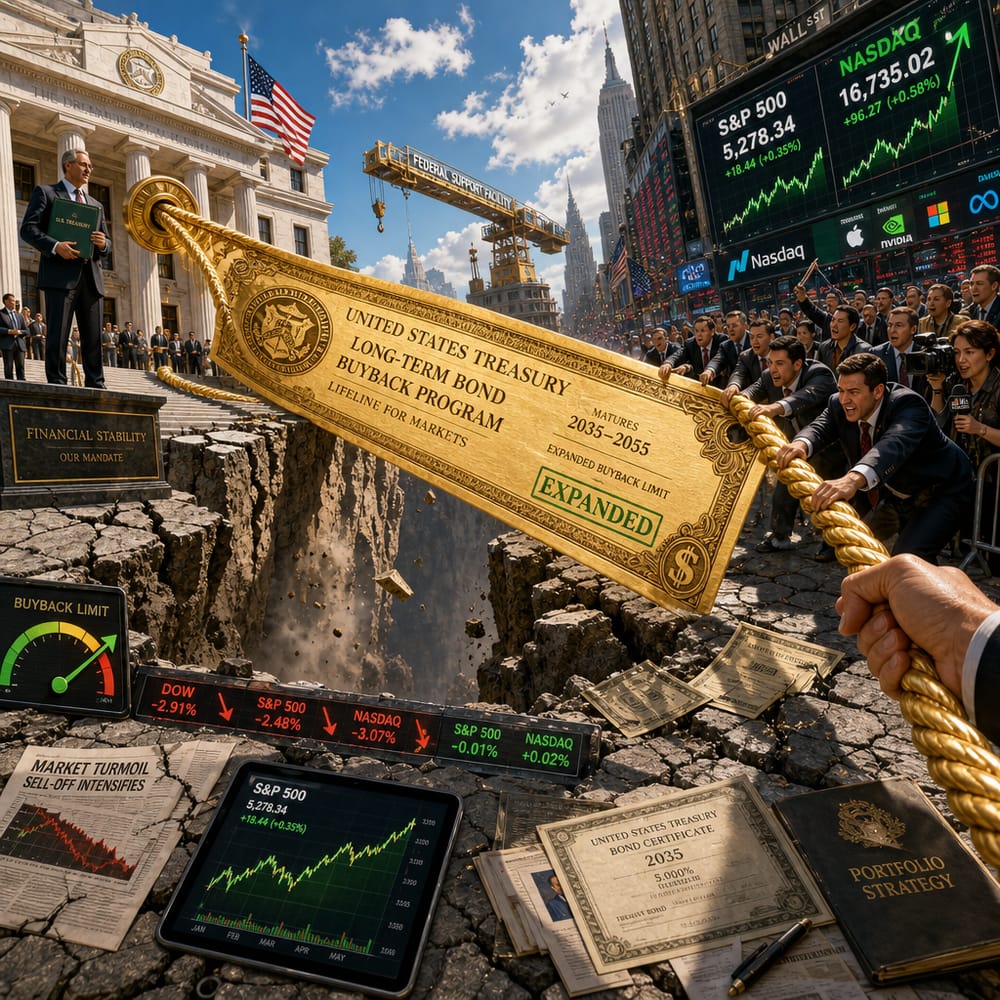
THE TREASURY'S BIG GAMBLE: CAN BOND BUYBACKS TRULY CALM THE STORM?
The U.S. bond market has been on a rollercoaster ride, and Treasury Secretary Scott Bessent just threw a lifeline. He expanded the long-term bond buyback limit, and suddenly, the markets are breathing a bit easier. But here’s the real question: is this a momentary sugar rush, or does Uncle Sam have a long-term strategy to stabilize the economy?
When the Treasury decided to up its buyback game, it was like throwing water on a financial bonfire. The S&P 500 and Nasdaq took a breather from their anxiety-fueled swoon, showing that a little government intervention can send shockwaves of optimism through Wall Street. Investors are always looking for a reason to be cheerful, and this was a pretty good one. But before you start planning your retirement on these feel-good vibes, let’s dig deeper.
TO INTERVENE OR NOT TO INTERVENE?
You've got to hand it to the Treasury. They saw the market volatility, pulled out their checkbook, and said, "Let's give these investors something to smile about." But here's the kicker: while this move puts a temporary band-aid on the bleeding, it doesn’t address the underlying issues plaguing the bond market—rising inflation and a growing national debt that could make even the most seasoned economist break a sweat.
The S&P 500 is having a moment, and not necessarily a good one. Sure, low-cost index funds have been the toast of the town for the past decade, but their recent performance has some investors eyeing the exit. The concentration in tech stocks is flashing warning signs reminiscent of the dot-com bubble, and this economic jitteriness is not going away overnight. So, the Treasury’s intervention is less of a solution and more of a "Hold my drink while I figure this out" moment.
THE BIG QUESTION MARK
And here's the million-dollar question: how sustainable are these interventions? Expanding the bond buyback limit is a tool in the economic toolbox, but it’s not a magic wand. While it boosts market confidence in the short term, the U.S. Treasury can’t play the hero every time the market catches a cold. Persistent inflation and debt issues are not just going to pack up and leave because the Treasury stepped in for a cameo.
Think of it this way: if the markets are a party, the Treasury just showed up as the DJ, getting everyone back on the dance floor. But at some point, the music stops, and investors have to face the reality of underlying economic challenges. This intervention is a short-term win, but if inflation continues to rise and the debt pile grows, the next downward market spiral could be just around the corner.
FISCAL POLICY FUTURES
Then there’s the matter of future fiscal policy. The Treasury’s current approach is akin to a kid sticking their fingers in a leaking dam. It’s a temporary fix, and without more sustainable long-term strategies, it may not hold up. Imagine walking a tightrope with inflation on one side and debt on the other—now that’s a balancing act. If the current trajectory continues, we might see more aggressive fiscal policies that aim to tackle these head-on rather than constantly react to market swings.
In an economy that's been as unpredictable as the weather, one intervention does not define a fiscal strategy. The Treasury’s move to increase bond buybacks shows they’re willing to act, but this can't become the go-to whenever markets show signs of fatigue. A clear, long-term fiscal policy is essential for maintaining investor confidence and economic stability.
SO, WHAT'S NEXT?
Look, the markets are relieved, and that’s great news for your portfolio—for now. But as we sip our coffee and watch the markets, it’s crucial to keep an eye on the bigger picture. The Treasury's recent move is a step, but it doesn’t solve the core economic puzzles we face. Investors would do well to stay informed, diversify, and remember that while market interventions can provide temporary stability, they're not a cure-all.
As we ride this financial wave, the balance between intervention and long-term strategy will be critical. So keep those seatbelts fastened. The Treasury's lifeline is a welcome gesture, but the real challenge will be steering this ship through the stormy seas of economic uncertainty ahead.
This article is for informational purposes only and is not investment advice. Always do your own research or consult a licensed financial professional before making investment decisions.
© Copyright 2024. All Rights Reserved.
© Copyright 2024. All Rights Reserved.