

Treasury Bond Buybacks Fail to Contain Long-Term Yields
Wednesday, August 26, 2026
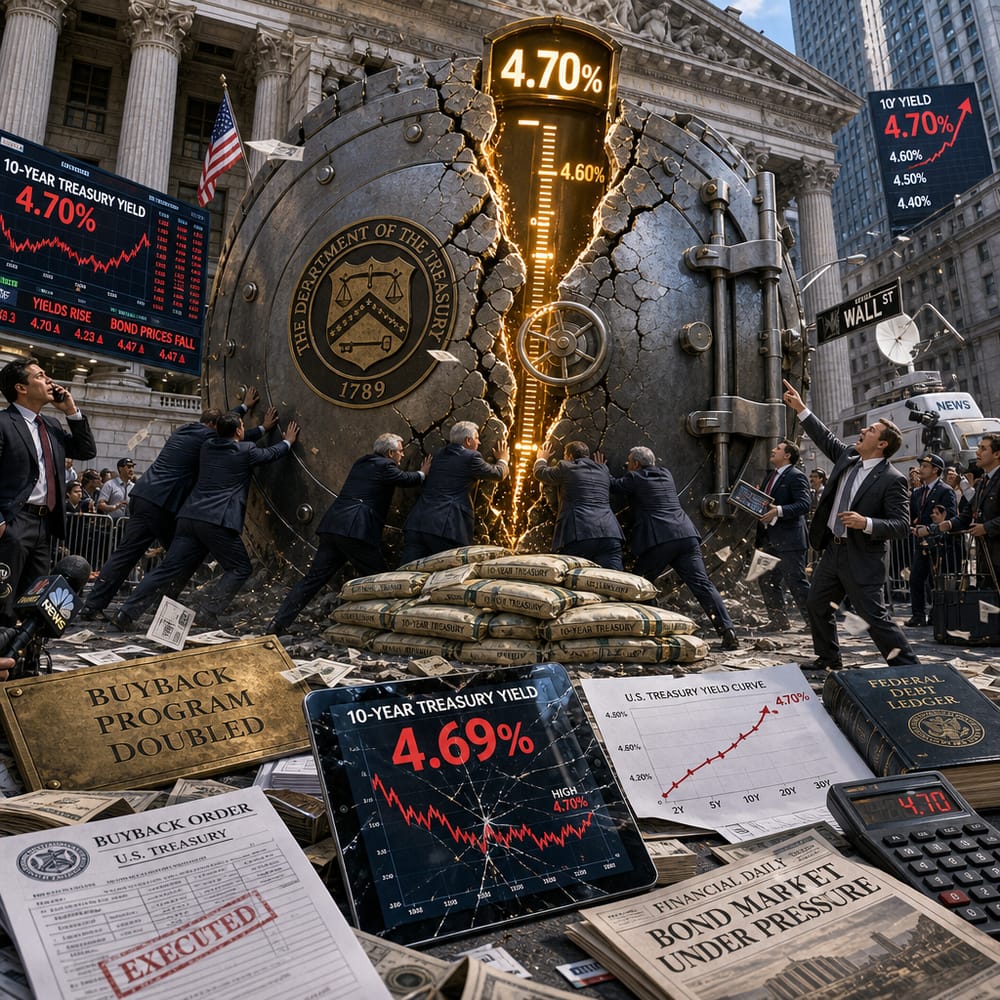
If you thought U.S. Treasury bonds were the safest bet, think again. Recently, the 10-year Treasury yield spiked back up near 4.69%–4.70%, even after the Treasury Department went into overdrive, doubling its bond buyback program. It was supposed to be the equivalent of giving the market a soothing cup of chamomile tea; instead, it’s like it chugged a quadruple espresso. So what's the deal?
Imagine the Treasury Department as a giant shop trying to buy back its products to drive demand and lower the interest payout — a bit like trying to get rid of last season’s fashion at a discount. Well, turns out the market isn’t biting, and that’s got everyone scratching their heads. What's up with this stubborn yield? The bond market is like a giant, moody teenager, and it's not playing nice.
WHY ARE BOND BUYBACKS NOT REDUCING YIELDS?
Firstly, the market's got a trust issue. Higher yields usually mean investors want a bigger reward for the risk they’re taking. They’re worried about government deficits and how much more debt Uncle Sam might rack up. Treasury’s buybacks are like putting a Band-Aid on a broken leg — the problem is bigger than a quick fix. Plus, there’s the issue of debt sustainability, which is making investors jittery.
Also, the Federal Reserve’s past actions have created a cautious climate. Remember those rate hikes? The market hasn’t forgotten, and it’s watching every move like a grumpy cat eyeing its owner. The Fed needs to walk a tightrope, balancing supporting economic growth with fighting inflation. And right now, bond investors aren’t convinced it’s pulling off the feat.
WHAT DOES THIS MEAN FOR FUTURE FED POLICY?
The big brains at the Fed are probably sweating bullets. Rising yields might coax them into pausing any plans for rate hikes, but will they resort to a cut? That's the trillion-dollar question. If they raise rates, it could cool the economy too much. But if they signal a pause or cut, it might calm the bond market — or not. It's like trying to play whack-a-mole with a blindfold; you hit one problem, and another pops up.
The Fed’s response will be crucial. They’ve got to keep inflation in check without throwing the economy under the bus. The bond market's tantrum serves as a reminder that their decisions echo beyond Wall Street and into Main Street.
HOW MIGHT THIS AFFECT CONSUMER BORROWING COSTS?
Hold onto your wallets, folks. Higher Treasury yields often mean interest rates across the board go up. That includes everything from your mortgage to your credit card bill and even the loan for that brand-new car you've been eyeing. The higher yields mean the government has to offer sweeter deals to get folks to buy bonds, and that cost trickles down to you.
Imagine trying to buy a home. A higher 10-year Treasury yield could mean the difference between affording that beautiful three-bedroom with the white picket fence or settling for a fixer-upper. It doesn’t just end there; companies might find borrowing more expensive too, which could impact everything from your favorite brand’s next big product to your job if the company tightens its belt.
In short, the Treasury’s bond buybacks are proving to be the financial equivalent of shouting into the void. The market’s not responding as expected, and that spells uncertainty for everyone — from the Federal Reserve to Joe and Jane Investor at home. So what’s next? Expect some serious strategizing from the Fed, and maybe tighten your budget a bit. We’re living in turbulent times, and the ripples could touch every corner of your financial life.
This article is for informational purposes only and is not investment advice. Always do your own research or consult a licensed financial professional before making investment decisions.
© Copyright 2024. All Rights Reserved.
© Copyright 2024. All Rights Reserved.