

Treasury Bond Buyback Sparks Midweek Bounce in Equities
Friday, August 21, 2026
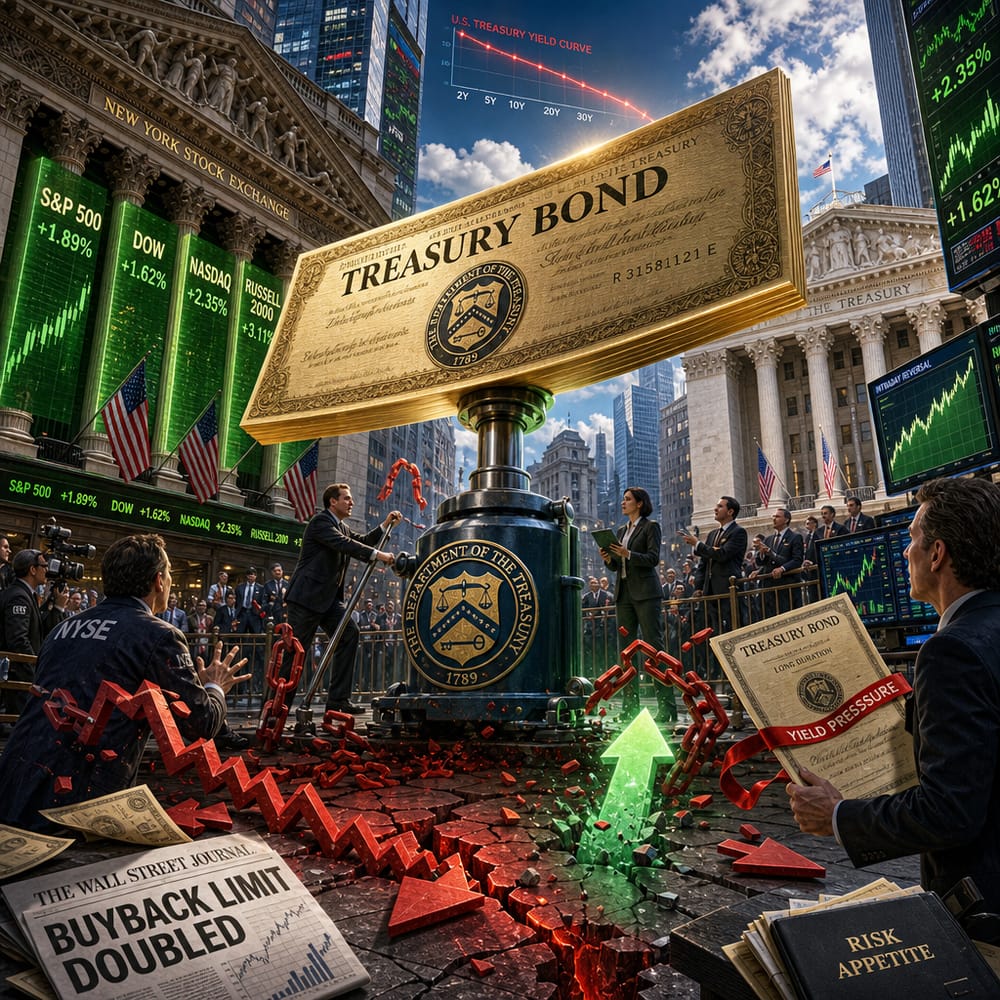
A midweek bounce can feel like a sip of lemonade on a hot summer day—refreshing, unexpected, and very much needed. As the calendar page flipped to this past Wednesday, Wall Street got its metaphorical sip, courtesy of the U.S. Treasury. With a bold move to double its long-term bond buyback limit, the Treasury not only stabilized the bond market but also brought a sigh of relief to equity investors, sizzling with fears over rising Treasury yields. The result? A heartening rally across major indices, just as they seemed poised to tumble off a cliff.
If you're wondering how a decision about bonds can sway stocks, let's break it down. When the Treasury bonds—the boring, predictable part of your investment cocktail—start to look riskier, investors often panic like they're watching a horror movie alone at night. Recently, climbing Treasury yields, like the ghostly villain in this thriller, have been haunting the markets, driving a sell-off as investors fretted over inflation and interest rate hikes. Higher bond yields mean higher borrowing costs and tighter financial conditions, which can slow economic growth. Not exactly the kind of bedtime story equity investors enjoy.
Enter the Treasury's announcement of a long-term bond buyback. This move is akin to changing the channel—offering investors a break from the horror flick and presenting a rom-com instead, inducing some much-needed laughter and relief. By doubling the buyback limits, the Treasury effectively signaled it was committed to supporting the bond market, reining in those runaway yields. This reassured investors, who then felt emboldened to dip their toes back into the equity waters.
So, what happens when investor sentiment turns from fear to hope? Well, the S&P 500, Dow, and Nasdaq, like concert-goers at a surprise encore, surged in joy. Futures on these indices rose smartly, with the Dow jumping 375 points, the S&P 500 climbing 0.5%, and the Nasdaq notching a 0.8% gain. It was like a group hug on Wall Street.
But there's more to this story than just a one-day market rally. The Treasury’s intervention might seem like a quick fix, but its effects on the bond market could resonate well into the future. For one, stabilizing Treasury yields can avert a full-blown crisis of confidence. If the yields go unchecked, they could spiral into the dreaded realm of financial instability, wreaking havoc on everything from mortgages to corporate loans. By stepping in, the Treasury essentially set a floor under the bond market, making it less likely to cause a ripple effect of financial distress.
Moreover, the move could also lead to a prolonged period of lower yields, giving stocks room to breathe and grow. Companies can borrow at cheaper rates, which can lead to increased investment in growth and expansion—think of it like a shot of espresso for the economy's productivity levels. More borrowing, more growth, more jobs. It's the economic wheel turning smoothly again.
Of course, nothing is ever straightforward in finance. The Treasury's action, while calming in the short term, also raises questions about the long-term implications for the bond market. Are we kicking the can down the road, delaying an inevitable reckoning with high national debt levels? Will this lead to increased inflation down the line, as more money in the system could spark a spending spree? These are the questions that keep economic policymakers up at night.
For everyday investors like us, the takeaway is simpler. The Treasury's buyback move has given the stock market a temporary reprieve from its recent jitters. It’s a reminder that government interventions can, and do, play a crucial role in shaping market dynamics. Whether you're watching the S&P 500, Dow, or Nasdaq, this midweek bounce underscores the importance of staying informed and understanding how interconnected our economic systems truly are.
So, while the Treasury's buyback might feel like a hero's rescue, it's more of a team effort in an ongoing game. The markets—and us players—will be keeping a close eye on the next moves in this ever-evolving financial chess match. Stay tuned, stay sharp, and maybe keep a refreshing lemonade on hand for the next churn in the market tides.
This article is for informational purposes only and is not investment advice. Always do your own research or consult a licensed financial professional before making investment decisions.
© Copyright 2024. All Rights Reserved.
© Copyright 2024. All Rights Reserved.