

Treasury Bond Buyback Fuels Bitcoin's 20% Surge
Saturday, August 22, 2026
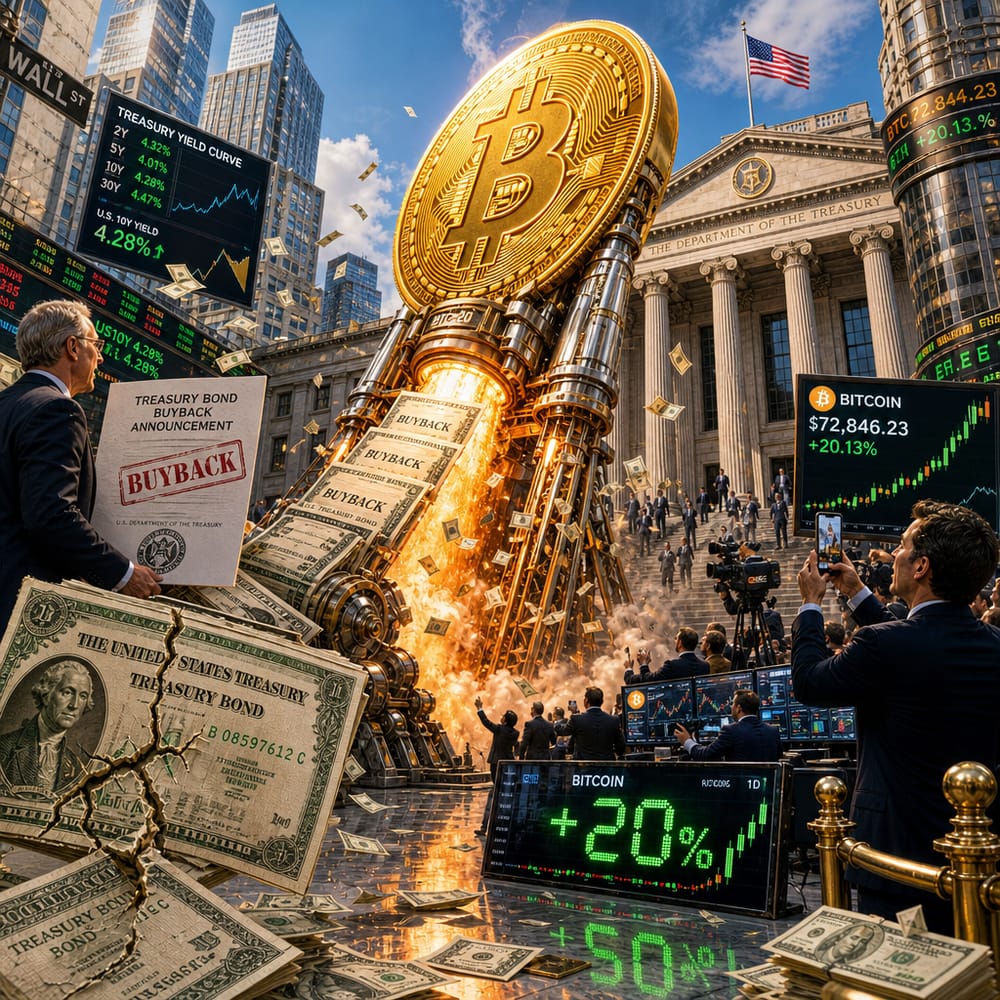
TREASURY BOND BUYBACK FUELS BITCOIN'S 20% SURGE
If you blinked last week, you may have missed Bitcoin's sudden sprint, taking a 20% leap in just a matter of days. What supercharged this digital rocket? None other than the U.S. Treasury and a little financial wizardry known as a bond buyback. Yep, you read that right—bonds, those stodgy financial instruments your grandpa always rambled about.
So, what’s the deal with bond buybacks? Put simply, the Treasury announced plans to swoop in and purchase some of its own bonds. Why, you ask? It's like cleaning up after a wild party—buying back bonds helps settle the mess from old debts and smooths out the financial system. But here's where it gets spicy. This move sent ripples through the economy, and those ripples became waves in the crypto ocean.
You see, macroeconomic events like these can make Bitcoin jittery—like a cat on an espresso binge. When the Treasury buys back bonds, it’s essentially pulling cash out from under the mattress and plopping it back into the financial system. This extra liquidity often means lower interest rates and, consequently, a softer dollar. And when the dollar sags, Bitcoin flexes its muscles. Why? Because Bitcoin, the rebellious teenager of the financial world, thrives as a hedge against traditional currency movements.
For those sipping their morning coffee and wondering why this matters, think of Bitcoin like that friend who always shows up when the drama is thick. When the traditional financial stage gets shaky, Bitcoin is there, often gaining value just as everything else seems to be wobbling. Sure, it’s volatile, and yes, it’s not always the sensible choice. But in times of economic uncertainty, Bitcoin stands out as a sort of digital gold—a hedge against the chaos of the macroeconomic world.
This latest surge isn’t just about numbers. It’s a signal that Bitcoin is solidifying its role as a financial hedge. With every move the Treasury makes, Bitcoin is watching—ready to react, jump, or even take a detour if the traditional market takes an unexpected turn. It’s like the market’s mood ring, reflecting the emotions of broader economic policies.
And what does that mean for you, dear retail investor? If you’re dabbling in crypto or thinking about it, understanding these macroeconomic signals could be your secret weapon. The Treasury’s policies, interest rate decisions by the Federal Reserve, and even international trade dynamics can all serve as tea leaves for Bitcoin’s next move. Buying a little Bitcoin might just make sense if you’re looking to diversify your financial portfolio or hedge against potential market downturns.
Of course, predicting Bitcoin’s behavior is like trying to guess the weather in the middle of a storm. But if history is any guide, similar events—from inflation spikes to interest rate rumors—could trigger future Bitcoin rallies. It’s the wild west of investing, with Bitcoin's price chart serving as the roadmap to potential gains.
However, let's not get ahead of ourselves. While Bitcoin loves a good macro drama, it’s not the only player in the crypto field. Investors should keep an eye on regulatory developments, tech advancements, and market trends. After all, in this crypto rodeo, it’s not just the bulls and bears you have to watch for; there are also wild cards like international digital currencies and decentralized finance platforms.
In a nutshell, for those of us hooked on the crypto rollercoaster, the Treasury’s bond buyback is a reminder. Bitcoin isn’t just a speculative asset. It’s a dynamic, reactive player in the global financial game. So next time you hear about bond markets or Treasury movements, don’t just scroll past. Bitcoin might just be gearing up to make another leap. And who knows? You might catch a ride on the next big surge.
This article is for informational purposes only and is not investment advice. Always do your own research or consult a licensed financial professional before making investment decisions.
© Copyright 2024. All Rights Reserved.
© Copyright 2024. All Rights Reserved.