

Treasury Bond Buyback Expansion
Wednesday, August 19, 2026
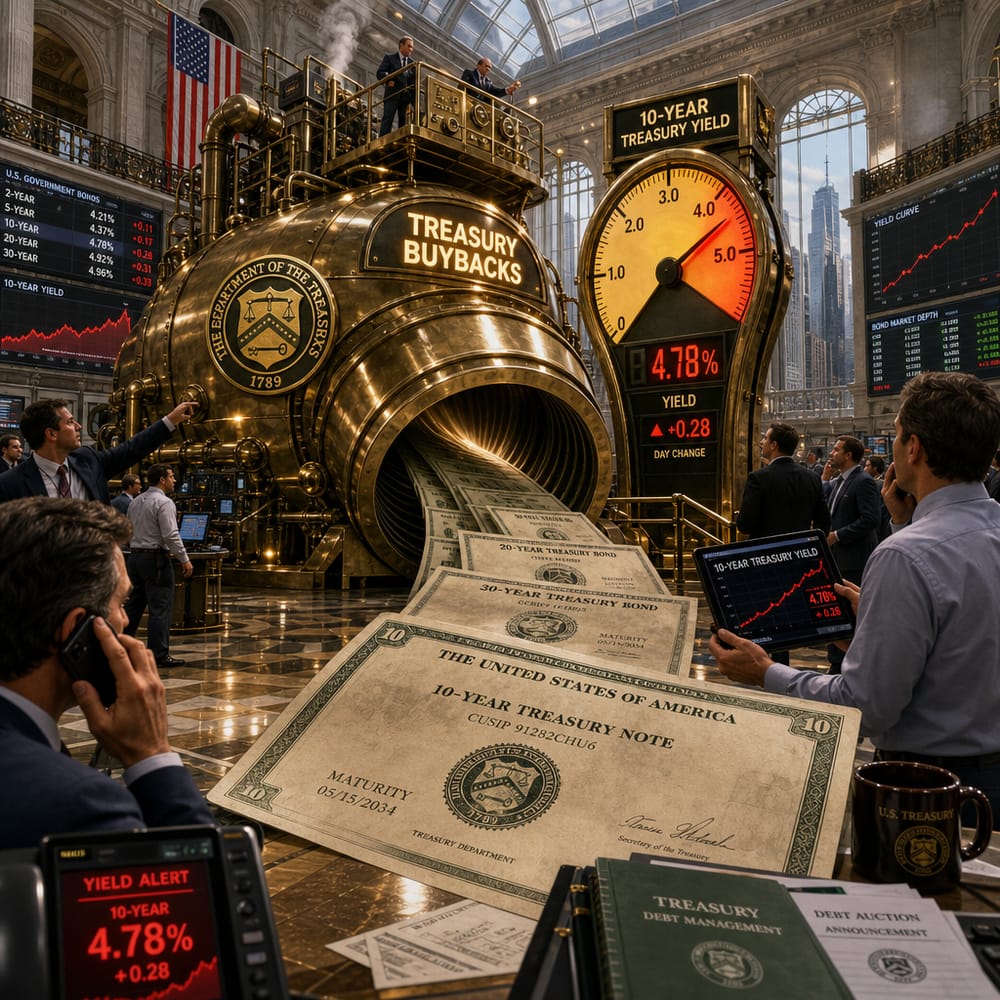
TREASURY BOND BUYBACK EXPANSION: WHY YOU SHOULD CARE ABOUT IT
Let’s talk about the U.S. Treasury's new favorite juggling act — the bond buyback expansion. Imagine the Treasury as the nation’s financial plumber, diving under the sink to tweak the pipes and keep the financial water flowing. So why is this plumber tinkering more than usual? It seems the bond market’s been acting like a teenager on caffeine, with yields (that’s the interest rates on bonds) rising like a loaf of sourdough in quarantine. But let’s break this down in a way that doesn’t cause you to snooze faster than a lullaby.
On stage is the U.S. Treasury, announcing an increase in long-term bond buyback operations. Fancy words, right? Essentially, they’re planning to reel in some of those long-term government bonds swimming in the market waters. Why? Because the cost of money — aka interest rates — has been inching upwards, and this move is all about keeping them in check. Like a diligent lifeguard at a crowded pool, they’re aiming to keep things safe and not let anyone go overboard.
HOW DOES IT WORK?
The mechanics of a bond buyback can seem like someone speaking in code, but here’s the real deal: when the Treasury buys back government bonds, it injects liquidity — that’s cold, hard cash — back into the market. This act of financial wizardry helps to bring long-term yields back down to earth. Think of it as the Treasury taking a big vacuum to the market, sucking up bonds to make the place less crowded, which helps relieve pressure and stabilizes those pesky yields.
WHAT ABOUT LONG-TERM YIELDS?
Ah, the million-dollar question. The big picture here is that by increasing buybacks, the Treasury hopes to keep long-term yields from making a mad dash upwards. If they succeed, borrowing costs for everyone from Uncle Sam to Joe Homebuyer might stay reasonable. So, while your fixed-rate mortgage might not drop to happy-hour levels, it won’t spike like concert tickets for a reunion tour either.
WHAT ABOUT FUTURE TREASURY ISSUANCES?
Here’s a nifty tidbit: fewer bonds in circulation today could mean a healthier position for the Treasury when it’s time to issue more debt in the future. Think of it like clearing out the closet before a big shopping spree. Less clutter now makes room for more later, and in financial terms, this could mean better conditions for the Treasury to issue bonds without sending yields through the roof.
THE HISTORY BOOKS: HOW DOES THIS COMPARE?
A little jaunt down memory lane: the Treasury has done buybacks before, but this time it’s like they’ve added a couple of extra taps to their dance routine. By expanding their buyback operations, they’re deploying a strategy akin to keeping a fully stocked first-aid kit on hand. It’s a precaution, a buffer, to make sure the market doesn’t get the wobbles.
FINAL THOUGHTS
So, why should you care if the Treasury is playing a game of financial Monopoly? Because those long-term yields affect everything from how much interest you pay on loans to how much the federal government spends on its debt. This isn’t just a game for Wall Street. Whether you’re in the stock market or not, these moves ripple down to Main Street and beyond.
Remember, in the world of finance, everything’s connected. A decision here can send shockwaves there. With the Treasury stepping up its buyback game, it’s like they’re adding some weight to the financial scales to keep things balanced. And who doesn’t love a little balance, especially in today’s topsy-turvy world? So, keep an eye on those yields and the Treasury’s moves — because, in the financial market, forewarned is forearmed.
This article is for informational purposes only and is not investment advice. Always do your own research or consult a licensed financial professional before making investment decisions.
© Copyright 2024. All Rights Reserved.
© Copyright 2024. All Rights Reserved.