

Treasury Bond Buyback Boost Lifts U.S. Equity Markets
Wednesday, August 19, 2026
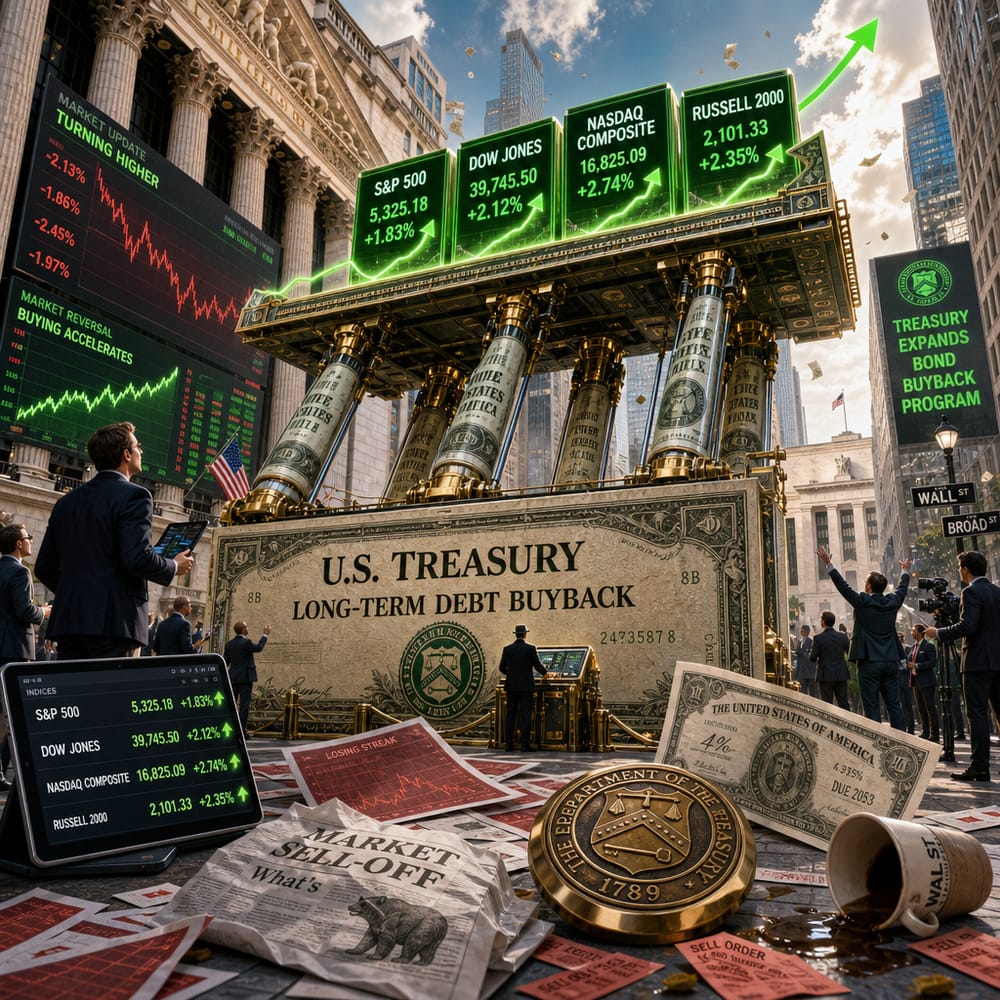
TREASURY BOND BUYBACK BOOST LIFTS U.S. EQUITY MARKETS
If the stock market were a reality TV show, the U.S. Treasury just played the role of savior, swooping in with a dramatic scheme to raise the stakes. This week, it announced plans to more than double its buyback of long-term bonds, throwing a lifeline to equity markets that have been drowning in a sea of red ink. The result? A much-needed boost, breaking a multi-day losing streak and giving investors something to smile about. But as applause fills the air, one question lingers: Is this intervention a quick fix or a long-term remedy?
Let’s rewind for a moment. The bond market has lately been about as stable as a toddler on a sugar high, with Treasury yields climbing to vertigo-inducing levels. This wasn't just a numbers game; it had real-world effects, igniting alarm bells across stock indices like the S&P 500, Dow Jones, and Nasdaq Composite. Investors watched nervously as their portfolios swayed like reeds in a storm. Enter the Treasury Department, stage left, with a plan to buy back 10-, 20- and 30-year bonds in larger quantities than we've seen in recent times.
This move is akin to a bartender cutting off the tequila shots and offering water instead—a necessary intervention to calm the madness. By stepping up its bond buybacks, the Treasury is attempting to balance the scales, ease borrowing costs, and prevent the yield spike from further stressing the financial system. For stock markets, this means a sigh of relief as bond yields, those pesky competitors for investor dollars, finally show signs of mellowing.
But is this fiscal intervention a magic wand or merely a temporary band-aid? Michael Schumacher, a former macro head at Wells Fargo, remains skeptical. "I'm still negative," he says, pointing out that the fiscal deficit is "yawning like a canyon." And he's not wrong. With the U.S. debt ballooning past an eye-watering $40 trillion, the idea that bond buybacks alone can resolve the systemic issues feels a bit like trying to plug a volcano with a cork.
Still, the immediate impact on market sentiment is undeniable. The S&P 500 finally broke its three-day losing streak, taking a brief, albeit sweet, breather. But for retail investors scrolling through their brokerage apps, the enduring question is whether this uptick is here to stay or simply a flicker on the radar.
The long-term implications of increased bond buybacks are far from a settled science. On one hand, these interventions can stabilize the market, create a more predictable interest rate environment, and encourage risk-taking, which is music to investors' ears. On the other hand, there's the risk of becoming too reliant on such measures—like a caffeine junkie depending on coffee to get through the day. If the bond market needs constant intervention to keep its cool, that raises red flags about the underlying fiscal health.
For investors, the key takeaway is to keep an eye on the broader fiscal picture. While the Treasury's buyback boost is a welcome reprieve, it's crucial to remember that market fundamentals haven't changed overnight. Budget deficits remain a looming shadow, and the ballooning national debt isn't just going to vanish because of a little fiscal maneuvering.
Ultimately, the efficacy of these interventions will be determined by how they interact with other economic factors—such as inflation, consumer sentiment, and global economic events. But for now, the Treasury has provided a moment of calm in the financial storm, and that's worth a nod of appreciation. Whether this is the start of a sustained rally or just a temporary surge is yet to be seen. Consider it a financial cliffhanger, keeping us all glued to the unfolding drama. Keep your portfolios balanced, your eyes sharp, and stay tuned.
This article is for informational purposes only and is not investment advice. Always do your own research or consult a licensed financial professional before making investment decisions.
© Copyright 2024. All Rights Reserved.
© Copyright 2024. All Rights Reserved.