

Treasury Bill Yields: Short-End Rally and Fed Speculation
Thursday, July 09, 2026
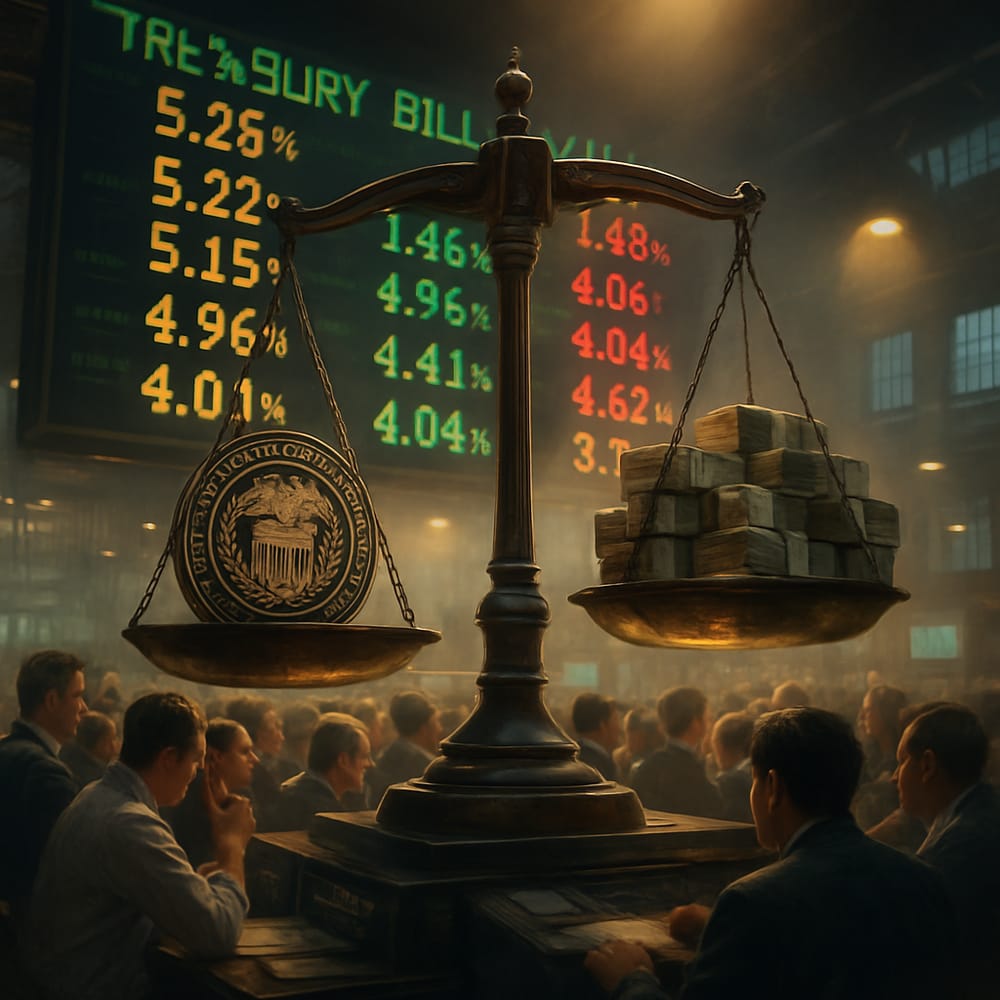
TREASURY BILL YIELDS: SHORT-END RALLY AND FED SPECULATION
If you’ve got your eye on the financial ball these days, you might have noticed something peculiar happening with short-end Treasury bill yields. They're on a tear, and that's got investors buzzing like bees in a honey factory about what the Federal Reserve might be up to next.
Now, if you're scratching your head wondering what a "short-end Treasury bill" even is, let me break it down. These are basically short-term loans to the U.S. government. Investors buy them with the understanding that Uncle Sam will pay them back with a smidgeon of interest, usually in three months to a year. They're about as safe as investments get, but when the yields — think of this as the return you get — start to spike, the usually sleepy Treasury market suddenly becomes the talk of the financial town.
So, what's driving the recent rally in these yields? A cocktail of economic signals and market jitters. First, the economic data is coming in hot. Inflation has been stickier than a New York summer, and the job market is resilient. With the U.S. economy showing strength, investors are betting that the Fed might keep interest rates higher for longer to cool things down. Remember, when the Fed hikes rates, it influences the yields on these bills, making them go up like the fizz in a shaken soda can.
But here’s the twist: The Fed has been cagey, dropping hints here and there but never showing its full hand. It's like they're in a poker game, and every investor is trying to guess whether they're bluffing about rate hikes or if they really mean business.
And why does it matter? Treasury yields are the thread that stitches together the fabric of the broader market. When short-end yields rise, it signals that investors expect higher rates and better returns in the future. It’s like a lighthouse guiding investors through the fog of market uncertainty. Higher yields can make stocks less attractive since they offer lower risk for a similar reward. In other words, why chase risk when safety is promising you a cushy return?
For the Fed, these movements are like a sneaky nudge. If the market is expecting higher yields, it may pressure the Fed into acting, or at least justifying their stance on rates. It’s a delicate dance of economic diplomacy, trying to balance growth, inflation, and market expectations. The Fed's decisions here ripple through everything from mortgage rates to the cost of borrowing for businesses.
Now, what should you, the savvy investor lounging on your couch or scrolling through Twitter, do with all of this? Well, if you're holding Treasury bills, rising yields could mean juicier returns. It’s a good old-fashioned win if you’re looking for a low-risk investment. But, if you’re eyeing the stock market, be wary. Higher Treasury yields can spell trouble for equities, especially those tech darlings that thrive in low-rate environments.
But don't go tossing your stock portfolio out the window just yet. Diversification is your friend. Mixing up your investments can cushion you from the whims of any single market movement. Hold a mix of stocks, bonds, and maybe a Treasury bill or two. Think of it as a financial smoothie — different ingredients for a balanced and nutritious investment strategy.
And keep an ear to the ground for what the Fed might do next. They've got the power to turn the tide, and their next move could either send these yields soaring higher or bring them back down to earth.
In the meantime, sit back and enjoy the show. The financial world is a stage, and right now, Treasury yields are the star act — and the plot is thickening by the second.
This article is for informational purposes only and is not investment advice. Always do your own research or consult a licensed financial professional before making investment decisions.
© Copyright 2024. All Rights Reserved.
© Copyright 2024. All Rights Reserved.