

Treasury Auction and Oil-Fed Volatility Keep Yields in Flux
Wednesday, August 12, 2026
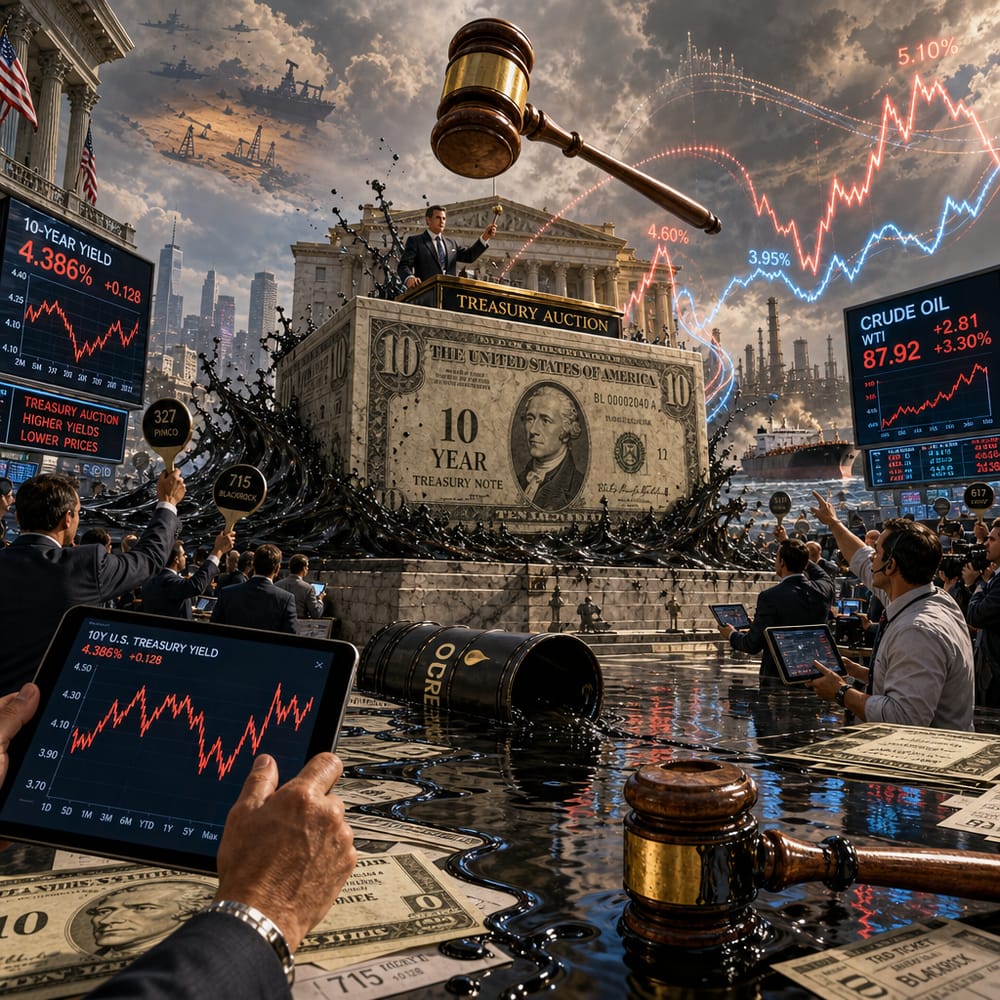
TREASURY AUCTION AND OIL-FED VOLATILITY KEEP YIELDS IN FLUX
Blink and you might miss it—Treasury yields these days are as changeable as the weather. Thanks to a cocktail of volatile oil prices, a scheduled U.S. Treasury auction, and a pinch of geopolitical chaos, yields have been swinging around like a kid on a sugar high. If you're not paying attention, you're sure to get dizzy.
So, what's the deal with oil prices and Treasury yields? Imagine you're at a party where crude oil is the loud guest who always seems to shift the vibe in the room. When oil prices rise, it gets folks talking about inflation. Higher inflation can push investors to demand higher yields on Treasuries—essentially interest paid on government debt—to compensate for the eroding value of money. Think of it as the investor's "show me the money" moment. Recently, oil prices have been playing their favorite game of see-saw, bouncing above $83 a barrel amid drama over the reopening of the Strait of Hormuz. Every time there's a whiff of geopolitical tension, like the Houthi threat to Saudi oil exports, oil prices rise, and Treasury yields start to twitch nervously.
And if oil's antics weren't enough, the U.S. Treasury decided to throw its own shindig with a Treasury auction. Yields often dip temporarily ahead of these events as investors snatch up bonds expecting higher returns once the auction clears. It's like lining up for concert tickets, hoping they'll be cheaper if you just wait a bit. The result? Volatility in the yields is not just expected, it's inevitable. The auction process can make the market dance to the rhythm of supply and demand. If the demand is weak, like an under-attended concert, yields might spike to sweeten the deal for buyers. Conversely, a strong appetite for Treasuries can keep yields lower.
To make things even more interesting, let's sprinkle in some geopolitical drama. Think of this as the plot twist in our financial thriller. With the world stage looking more precarious than a tightrope walker in a hurricane, investors are skittish. The potential conflicts and the broader instability keep yields on their toes, as risk-averse investors often seek the safe haven of U.S. government debt during uncertain times. However, if tensions escalate, it could ignite concerns about global economic slowdown, pushing yields up as inflation expectations shift.
So, why does this matter to you, dear reader? These fluctuations in Treasury yields aren't just Wall Street's problem. They influence everything from your mortgage rates to the health of the stock market. When yields rise, borrowing costs creep up, making loans more expensive for businesses and consumers. That's like raising the cover charge at your favorite club—not great for attendance, right? It can also dampen investor sentiment, as higher yields make bonds more attractive compared to stocks, potentially pulling money out of the equity markets.
Moreover, the interplay between yields and inflation expectations is a key barometer of future economic growth prospects. With the U.S. budget deficit recently hitting its highest level in over five years, the stakes are high. If inflation takes off like a runaway train, the Federal Reserve might have to hike interest rates to keep things in check. That could slow down economic growth, turning our financial rollercoaster into more of a haunted house ride.
In sum, the current volatility in Treasury yields isn't just a bunch of numbers on a screen. It's a living, breathing phenomenon with fingers in many pies—from your savings account to the broader economy. So, the next time you catch a headline about oil prices or a Treasury auction, remember: it's not just market noise. It's a symphony of factors playing a tune that can have real implications for your wallet and beyond. Keep your eyes on the prize and your fingers crossed that this rollercoaster ride won't end in a steep drop.
This article is for informational purposes only and is not investment advice. Always do your own research or consult a licensed financial professional before making investment decisions.
© Copyright 2024. All Rights Reserved.
© Copyright 2024. All Rights Reserved.