

Treasury Action Slashes Volatility—VIX Plummets
Wednesday, August 19, 2026
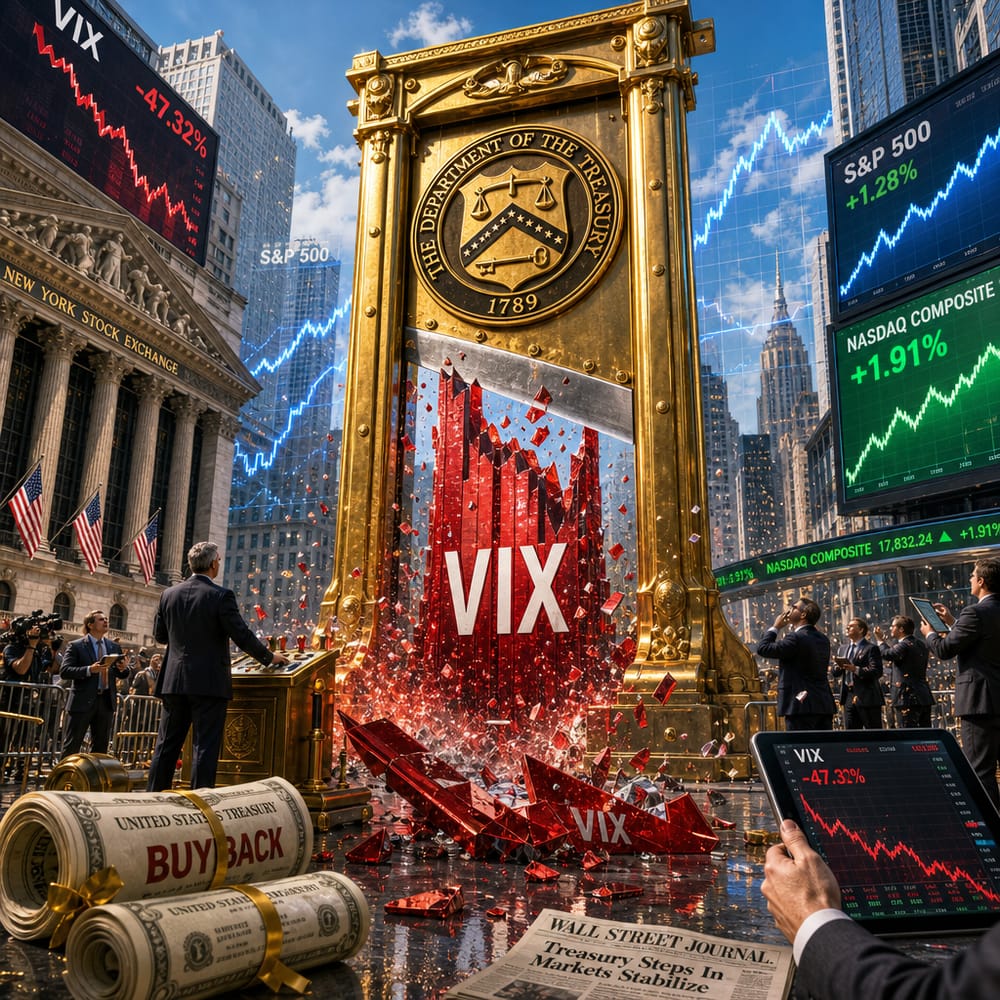
TREASURY ACTION SLASHES VOLATILITY—VIX PLUMMETS
Imagine walking into a party prepared for chaos, only to find everyone sipping tea calmly. That's the market right now, folks. The VIX, Wall Street's fear gauge, just took a nosedive after the U.S. Treasury announced a bond-buyback plan. Normally, the stock market, with its mood swings, keeps investors on edge, but this move seems to have sent a wave of calm across trading floors. So what’s the deal? And what should you, the savvy retail investor, make of this zen moment in finance?
Okay, let’s unpack this. The VIX, or the Volatility Index, is like the market's stress ball. When it spikes, investors are on edge, and when it plummets, it's time to breathe easy. It measures expected volatility in the S&P 500 over the next 30 days, essentially revealing how jittery traders are feeling about the future. With the latest announcement from the Treasury about bond buybacks, the VIX slipped, suggesting traders are chilling out. But why does this matter, and what’s the catch?
The Treasury's unexpected bond-buyback maneuver was like a soothing lullaby to a market that's been jittery over soaring yields and ballooning debt figures. For context, the U.S. government’s IOU has ballooned to a staggering $40 trillion. But wait, don’t let your eyes glaze over just yet. The bond market was on a rollercoaster, and the U.S. Treasury decided to hop into the driver’s seat to stabilize things. By increasing repurchases of longer-term debt, they’re essentially taking steps to calm a jittery bond market, which had seen yields hitting highs reminiscent of prom night anxiety levels not seen in decades.
So, the VIX dropping means investors are feeling more confident—or at least less anxious. This change in sentiment can influence how people are positioning their portfolios. Less fear usually means more risk-taking. When investors aren't clutching their pearls over potential market implosions, they might start eyeing those juicy, high-risk, high-reward opportunities. You know, like when you finally try that spicy food everyone else at the table is raving about.
Traders are recalibrating their strategies in light of this newfound tranquility. With the VIX down, the cost of options—financial tools that let you bet on stock movements without owning the stocks—also drops. Cheaper options mean that traders can hedge their bets without breaking the bank. This environment shifts the landscape for derivatives, those spicy market tools that can multiply your gains (or losses). The decrease in volatility might encourage more call-buying, where traders bet on stock prices rising, and adjusting hedging strategies to reflect reduced risk.
But here’s the kicker: This stability might not last. Some market veterans, like former Wells Fargo macro head Michael Schumacher, sound a cautious note. The U.S. still faces substantial budget deficits, and long-term rates might rise again. Think of it as those ominous clouds in the sky that haven’t quite left the horizon.
So, what’s the takeaway for you, dear retail investor scrolling through this on your phone? The drop in VIX signals a cooling period, where the market isn’t as fraught with tension. But markets, much like teenagers, have a knack for unpredictability. While the current calm might present opportunities for more aggressive plays, it’s smart to keep an eye on the broader economic signals. Watch out for those longer-term rates and the fiscal health of Uncle Sam.
In essence, the Treasury’s play might have bought the market some chill time. But just like any good thriller, there are twists in the plot yet to unfold. Stay alert, keep your strategies nimble, and enjoy the ride while it lasts. After all, it's these unexpected market moves that keep the world of investing anything but dull.
This article is for informational purposes only and is not investment advice. Always do your own research or consult a licensed financial professional before making investment decisions.
© Copyright 2024. All Rights Reserved.
© Copyright 2024. All Rights Reserved.