

Thursday's Broad Market Sell-Off
Sunday, August 23, 2026
THURSDAY'S BROAD MARKET MELTDOWN: WHAT WENT WRONG AND WHY WE SHOULD CARE
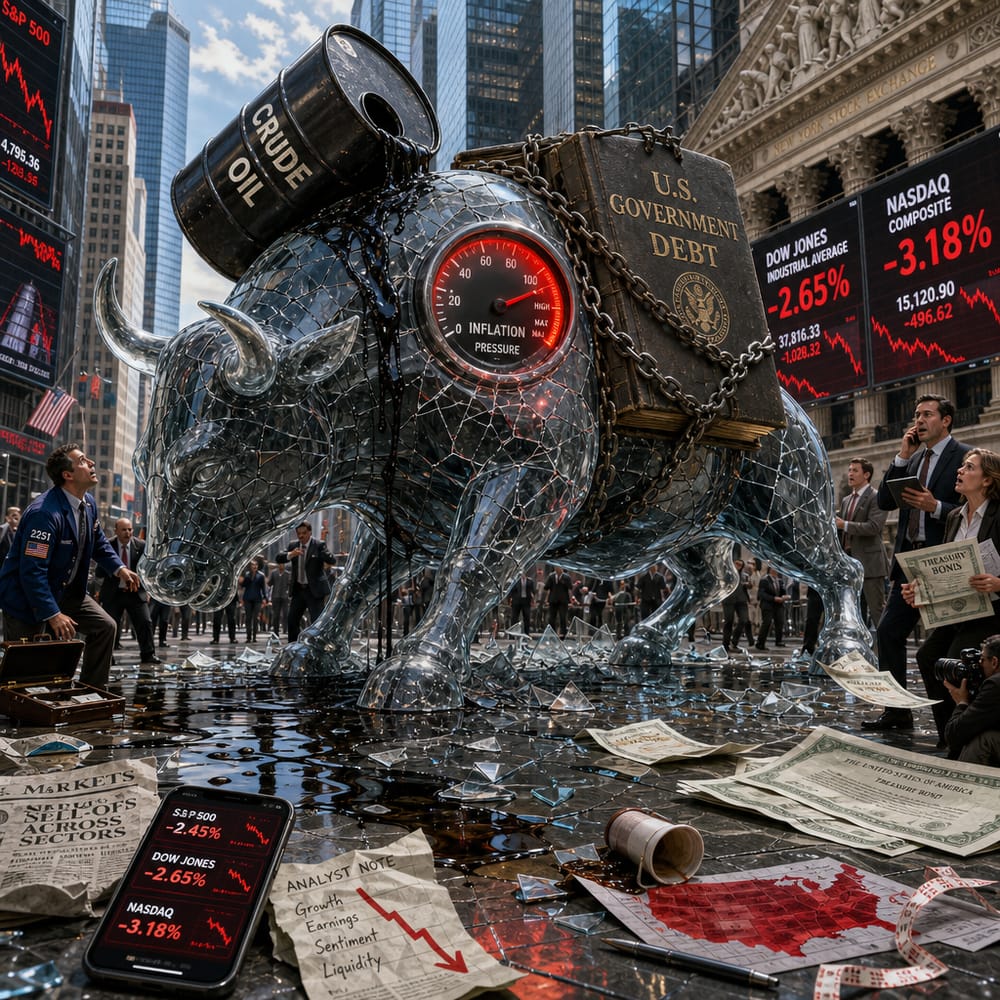
Wall Street took a nosedive last Thursday like a clumsy tightrope walker. The S&P 500, Dow Jones Industrial Average, and Nasdaq Composite all stumbled, leaving investors clutching their portfolios like lifebuoys in a stormy sea. But before you start hyperventilating into your morning coffee, let’s break down why this happened and what it means for the future.
First up, the oil price spike—the sly villain in our tale—is back in action. You might have noticed your wallet getting a bit too light at the gas station recently. Rising oil prices are the economic equivalent of pouring hot sauce on a paper cut. They sting, and they're not going away quietly. Higher oil prices mean higher costs for businesses, which love to pass that expense to—you guessed it—you, the consumer. The result? Less discretionary spending, a fancy term for choosing between an extra avocado toast or keeping gas in the tank. Investors start to worry that people will cut back on spending, and that fear translates to a sell-off in the market.
Now, let's discuss inflation—everybody's least favorite word. Recently, inflation has been defying expectations like a rebellious teenager. Instead of calming down, it continues to hover at uncomfortable levels. When inflation is high, the Federal Reserve might decide to raise interest rates. While rate hikes are designed to cool things down, they can also stifle growth. It’s a bit like trying to keep a bonfire contained without putting it out entirely. Investors, concerned about their profit margins, might bolt at the first sign of rate hikes—hence, the market drop.
But wait, there's more! The U.S. national debt is now a whopping $40 trillion, and it’s as if we’re living on borrowed time and money. If you thought your credit card statement was bad, imagine the country’s. The debt is starting to look like a mountain with no summit, and that has everyone from market analysts to your financially savvy neighbor clutching their pearls. Investors fear that this debt burden might push interest rates even higher in the long run, affecting everything from your mortgage to your favorite tech stocks.
These macroeconomic pressures form a perfect storm, swirling together like a tornado, but the big question is: should you panic? Long story short, no. Jumping ship during every market dip is like selling your umbrella just because it's raining. Understanding the drivers behind these sell-offs can provide clues about potential future market volatility and investor sentiment.
Rising oil prices, ongoing inflation, and escalating national debt are all significant concerns. However, markets are as resilient as they are unpredictable. They might waver and stumble, but historically, they’ve always found a way to bounce back. What's important is staying informed and keeping a level head.
So, what should you do next? First, don't panic—panic is the silent portfolio killer. Instead, consider reviewing your investment strategy. Are you diversified enough to weather market fluctuations? Now might be the time to reassess your risk tolerance.
Remember, while macroeconomic factors can disrupt markets, they also offer buying opportunities. When stocks take a hit, savvy investors often see potential bargains. As the saying goes, buy low, sell high. In volatile times, keeping a keen eye on market movements can help you spot those hidden gems.
In conclusion, Thursday’s market tumble might have left some investors feeling queasy, but it’s not the end of the world. Understand what's driving these market moves, stay informed, and make decisions that align with your financial goals. With some patience and foresight, you'll not only survive these ups and downs but, hopefully, thrive on the other side.
As always, remember to take financial advice with a grain of salt and consult with a professional. Happy investing, and may your portfolio thrive amidst the chaos.
This article is for informational purposes only and is not investment advice. Always do your own research or consult a licensed financial professional before making investment decisions.
© Copyright 2024. All Rights Reserved.
© Copyright 2024. All Rights Reserved.