

Thursday's Broad Market Crash: A Closer Look at the Flash Sell-Off
Friday, November 06, 2026
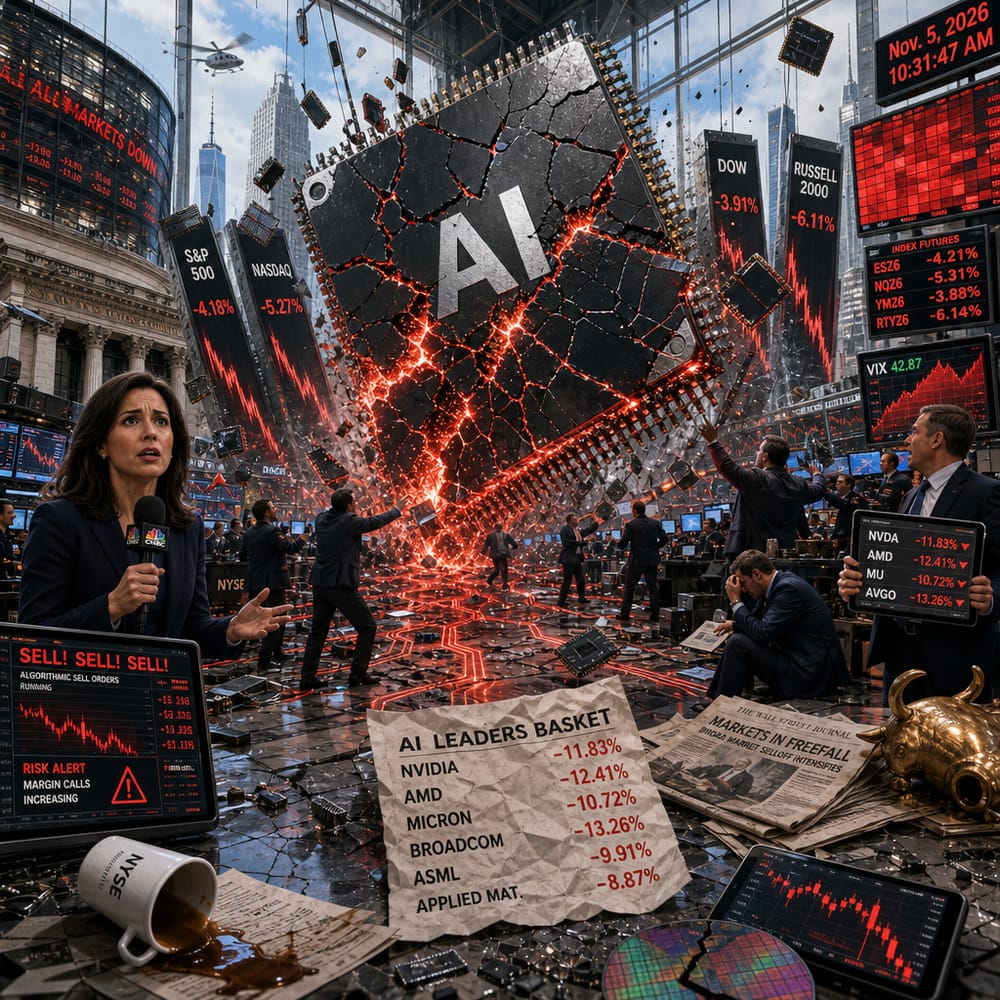
Batten down the hatches, folks. November 5, 2026, gave Wall Street a rollercoaster ride it won't soon forget. The U.S. markets were walloped by one of the sharpest one-day declines since a similarly dizzy day in April 2025. At the heart of this financial earthquake? A swift collapse in AI and chip-sector stocks that left investors clutching their digital pearls.
So, what triggered this financial flash crash? Picture this: In the midst of the market's AI-fueled euphoria, the rug was pulled when regulatory storm clouds gathered following the Democrats' triumphant sweep in the midterm elections. With Congress now bluer than a Smurf family reunion, market mavens feared a flood of new regulations targeting tech and AI companies. Investors didn't like that one bit, sending stocks in this sector into a tailspin.
The sell-off went down faster than your uncle at a wedding open bar. The Nasdaq Composite, home to all things tech, tumbled 5.5%, waving goodbye to its recent high and officially entering what Wall Street calls a "correction"—a polite term for "things have gone south." The S&P 500 and Dow weren't spared either. The S&P lost a hefty 4.4%, while the Dow plunged over 1,800 points—a gut punch from which it struggled to recover.
The AI and semiconductor stock rout hit like a thunderclap across the market. Nvidia, Micron, AMD, Broadcom—you name it, they were all on the chopping block. These companies have been riding high on the AI hype train, but when the brakes slammed on data center expansions and cloud partnerships, the market’s faith wavered.
Behind the scenes, a few tectonic shifts were shaping this messy market milieu. Rising interest rates were an ominous cloud over the tech sector's sunny skies. San Francisco Fed President Mary Daly didn't sugarcoat it, hinting that more rate hikes are in the offing to tame inflation. With borrowing costs already squeezing tech companies like a too-tight pair of jeans, the prospect of further hikes sent shivers down Wall Street's spine.
And let’s not forget the backdrop of a jittery global economy. The economic landscape was already dotted with landmines—high inflation, geopolitical tensions, and the not-so-small matter of an ongoing conflict in Iran, which is keeping oil prices on the boil. Add the potential slowdown in AI infrastructure—and boom, you’ve got a recipe for disaster.
But what’s the longer-term prognosis? Are we looking at a temporary blip or the first act of a prolonged market drama? For AI and chip stocks, the reality check could mean a more measured growth trajectory. While the AI boom has been the market's darling, it’s clear that investors are recalibrating their expectations amid potential regulatory crackdowns and interest rate uncertainties. Companies with hefty debts or those overly reliant on aggressive growth forecasts may need to tighten their belts.
The broader market sentiment may also take some time to recover. The election results—not just the Democrat victories but the sweeping regulatory implications—could herald a more challenging environment for tech investment. This could see investors seeking refuge in more traditional, stable sectors—or perhaps taking a breather until the smoke clears.
In the meantime, savvy investors might want to keep an eye on any opportunities arising from the carnage. The high volatility has unleashed a torrent of options trading, hitting record levels as traders scramble to capitalize—or merely survive.
As Friday dawned, there were glimmers of hope. Some investors, ever the optimists, were buying the dip, coaxing minor rebounds in beaten-down chip stocks. But whether this is the start of a recovery or a mere dead-cat bounce remains to be seen.
So, buckle up, retail investors, and keep your ear to the ground. The market’s message is loud and clear: volatility is the name of the game, and the days of easy money might be over—for now. But with risk comes opportunity—if you’re ready to ride the wave.
This article is for informational purposes only and is not investment advice. Always do your own research or consult a licensed financial professional before making investment decisions.
© Copyright 2024. All Rights Reserved.
© Copyright 2024. All Rights Reserved.