

Three Fed Officials Dissented—Wanted Higher Rates
Friday, July 31, 2026
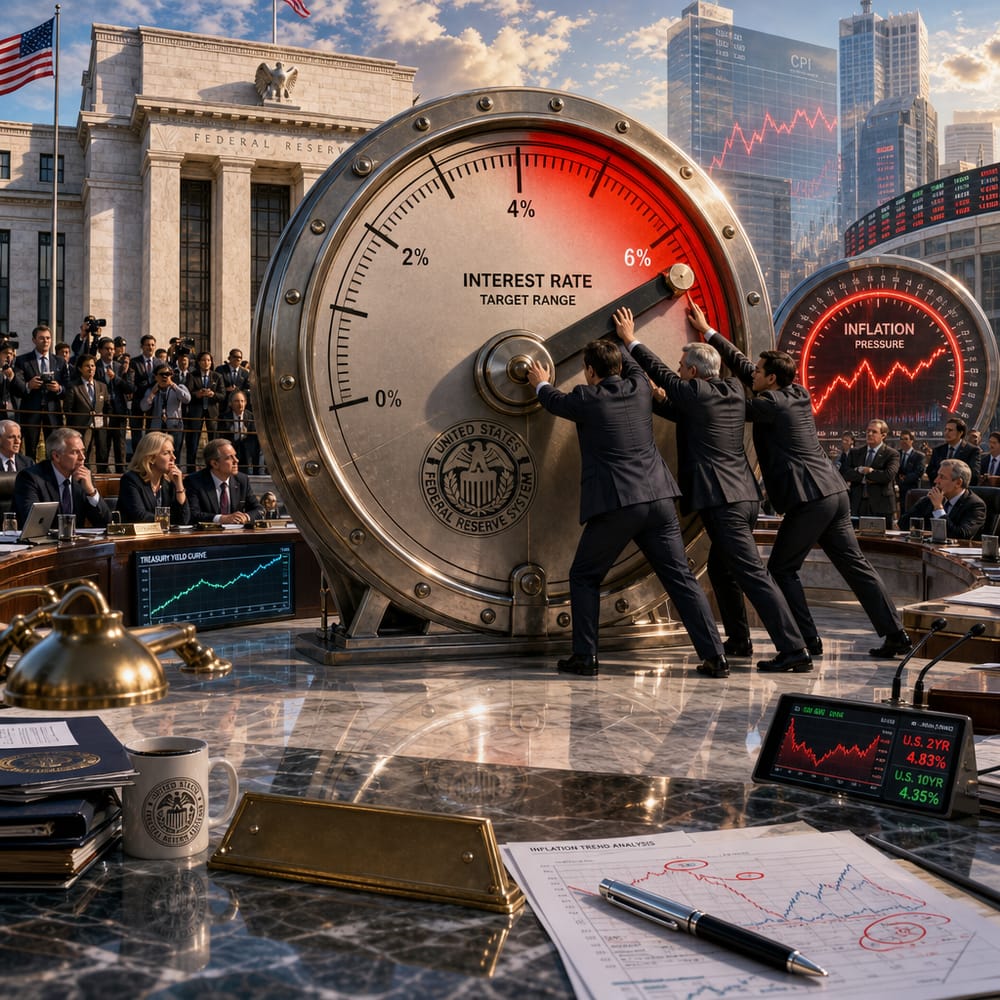
FEDERAL RESERVE FAMILY FEUD: DISSENT IN THE RANKS AND WHAT IT MEANS FOR YOU
In the world of finance, drama is usually reserved for stock market roller coasters or the latest crypto craze. But this week, the U.S. Federal Reserve brought its own version of a reality show twist when three of its officials ditched the script and dissented from the team's decision to keep interest rates steady.
WHAT’S THE BIG DEAL?
You see, when the Fed huddles up to discuss interest rates, they usually emerge with a unified front—like a well-oiled machine, albeit one that mostly talks about inflation and unemployment. But this time, three officials decided they were feeling a little "spicy" and voted in favor of a rate hike. That’s right, folks—they wanted to crank up the cost of borrowing once again to combat inflation.
Now, why should you care about a few folks in suits disagreeing in some boardroom in D.C.? Well, the Fed's decisions on rates affect everything from your mortgage and car loan to how much your savings earn in interest. When there's dissent among the Fed's ranks, it signals potential shifts in monetary policy that can ripple through the economy and, by extension, your wallet.
THE ARGUMENT FOR HIGHER RATES
Those three dissenting voices are like the financial equivalent of parents insisting you need a curfew. Their argument? Inflation is the villain in the economic story, and it needs to be tamed before it devours purchasing power. They see a rate hike as a necessary evil to keep inflation in check and prevent it from spiraling out of control.
THE CASE AGAINST
On the flip side, the rest of the Fed's team is playing the cautious card. They're concerned that too aggressive a move could cool down economic growth faster than an iced latte on a summer day. Higher rates mean higher borrowing costs, which can slow down everything from business expansions to home buying. If the economy starts to sputter, we're looking at potential job losses, and no one wants a repeat of that sad song.
THE RIPPLE EFFECT
So, with this dissent out in the open, what happens next? First, we can expect a lively debate in upcoming Fed meetings, with the potential for more drama and split decisions. Markets will be watching closely, and so should you, because uncertainty at the Fed can lead to choppy waters in the stock and bond markets.
If more officials join the dissenters’ club, the chances of a rate hike in the near future could increase. Investors, especially those with a nose for bonds, might start pricing this into their forecasts, affecting yields and potentially stirring up volatility.
A LOOK AHEAD
The dissent signals a broader conversation about how the Fed should tackle inflation while supporting economic growth—think of it as a high-stakes balancing act. While Chairman Kevin Warsh is steering the ship, these differing opinions mean he’s not having the easiest of sails. How he manages this family feud within the Fed could be critical.
In the coming months, keep an eye on economic indicators like inflation rates and employment figures. These will provide clues about which side of the Fed’s debate could gain the upper hand. And as the central bank inches closer to its next decision, you'd better believe investors and economists alike will be hanging on their every word—no pressure, Mr. Warsh.
THE BOTTOM LINE
For now, it’s a wait-and-see game. But one thing’s for sure: The Fed’s internal drama isn’t just for economists or Wall Street traders. It’s about the money in your pocket and the rates you pay on everything from loans to credit cards. So, keep your eyes peeled, because this isn’t just some academic discussion. It's the financial equivalent of a cliffhanger—and you’re part of the show.
In the meantime, tighten those purse strings, stay informed, and perhaps consider channeling those inner calm vibes. The Fed may be divided, but with a little financial savvy, you can keep your own house in order.
This article is for informational purposes only and is not investment advice. Always do your own research or consult a licensed financial professional before making investment decisions.
© Copyright 2024. All Rights Reserved.
© Copyright 2024. All Rights Reserved.