

The Shutdown That Broke Records — and the Economy
Wednesday, November 05, 2025
A Record No One Wanted
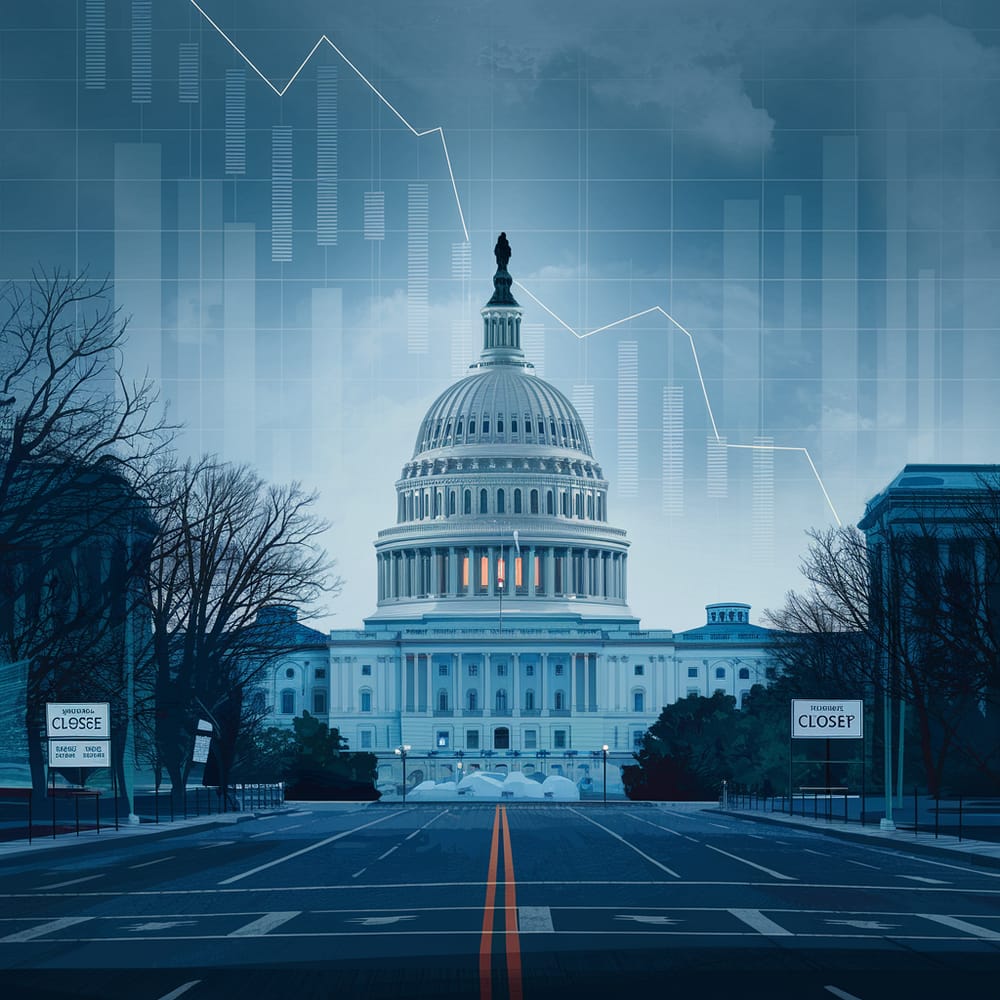
The U.S. government shutdown that began on October 1 has now officially become the longest in American history — and by all accounts, the most economically damaging. What started as another partisan budget standoff has spiraled into a 36-day freeze that’s throttled public services, drained household finances, and rattled the world’s largest economy.
More than 1.4 million federal workers haven’t been paid, even as many continue working. Millions more are missing critical benefits like food stamps, leaving families struggling to cover essentials. Meanwhile, economists warn that the ripple effects are spreading — not just through Washington, but through Wall Street and Main Street alike.
From Shutdown to Slowdown
Goldman Sachs’ chief political economist Alec Phillips says this shutdown is “likely to have the greatest economic impact of any on record.” Even if it ends soon, the firm estimates the delay could knock 1.15 percentage points off GDP growth in the fourth quarter.
The Congressional Budget Office echoes that view, projecting that between $7 billion and $14 billion in economic output could be permanently lost. The difference this time? Scale. The last record-holder — the 2018–2019 shutdown — only hit about 10% of government spending. This one has frozen 100% of appropriations.
JPMorgan’s chief strategist David Kelly summed it up bluntly: “The economy was already slowing down — and this just made it worse.” Between high tariffs, student loan repayments returning, and historically low immigration, the shutdown arrived at exactly the wrong time.
Flying Blind in a Data Blackout
The damage isn’t just economic — it’s informational. With most agencies offline, key government data like the monthly jobs report, inflation metrics, and consumer spending figures aren’t being published. “We are flying blind in this economy,” Kelly said.
So far, the only major report released has been September’s Consumer Price Index, the last piece needed for Social Security’s cost-of-living adjustment. Everything else, from job creation to retail spending, is on pause. For the first time ever, even the Federal Reserve was forced to make an interest rate decision without the latest employment data — a move economists called unprecedented.
Powell’s Foggy Forecast
Fed Chair Jerome Powell likened the situation to “driving in the fog.” He hinted the Fed may delay cutting rates in December, simply because it’s operating without visibility. “When you can’t see,” Powell said, “you slow down.”
And the longer the shutdown drags on, the murkier things become. Once it’s over, agencies will need weeks to rebuild lost data, and the Bureau of Labor Statistics warns that gaps in its surveys could skew the unemployment rate higher for October.
The Cost of Uncertainty
Despite the chaos, most analysts expect the economy to rebound once Washington reopens. Goldman Sachs forecasts a 1.3 percentage point boost to first-quarter GDP in 2026 as back pay flows and spending restarts. But that optimism hinges on a key assumption — that furloughed workers actually get paid.
President Donald Trump, who signed the law guaranteeing back pay during his first term, has recently cast doubt on whether those payments will go through this time. The White House’s refusal to commit has raised fears that this shutdown could leave lasting scars on federal workers and the broader economy.
A Political Stalemate, an Economic Casualty
Economists agree that shutdowns are bad politics and worse economics. Yet the spectacle continues, with millions of Americans stuck in limbo while politicians spar over budget lines.
Even if the economy bounces back next year, the message from this record-breaking shutdown is clear: every day of dysfunction in Washington comes with a very real price tag — and this one may go down as the most expensive yet.
© Copyright 2024. All Rights Reserved.
© Copyright 2024. All Rights Reserved.