

The Dollar's 52-Year Slump: What’s Behind the Greenback’s Fall
Tuesday, July 08, 2025
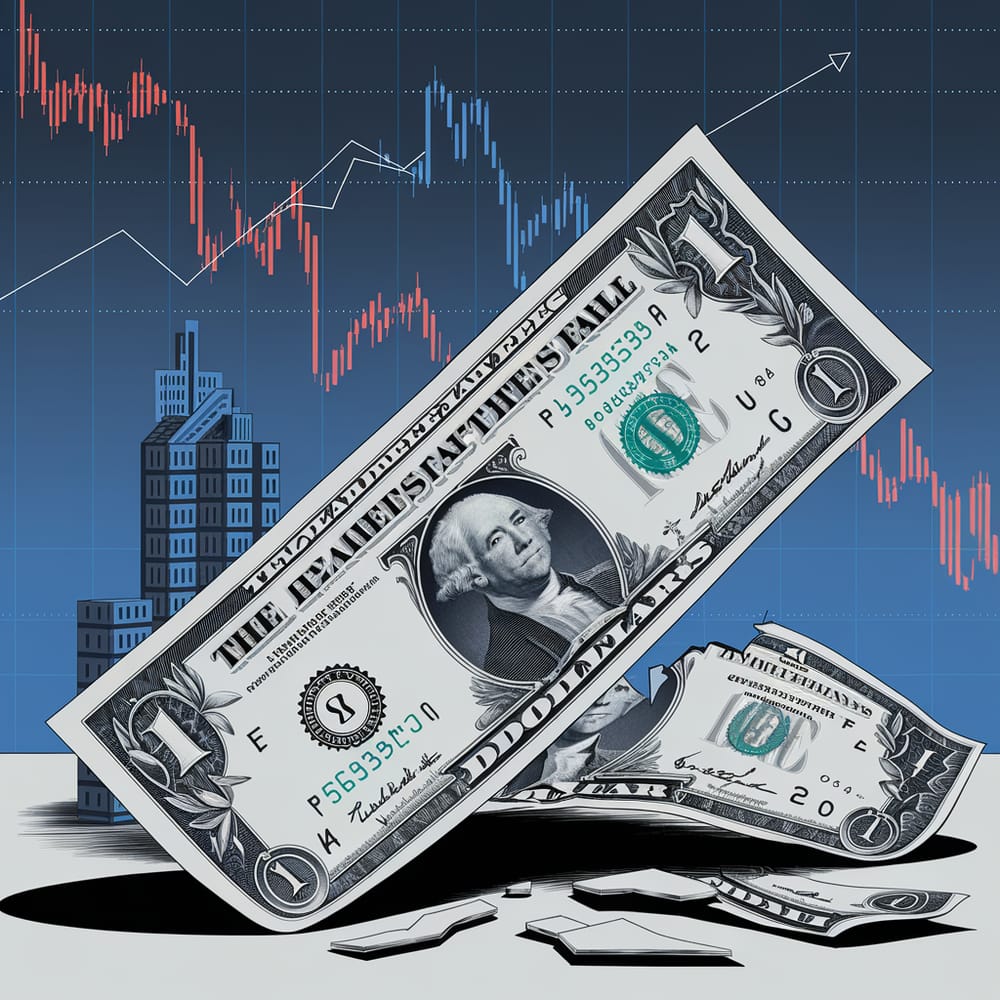
The U.S. dollar just wrapped up its worst first-half performance since 1973, diving 10.7% against global currencies through June. That’s not just a statistic—it’s a flashing red signal on investors’ dashboards.
So, what’s going on with the world’s reserve currency?
Let’s unpack it.
Why the Dollar Is Dropping
The dollar’s tailspin isn’t just about one factor—it’s a perfect storm of issues:
Massive federal deficits: With the public debt heading toward $30 trillion and this year’s deficit tracking close to $2 trillion, global confidence in U.S. fiscal responsibility is wavering.
Rate-cut expectations: With the Fed hinting at upcoming rate cuts, the dollar’s yield advantage is fading.
Trade drama: President Trump’s aggressive tariff threats—and the retaliation they risk triggering—aren’t helping.
Policy chaos: Geopolitical spats and strained alliances are making the dollar feel less like a “safe haven” and more like a political pawn.
Art Hogan of B. Riley Wealth Management summed it up: “You’ve got enough negative catalysts, and once momentum starts, it’s hard to stop.”
Winners and Losers
Ironically, the dollar’s decline isn’t all bad news.
Exporters win: With over 40% of S&P 500 revenues coming from overseas, a weaker dollar makes U.S. goods cheaper abroad.
Gold shines: Central banks are buying up gold—24 tons a month, according to the World Gold Council—as they hedge against dollar risks. Gold just had its best first half since 1979.
Global alternatives: BRICS countries and others are making moves to reduce dependence on the dollar, exploring alternatives like digital currencies or boosting gold reserves.
But the flip side is clear: a weaker dollar also raises concerns about inflation, rising yields, and the long-term health of U.S. assets.
Could the Dollar Bounce Back?
Not everyone’s sounding the alarm.
Wells Fargo argues the dollar’s deep-rooted strength—liquidity, rule of law, global demand—makes any permanent dethroning unlikely.
Capital Economics sees the dip as temporary, possibly driven by currency rebalancing and hedging tactics.
Treasury Secretary Scott Bessent called the fluctuations “not out of the ordinary,” even as rising Treasury yields signal some unease in the bond market.
Bottom Line
The dollar’s dominance isn’t dead—but it’s definitely under pressure. Whether this is a blip or a breakdown depends on what the Fed, the White House, and the rest of the world do next. For now, investors are watching, hedging—and hunting for safer ground.
© Copyright 2024. All Rights Reserved.
© Copyright 2024. All Rights Reserved.