

The U.S. Dollar Index Nears 20-Month Highs: Has the Dollar Entered Overbought Territory?
Sunday, November 29, 2026
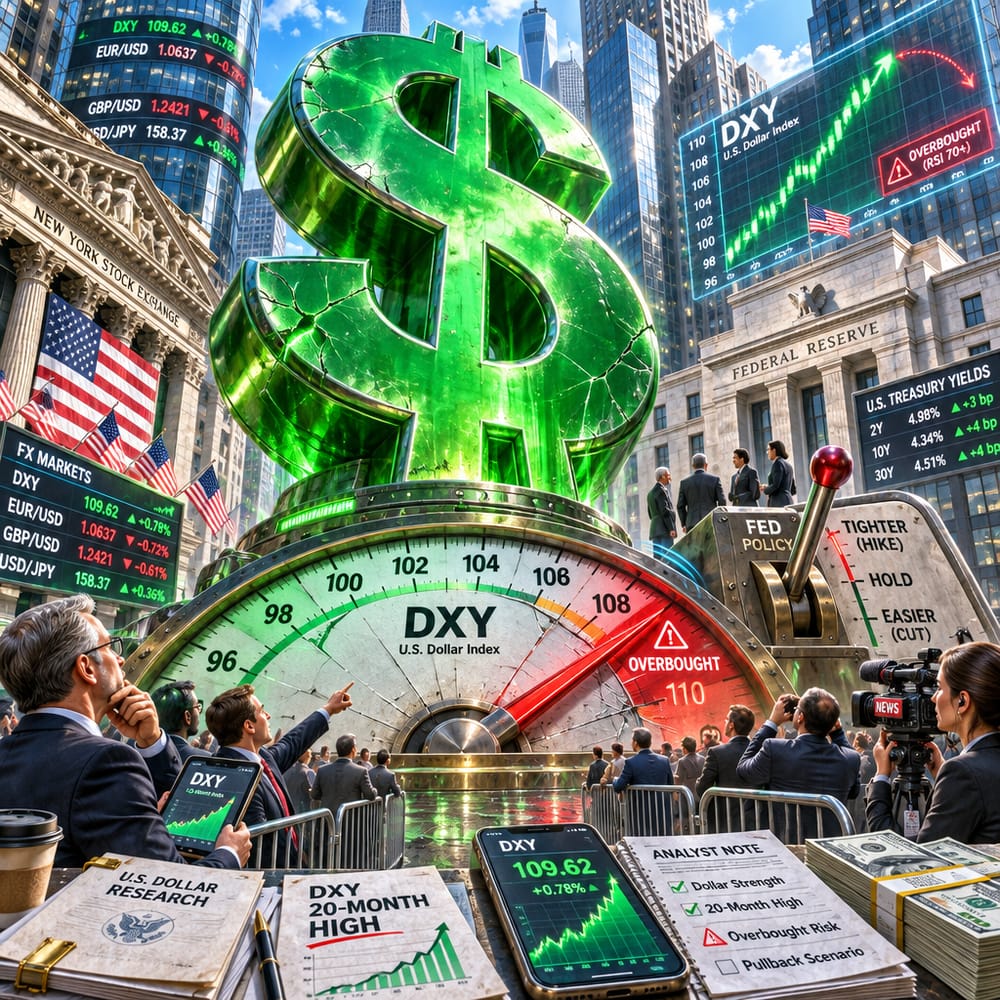
THE U.S. DOLLAR INDEX NEARS 20-MONTH HIGHS: HAS THE DOLLAR ENTERED OVERBOUGHT TERRITORY?
If you were to ask the U.S. dollar if it’s feeling a bit overworked lately, it might just nod in agreement. The U.S. Dollar Index (DXY), a thermometer of the dollar’s strength against a basket of other major currencies, has shot up to levels not seen in nearly 20 months. This dollar dance has some investors wondering: Is it time for the DJ to change the tune?
The dollar’s rise isn’t just a vanity metric. A strong dollar impacts everything from the cost of your imported wine to the price tag on foreign vacations. It juggles global trade balances, twists inflation rates, and sends central banks into policy overdrive. So, when the greenback shows off its muscles, the world takes note.
IS THE DOLLAR’S RALLY SUSTAINABLE?
Before betting the house on this dollar run, it’s worth asking if this rally is built to last or just a sugar high. Economists and market watchers keep their eyes glued to technical indicators like hawks. Terms like “overbought” and “pullback” might fly around in these discussions, but let’s break it down: an overbought currency means it’s been over-purchased and may be due for a dip.
Recent data suggests that the DXY is indeed flirting with overbought territory. Technical indicators, the financial world’s version of tea leaves, hint that the dollar has run hot and fast. When currency charts start looking like someone’s heartbeat post-marathon, a cooldown might not be far behind.
CENTRAL BANK POLICIES: THE WIND BENEATH THE DOLLAR'S WINGS
But let’s not forget the puppet masters behind the scenes—central banks. The U.S. Federal Reserve, for instance, has been playing a major role in the dollar’s latest charm offensive. By raising interest rates to combat inflation, the Fed has made the dollar more attractive. Higher rates mean better returns for investors holding onto their greenbacks.
However, it’s not just about what the Fed’s doing; it’s also about what everyone else isn’t. Other central banks, notably the European Central Bank and the Bank of Japan, have been slower to hike rates. The result? A juicy interest rate differential that makes the dollar even more appealing.
The real kicker will come when (or if) these central banks decide to jump on the rate hike bandwagon. If they do, the dollar might find its runway a bit more crowded, potentially stalling its ascent.
THE GLOBAL RIPPLE EFFECTS
A dollar that’s flying high has consequences that stretch well beyond America’s borders. For starters, it makes U.S. exports more expensive and less competitive abroad. Not exactly what manufacturers want to hear. On the flip side, a stronger dollar can keep a lid on domestic inflation by making imports cheaper. Your next basket of avocados from Mexico? Possibly a bit friendlier on your wallet.
But it’s not all rosy. Emerging markets with dollar-denominated debts might find themselves squeezed as their local currencies weaken against the buck. It’s a financial headache they could do without, as repaying those loans becomes pricier.
For investors, a possible dollar pullback could also shake up the stock market, particularly sectors sensitive to currency swings, like technology and consumer goods. If the dollar retreats, you might see stock prices reacting faster than a caffeinated squirrel.
WHAT’S NEXT FOR THE DOLLAR?
So, where does this leave the dollar’s entourage of investors and onlookers? Some might suggest buckling up for a bit of turbulence. Others see opportunity in the volatility—after all, markets live and breathe on change.
Whether you’re watching from the sidelines or eyeing a piece of the action, it’s clear that the dollar’s journey isn’t over yet. The interplay between technical indicators, central bank policies, and global market dynamics promises more twists than a Netflix drama.
In the end, the question isn’t whether the dollar will dip or climb over the next few months. The real intrigue lies in how it will dance with the economic forces shaping our world. So, stay tuned and keep those currency charts close. The dollar’s saga is just getting started.
This article is for informational purposes only and is not investment advice. Always do your own research or consult a licensed financial professional before making investment decisions.
© Copyright 2024. All Rights Reserved.
© Copyright 2024. All Rights Reserved.