

Tesla & SpaceX Drag Nasdaq—Is Musk’s Influence Peaking?
Wednesday, July 08, 2026
TESLA & SPACEX DRAG NASDAQ—IS MUSK'S INFLUENCE PEAKING?
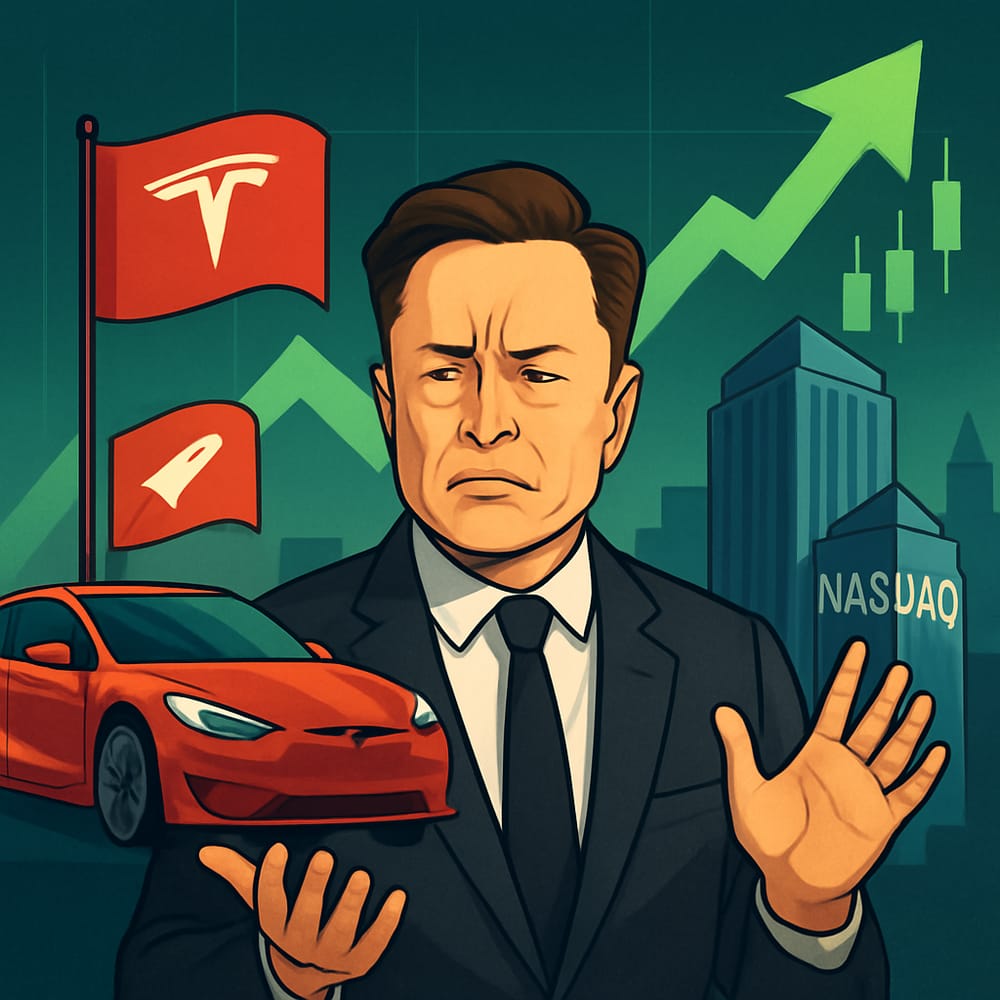
Elon Musk — the man who's got more fingers in pies than a bakery during the holidays. Yet recently, two of his flagship ventures, SpaceX and Tesla, have found themselves in a nosedive, dragging the Nasdaq index down with them. So, what's cooking in Musk's universe, and should investors be worried about the broader market impact of this mogul's rollercoaster ride?
First, the basics: SpaceX, the aerospace darling that’s aiming to Mars and beyond, faced a cut of around 7% in its valuation. Pair that with Tesla’s own tumble, and you’ve got a one-two punch that left the Nasdaq tech index wobbling like a rookie tightrope walker. But why? What’s behind this market mayhem?
SpaceX's valuation slip seems to stem from a combination of ambitious spending matched with investor skittishness about the timelines for returns on those investments. Musk’s plan to colonize Mars is one for the history books, but until those rockets start generating significant revenue, backers are getting a little itchy. Meanwhile, Tesla’s slide can be chalked up to a mix of production hiccups and growing competition in the electric vehicle market. Everyone and their grandmother seems to be launching an EV nowadays, which means Tesla's got more competition biting at its tailpipe than ever.
Both SpaceX and Tesla carry a lot of weight in the tech world, acting like the heavyweight champs in the Nasdaq ring. Together, they contribute a sizable chunk to the tech-heavy index's overall value. When these stocks catch a cold, the Nasdaq ends up in bed with the flu. It's like watching your favorite domino set fall in slow motion, taking others with it as it tumbles.
But here’s the real kicker. The influence of Musk-tied companies on broader market indices is starting to raise eyebrows about concentration risk. What's concentration risk, you ask? It's the risky business of having too much of one thing, like putting all your eggs in Musk's basket. If those eggs start cracking, it can lead to a scramble — pun intended — in the markets. With SpaceX and Tesla carrying so much weight, any fluctuations can ripple across the tech sector and beyond, turning minor tremors into seismic shifts.
Investors and analysts alike are starting to ask a pressing question: Has the power of Musk over the market peaked? With the Nasdaq's fate often tied to the whims of his enterprises, there's growing concern about the sustainability of this influence. No doubt, Musk's innovations have propelled tech stocks to new heights, but the risks of such dependency are becoming glaringly evident.
But don't grab your panic button just yet. While the current market slide might feel like a gut punch, it’s also an opportunity to rethink diversification strategies. Yes, Musk’s adventures in tech and space are as thrilling as a sci-fi blockbuster, but investors might want to consider spreading their chips a bit more evenly across the table. After all, a balanced portfolio is like wearing a seatbelt in the wild ride of the stock market — it won't stop the bumps, but it sure can soften the blow.
This isn’t about spelling doom for Musk's ventures. Tesla is still at the forefront of the green revolution in cars, and SpaceX is leading humanity’s charge into the final frontier. Yet, their significant impact on the Nasdaq also highlights the need for investors to be mindful of how much sway a single entrepreneur's companies can hold over their portfolios.
As we watch SpaceX and Tesla navigate these choppy financial waters, one thing is clear: Elon Musk's influence on the tech and space sectors is undeniable, but as with every star, there's always a balance to be struck. It's a gentle reminder that even in the world of high-tech dreams and cosmic aspirations, keeping a foot on the ground might not be the worst idea.
So, until Musk's next big move, keep your eyes peeled and your portfolios diversified — the markets will thank you later.
This article is for informational purposes only and is not investment advice. Always do your own research or consult a licensed financial professional before making investment decisions.
© Copyright 2024. All Rights Reserved.
© Copyright 2024. All Rights Reserved.