

Tesla's Semi Factory Opens: Equity Impact & Future Catalysts
Thursday, September 24, 2026
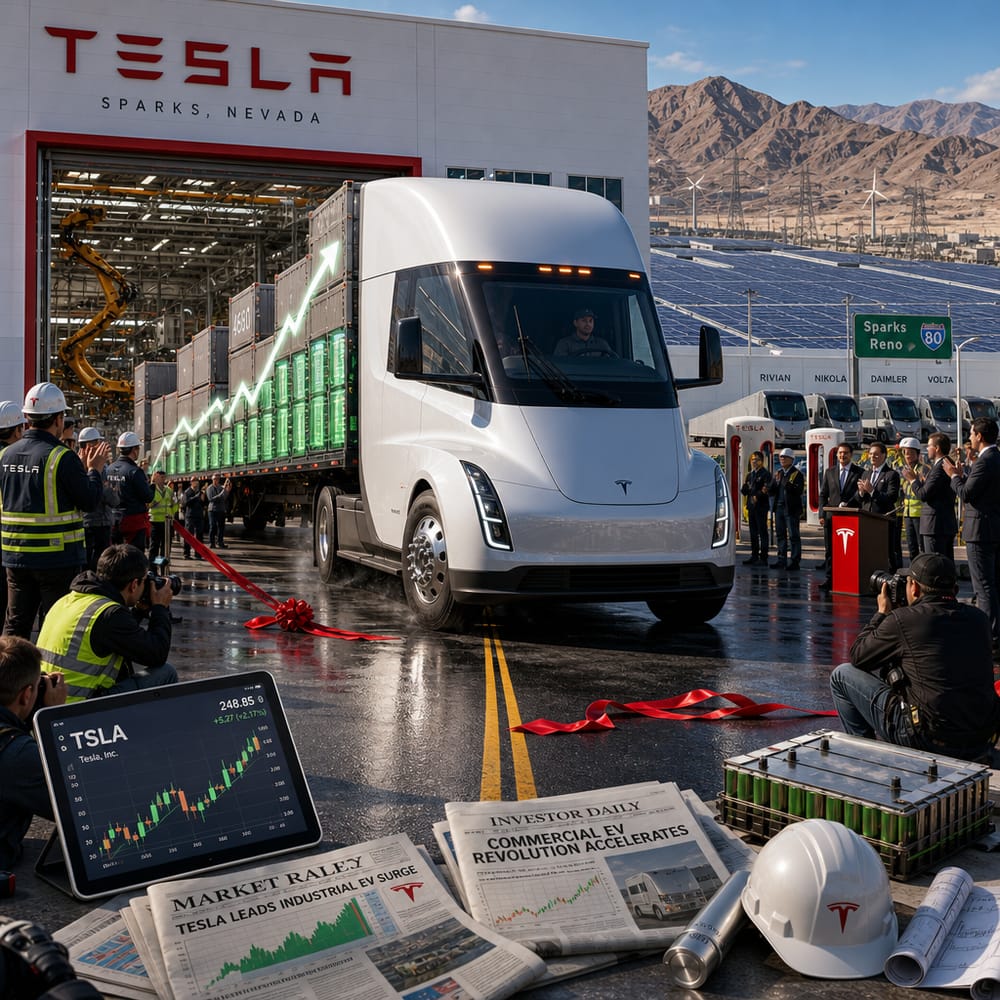
TESLA'S NEW SEMI FACTORY: CHARGING UP THE COMMERCIAL EV REVOLUTION
Hold onto your hats, folks! The electric buzz isn’t just in the latest iPhone or the AI chatbot that helps you decide whether to like that Instagram post. Tesla, the electric vehicle behemoth, has flipped the switch on its brand-new factory in Sparks, Nevada, dedicated to mass-producing its hefty, hard-hitting Semi trucks. This isn’t just another Tesla venture; it’s a strategic leap into the world of commercial trucking. Here's the rundown on why this shiny new factory is a big deal for retail investors like you.
Every automaker wants a piece of the electric pie, and with diesel prices soaring, the commercial trucking sector is ripe for an electric revolution. Tesla's new facility represents a strategic pivot, as CEO Elon Musk isn't just dreaming about moon landings anymore; he’s got his eyes on the open highway. But what does this mean for Tesla’s books, and how will it shake up the competition with other electric vehicle contenders like Nikola and Rivian? Buckle up as we dive into the financial and competitive landscape of Tesla's latest gamble.
COSTS, MARGINS, AND THE BOTTOM LINE
First off, let’s talk money — who doesn’t like money? Setting up a factory is no chump change. We're talking hefty capital expenditures (or capex, if you’re fancy), meaning Tesla is shelling out big bucks to make big bucks. But with any significant spend comes the question: how will this impact their bottom line? Tesla has been known for its razor-thin margins, and this factory could either be a stroke of genius or a little too close for comfort.
A new production facility means more spending on equipment, workforce, and all those other fun things that keep factories ticking. However, if Tesla can hit the sweet spot of scale, it could lower production costs per vehicle, potentially improving those skimpy margins. The key lies in volume — the more trucks they churn out, the more the costs spread out, making each unit cheaper to produce over time. So, if you’re a Tesla shareholder, you might want to keep an eye on those production numbers.
REVENUE ROADMAP WITH FLEET DEPLOYMENTS
Now, let’s shift gears to revenue. The world runs on fleets, from delivering your Amazon order to stocking grocery shelves. Tesla's new factory is a beacon to fleet operators who are looking to electrify their lineup. An anchor client like PepsiCo has already taken the plunge, with substantial orders paving the way for more blue-chip companies to jump on the Tesla train. Imagine fleets of Semis crisscrossing the country, and each represents a tidy sum added to Tesla's top line.
Fleet adoption could transform the company’s revenue stream, making it less reliant on passenger vehicle sales, which have become increasingly competitive. And with environmental regulations tightening globally, Tesla’s green, mean machines will look even more appealing to companies eager to cut emissions and boost their eco-credentials.
A QUESTION OF COMPETITION
But hold the applause — Tesla isn’t idling alone at the traffic lights. Rivals like Nikola and Rivian are revving their engines too. Nikola, despite its rollercoaster journey (remember the whole "rolling truck" saga?), has its own ambitious plans, while Rivian, although more focused on consumer trucks, is definitely worth watching as they could pivot or partner up in the commercial space.
However, Tesla has a few tricks up its sleeve. Its brand strength and vast charging network give it an edge, especially in a market where infrastructure can make or break adoption. Tesla’s move into heavy-duty electric trucks isn’t just about selling vehicles; it’s about creating an ecosystem. By positioning itself as the go-to choice for commercial electric vehicles, Tesla is setting the stage to potentially dominate yet another segment of the EV market.
THE BOTTOM LINE FOR INVESTORS
For retail investors, the opening of Tesla's new Semi factory in Nevada is more than just another chapter in Musk's electric dream. It's a potential inflection point that could alter Tesla’s financial landscape and position in the market. Keep an eye on those production numbers and fleet orders; they’ll be the speedometer for Tesla’s success in this new venture.
Tesla’s track record shows they’re not afraid to gamble on bold ideas — sometimes they win big, other times they stumble. But isn’t that what makes following Tesla such a wild ride? As investors, you’re not just putting money on a company; you’re betting on a vision of the future where the roads are paved with the hum of electric trucks.
So, charge up, stay informed, and remember, as always with investments: keep your eyes on the road and hands upon the wheel.
This article is for informational purposes only and is not investment advice. Always do your own research or consult a licensed financial professional before making investment decisions.
© Copyright 2024. All Rights Reserved.
© Copyright 2024. All Rights Reserved.