

Tesla's Price Cuts Prompt Analyst Downgrade: Margin Concerns Loom
Monday, August 17, 2026
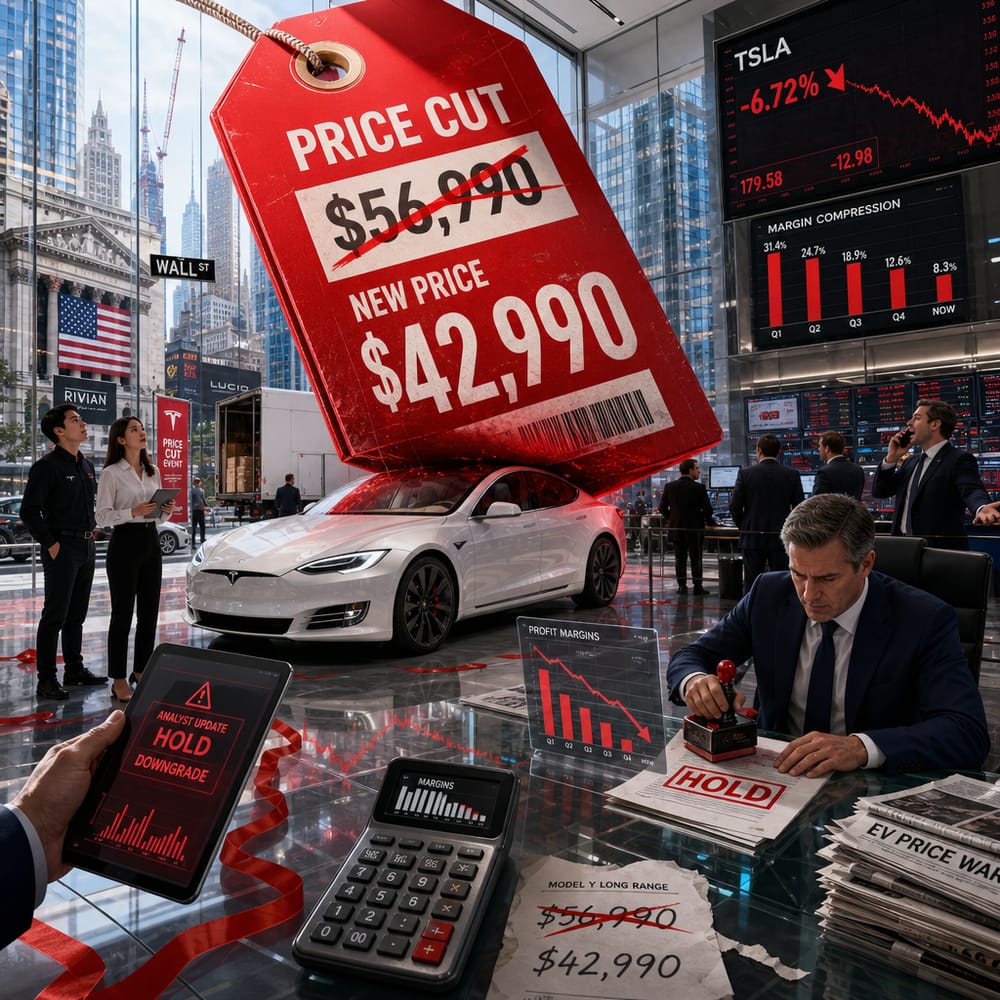
TESLA'S PRICE CUTS: A RISKY SLIDE INTO DOWNSIZED PROFITS
If Tesla's strategy were a roller coaster, its investors might be gripping their seatbelts right about now. Just when the ride was looking smooth, the company decided to take a wild plunge by slashing electric vehicle prices yet again. This bold move, however, prompted one analyst to hit the brakes and downgrade Tesla from "Buy" to "Hold." The concern? A stomach-churning dip in profit margins and an even crazier competitive landscape.
Imagine you’re Elon Musk for a minute. You're standing on the bridge of a spaceship, navigating the galaxy with daring maneuvers. Except, in this scenario, the galaxy is the electric vehicle (EV) market and the maneuver is a price cut. But this is no sci-fi adventure—this is the jarring reality Tesla finds itself in.
So, what’s the deal with these price cuts? Are we talking about a clearance sale at a department store? Not exactly. Tesla's decision to reduce prices is aimed at making its EVs more affordable, boosting sales volume, and staying ahead of fierce competition. But there’s a side effect: thinning profit margins that could leave investors feeling queasy.
Let’s break it down. Tesla has consistently enjoyed some of the beefiest profit margins in the auto industry, thanks to its brand loyalty, tech innovation, and production efficiencies. But when you cut prices, those lush margins can quickly slim down. The automatic consequence is a potential squeeze on profitability, which could trickle down and impact Tesla's bottom line.
This brings us to the question every investor is asking: What are the potential financial implications? The short answer is, it's complicated. Price cuts might ramp up sales and prevent competitors from poaching Tesla’s market. But they also potentially erode the premium brand image Tesla has worked so hard to build. Think of it like serving foie gras at a fast-food price—great for attracting hordes of new diners but not so great for maintaining that exclusive allure.
And then there’s the question of Tesla’s position in the ruthlessly competitive EV market. While the EV world was once a playground where Tesla had the fanciest toys, today it’s packed with contenders eager to swipe Tesla’s crown. Automakers like Ford, Rivian, and Lucid Motors are all charging into the space with their own electrifying beasts. Price cuts may keep Tesla’s offerings appealing on paper, but they don’t necessarily guarantee a win in the long game. It’s akin to slapping a turbo sticker on a sedan and hoping it outruns a sports car.
For the broader EV market, Tesla’s price-chopping strategy could set a precedent. Other automakers might feel pressured to follow suit, leading to an industry-wide race to the bottom in pricing. This could streamline EV adoption, a win for consumers and climate warriors alike, but it could also put the financial health of many automakers at risk.
The analyst downgrade from "Buy" to "Hold" is a signal, not a siren. It's telling investors to pause, catch their breath, and assess whether this roller coaster is really the thrill ride it's cracked up to be—or if it's more of a stomach-lurcher.
While Tesla's price cuts might seem like a masterstroke to fend off competition and bolster market share, it’s a double-edged sword. On one side, Tesla could sell more cars than ever before, solidifying its dominance. But on the flip side, razor-thin margins and a potentially diluted brand could spell trouble.
So, what's an investor to do? Keep a keen eye on Tesla’s financials, stay informed about the evolving EV landscape, and be ready to adjust strategies as needed. Investing isn’t about riding the wave blindly; it’s about steering through the waters with an eye on the horizon.
In the end, it's not just about how fast you can go—it's about how sustainable that speed is in the long haul. As Tesla gears up to zoom past its competitors, the real test will be whether it can keep the gears turning without slipping. Investors, buckle up—it’s bound to be a bumpy, exhilarating ride.
This article is for informational purposes only and is not investment advice. Always do your own research or consult a licensed financial professional before making investment decisions.
© Copyright 2024. All Rights Reserved.
© Copyright 2024. All Rights Reserved.