

Tesla Rating Divergence: Dual Analyst Revisions Amid Stock Slide
Saturday, November 21, 2026
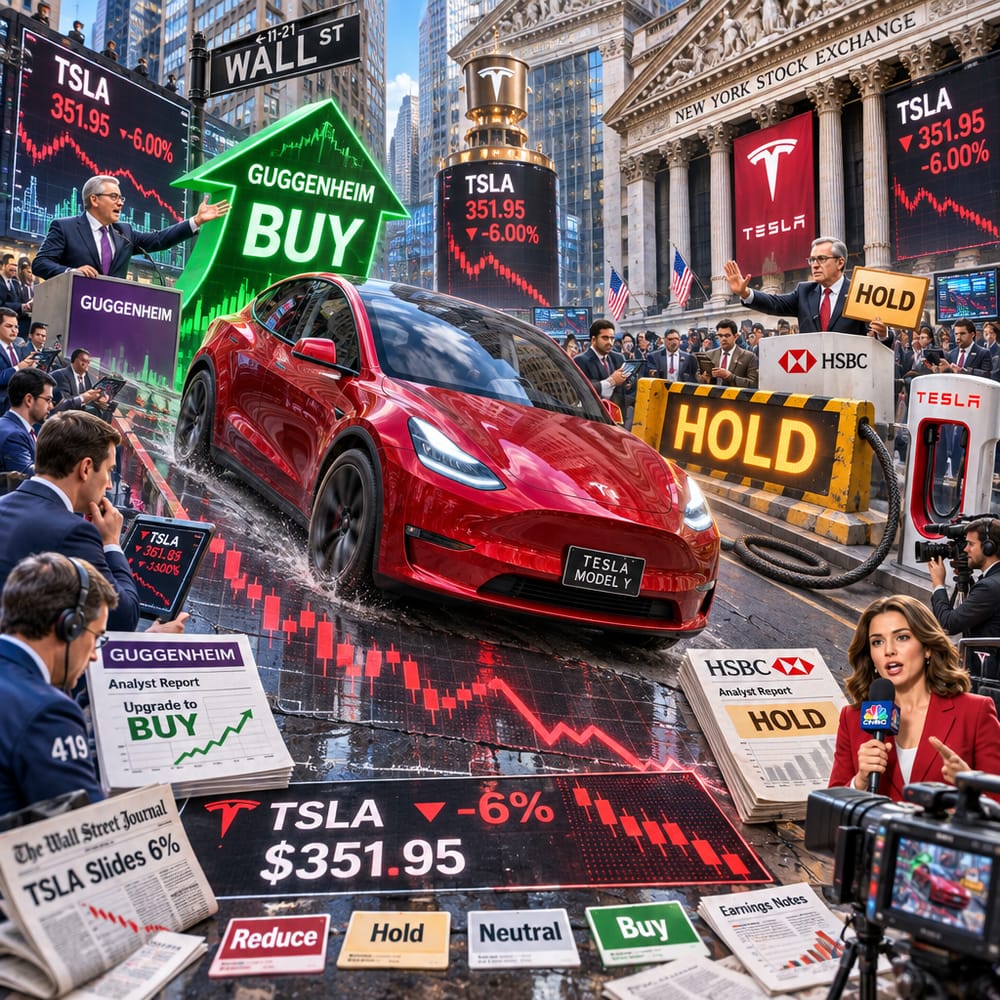
TESLA RATING DIVERGENCE: DUAL ANALYST REVISIONS AMID STOCK SLIDE
Tesla: the electric dream machine that's either revolutionizing transportation or leading the autopilot charge into a fiscal brick wall. On November 20th, as Tesla's stock skidded a slippery 6% to $351.95, two heavyweight analysts took starkly opposing stances. Like a scene from a Wall Street soap opera, HSBC dropped Tesla into the "Hold" basket from "Reduce," while Guggenheim did a cha-cha in the other direction, shimmying their rating from "Neutral" to "Buy." So, what’s cooking in this analyst stew?
First, let’s decode why HSBC put the brakes on Tesla. Their downgrade might seem like a gentle tap on the pedal rather than a full-stop screech, but it suggests caution. HSBC’s concerns seem to be rooted in the volatile nature of Tesla's market presence amid broader economic jitters. With the EV competition revving up and market conditions as favorable as a snowstorm in July, HSBC is probably signaling that investors should stay alert. Their stance hints at Tesla's stock being more of a wait-and-see situation rather than a clear-cut value pick.
Over at Guggenheim, however, it’s a whole different ballgame. They're seeing buy signals flashing brighter than a Tesla Model S Plaid’s headlights on a dark night. The upgrade to "Buy" suggests confidence in Tesla’s ability to harness its innovation-driven mojo and keep accelerating despite market roadblocks. Guggenheim might be betting on Tesla’s continuous growth potential, its command over the EV narrative, or maybe even the allure of Muskian charisma. Whatever the calculus, it’s evident they see Tesla as a buy-in-now-before-you-regret-it sort of deal.
These contrasting moves highlight a curious phenomenon: the duality of investor sentiment around Tesla. Such divergent ratings are not just about the numbers—they reflect the broader debate over Tesla's future role in the electric vehicle (EV) market and the tech sector at large. For the everyday investor, this news can feel like getting contradictory advice from a GPS: do you take the left fork or keep straight ahead?
Investors riding the Tesla rollercoaster are no strangers to abrupt twists and turns. Analyst ratings can sway sentiment like wind through a wind turbine, nudging Tesla’s notoriously volatile stock. This recent tango of opposing ratings could seed a fresh layer of uncertainty—or opportunity, depending on your perspective.
What does this mean for the market at large? Tesla is more than just a stock; it's a bellwether for investor attitudes toward innovation, risk, and the very future of the automotive industry. The divergent analyst opinions might foreshadow a broader debate about where the EV market is headed. As electric vehicles grow from niche to norm, companies like Tesla are central players in a high-stakes game that includes tech innovation, regulatory changes, and global economic shifts.
But here's the kicker: as much as analysts dissect Tesla's every move, the stock often dances to its own tune. The auto-loop these analyst opinions spin can excite or enervate investors, but Tesla's modus operandi has long thrived on beating conventional wisdom—even if it sometimes means driving through a dust storm.
In the end, whether you stick with HSBC's caution or vibe with Guggenheim's optimism might depend on your risk appetite and your confidence in Tesla’s ability to maintain its innovative edge. Just remember, in the stock market world, analyst ratings are like weather forecasts—they provide valuable insight, but you’d better pack an umbrella just in case.
So, Teslaphiles and wary investors alike, buckle up. This isn't just a tale of two ratings; it's a snapshot of the complex relationship between investor psychology and market reality. As Tesla continues its high-wire act across the stock market, one thing's for sure: the ride's bound to stay interesting.
This article is for informational purposes only and is not investment advice. Always do your own research or consult a licensed financial professional before making investment decisions.
© Copyright 2024. All Rights Reserved.
© Copyright 2024. All Rights Reserved.