

Tesla and Rivian Deliveries Boost EV Equities Amid Soft Jobs Data
Sunday, October 04, 2026
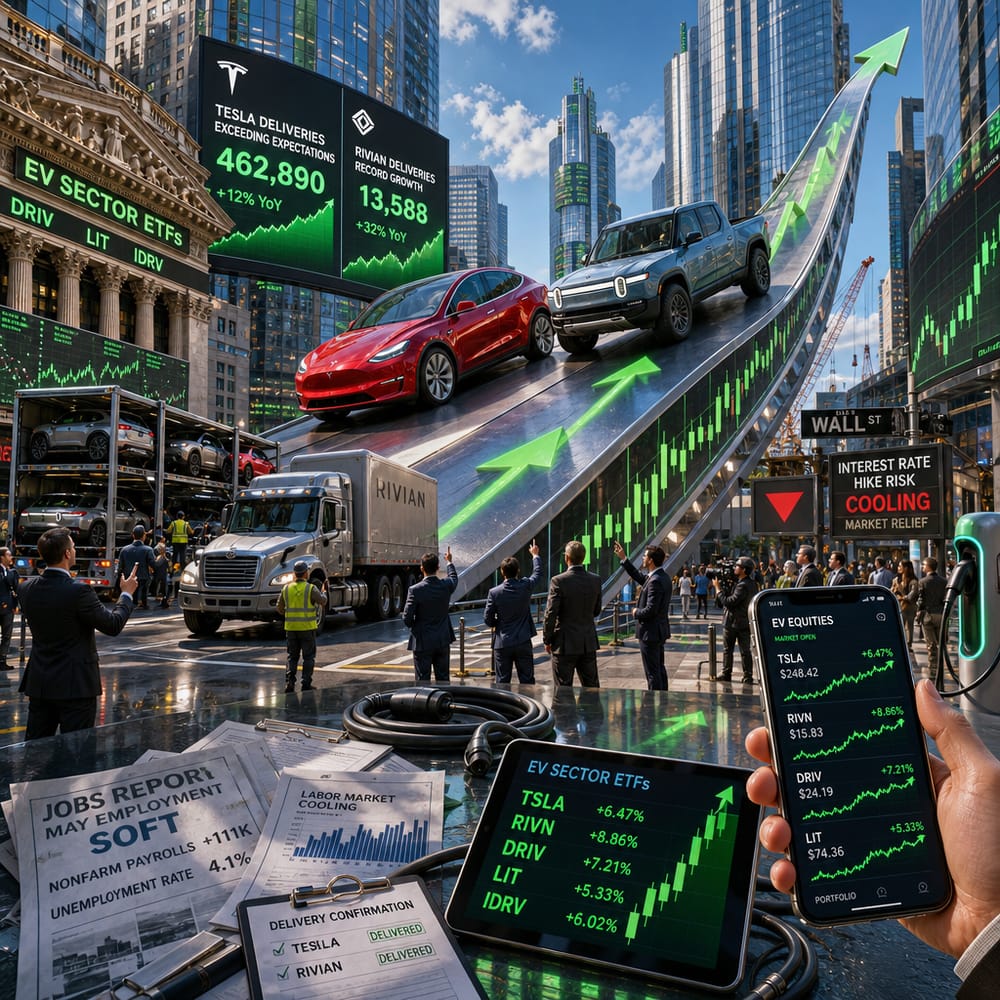
TESLA'S DELIVERY SURPRISE SPARKS EV STOCK RALLY, JOBS DATA ADDS FUEL
If you think electric vehicles (EVs) are just a passing trend, Tesla and Rivian's recent performance might make you reconsider. Picture this: Tesla just dropped its third-quarter delivery numbers and they weren't just good, they were "quit-your-day-job-and-invest-in-electric-cars" good. Not to be left in the dust, Rivian is feeling the love too, as investors seem to be saying, "I'll have what he's having."
So what exactly happened? Tesla's third-quarter 2026 vehicle deliveries left analysts blinking in disbelief. The numbers were not just slightly above expectations—no, they delivered a roundhouse kick of overachievement. When Wall Street was expecting a certain number of cars to hit the roads, Tesla said, "Hold my juice box," and revved past those estimates. It's more than just the volume; it's a signal that Tesla isn't just coasting on its reputation but is speeding ahead, pedal to the metal, in both production and delivery.
And just when we thought the stock market might be getting a little too boring, along came the latest jobs report. Normally, a weak jobs report isn't something that sends stocks soaring. Cue the collective groan from economists. But wait! This time, the softer-than-expected job numbers—a mere 29,000 new positions added with unemployment ticking up to 4.2%—actually worked in favor of EV stocks. The reason? It eased fears of the Federal Reserve getting trigger-happy with interest rate hikes. If the Fed decides to play it cool and keep rates stable, it's a positive jolt for high-growth sectors like electric vehicles, where financing costs can make or break an expansion plan.
So, what's going on with Rivian? It's not just caught in the Tesla tailwind; it's riding the electric wave with gusto. While Tesla's success is certainly boosting the whole sector, Rivian is making its own noise with robust deliveries that are turning heads. This isn't just trickle-down success. Rivian is carving its path and investors are paying attention. Think of it as Tesla lighting the fireworks, and Rivian happily joining the party with its own sparkler.
Investors, it seems, have developed a voracious appetite for all things electric, and it's not hard to see why. Between Tesla's delivery performance and the lull in interest rate hike fears, the market is practically begging for a piece of this electrified pie. EV sector ETFs are buzzing with activity, as retail investors, hedge funds, and probably that one uncle who always seems to know what's hot before anyone else does, are all trying to get in on the action.
So, why does all of this matter? Tesla is the canary in the electric coal mine. When it thrives, it suggests that the market demand for EVs is not only healthy but has potential legs that might sprint a marathon. As Tesla continues to set records, it's also setting a precedent and a pulse for the industry. Investors read into Tesla's numbers as a broader indicator of EV adoption and the potential for massive market shifts toward electric vehicles.
The takeaway from all this electric excitement? Keep your eyes on the EV road ahead. With companies like Tesla and Rivian charging forward, the auto industry landscape might just look a lot different in the near future. And if this week's developments are any indication, we could be headed for a future where more and more people are trading gas pumps for charging stations, and Wall Street seems ready to power the journey every step of the way.
In this electrifying moment, Tesla and Rivian are proving that it's more than a trend. It's a revolution. Whether you're a seasoned investor or someone who just likes the idea of never stopping for gas again, the next few months in the EV market promise to be as charged as the batteries powering these trailblazing cars. So hold tight, it’s going to be a fast ride.
This article is for informational purposes only and is not investment advice. Always do your own research or consult a licensed financial professional before making investment decisions.
© Copyright 2024. All Rights Reserved.
© Copyright 2024. All Rights Reserved.