

Tensions Heighten: Fed Chair Warsh’s Ambiguity Raises Market Questions on Interest Rate Path
Thursday, August 27, 2026
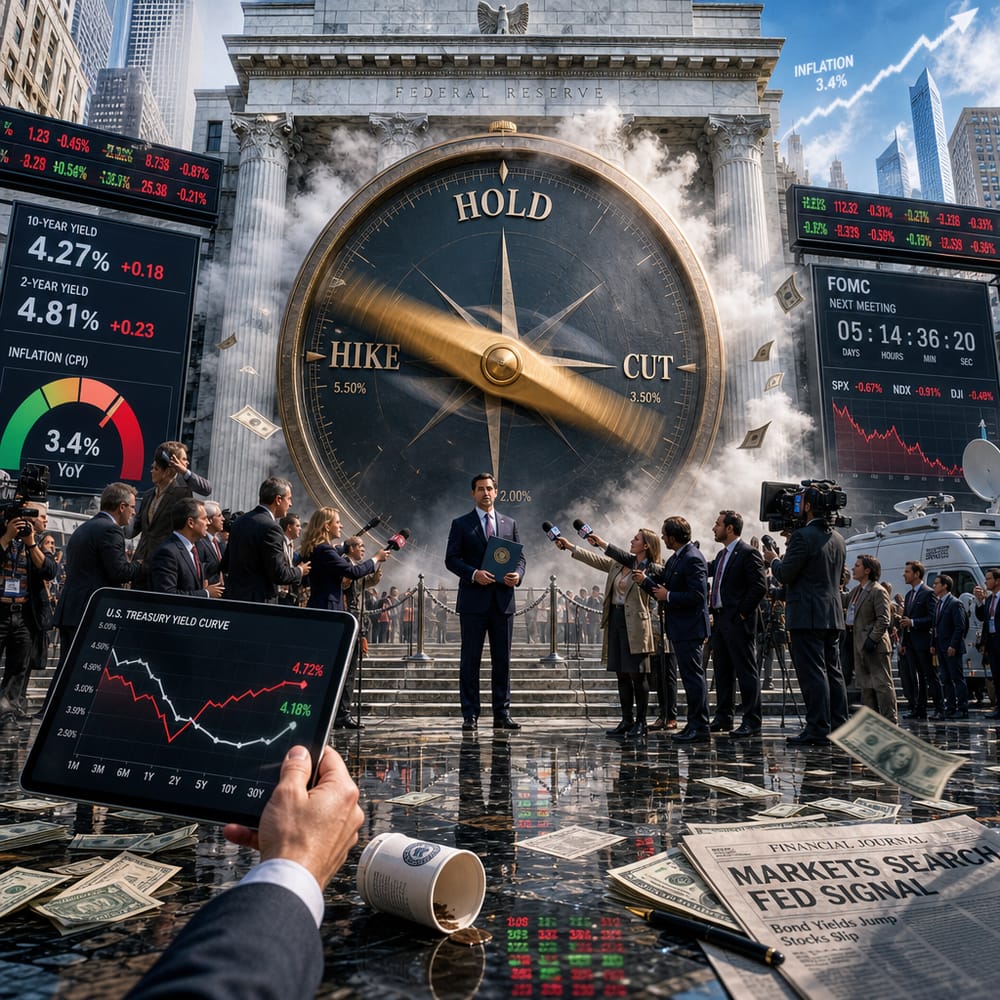
The Federal Reserve is feeling a bit like a moody magician these days—one moment, it pulls a rabbit out of its hat, and the next, it’s keeping the audience in suspense, waiting for a big reveal that may never come. Enter Kevin Warsh, our new Fed Chair with a penchant for ambiguity that has Wall Street’s finest scratching their heads and retail investors biting their nails. Warsh’s recent reticence on interest rates has led to a dramatic increase in market volatility, and investors are left wondering if this is part of a grand strategy or just a case of mixed signals.
Let's be clear: the stakes couldn't be higher. Interest rates are the rudder steering the economic ship through stormy seas, and right now, it feels like the captain has wandered off to take a nap. Investors are desperate for clues about where rates might be heading next, but Warsh has been as tight-lipped as a poker player with a royal flush. This leaves everyone—from day traders to Fortune 500 CFOs—playing a guessing game with real money on the line.
The consequences of this ambiguity could be as unpredictable as the Fed’s messaging. Without clear guidance, markets are behaving like a cat on a hot tin roof, bouncing with every hint and whisper from the Fed. Investors are left to piece together clues, parsing through every word from Fed officials like ancient scholars sifting through hieroglyphs. This mystery creates fertile ground for speculation and even more volatility. For those with a stake in the game, this is the financial equivalent of trying to stroll casually through a minefield.
To be fair, the Federal Reserve's opaque communication style isn’t entirely new. Under former chairs, the strategy of saying a lot by saying very little was often used to temper market reactions. But Warsh has taken it to a new level, leaving analysts debating whether less is really more when it comes to monetary policy. The thought process might be that by keeping everyone guessing, the Fed could maintain a sense of control—or at least the illusion of it—over an unpredictable economic landscape.
However, there’s a fine line between strategic ambiguity and outright confusion. And when the Fed remains mum on its plan, it leaves room for everyone to fill in the blanks with their own narratives, which can lead to some wild swings. Just look at the recent bump in tech stocks, spurred largely by Nvidia's earnings and the AI boom. Investors are keenly aware that interest rates can either fuel further rallying or throw cold water on the party, so Warsh's silence only adds to the uncertainty.
Retail investors, in particular, are feeling the heat. Without the resources to decode cryptic signals from the Fed, they often rely on more transparent guidance to make informed decisions about their portfolios. The lack of clarity can lead to reactive rather than proactive investment strategies, often leaving them chasing trends instead of setting them.
So what can investors do when left in the lurch by the Fed’s communication strategy? Diversification has never been more critical. Allocating assets across different sectors and taking a balanced approach can provide a buffer against the unpredictable. As recent market trends show with surges in AI and tech stocks, there are opportunities to capitalize on, but only if you’re prepared to navigate the choppiness.
Moreover, it might be wise to tune in more closely to other economic indicators, such as job reports or consumer spending data, for indirect insights into what the Fed might be mulling over in its ivory tower. While these won’t provide the definitive answers everyone craves, they can offer a sneak peek into the economic conditions the Fed might consider when deciding on rate hikes.
Ultimately, Warsh’s reticence acts as a double-edged sword. While it gives the Federal Reserve the flexibility to pivot as needed, it leaves markets swirling with uncertainty. And in a world where fortunes can be made or lost on the Fed’s every word or lack thereof, investors are hoping that Warsh will soon trade in his cloak of mystery for some much-needed transparency.
So, keep your eyes peeled and your ears open, folks. The Fed’s next move—or lack of one—could be the game-changer that defines your portfolio for years to come. Until then, it’s anyone’s guess which way the wind will blow. As the saying goes, forewarned is forearmed, and in this case, perhaps the best defense against uncertainty is to stay informed and ready to adapt.
This article is for informational purposes only and is not investment advice. Always do your own research or consult a licensed financial professional before making investment decisions.
© Copyright 2024. All Rights Reserved.
© Copyright 2024. All Rights Reserved.