

Ten-Year Treasury Yields Remain Elevated Despite Softer Data
Sunday, August 16, 2026
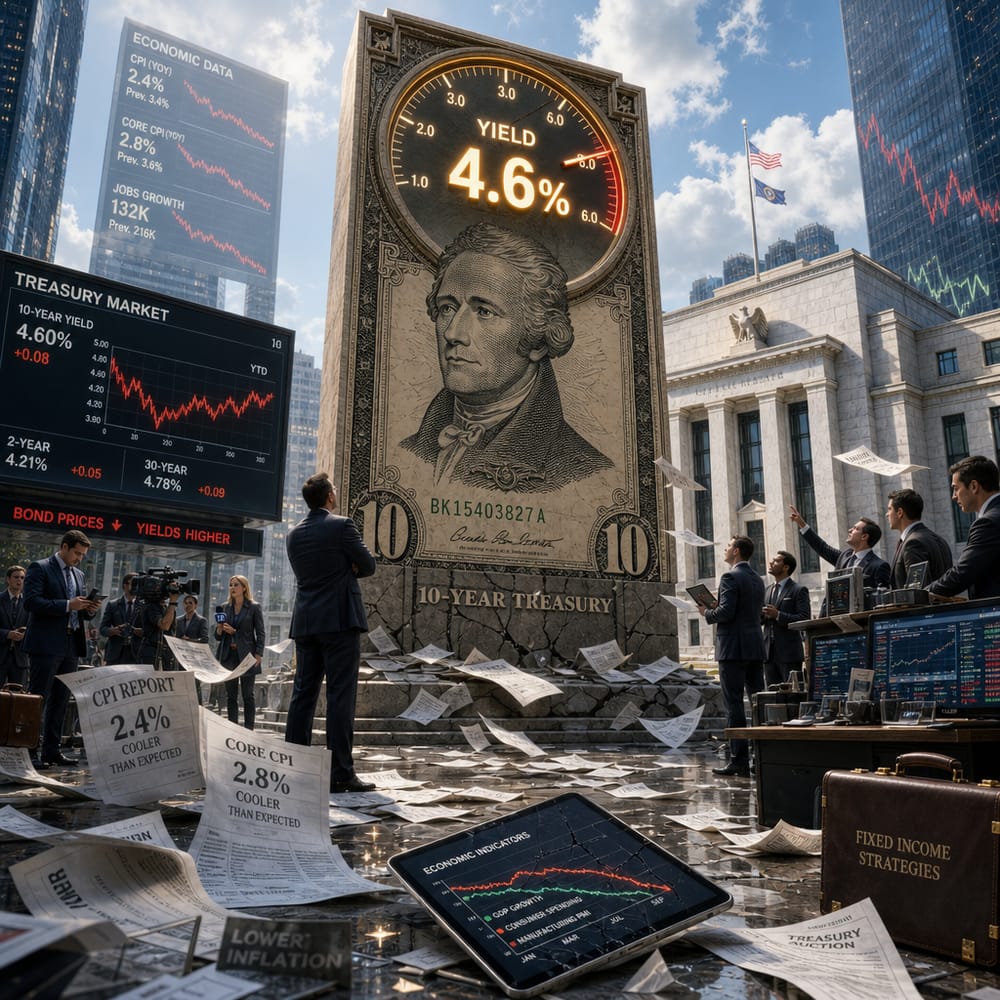
WHY TEN-YEAR TREASURY YIELDS ARE HIGH DESPITE SOFTER DATA
Grab your binoculars and get ready to peer into the mystifying world of ten-year Treasury yields. Despite the economy serving up some softer-than-a-marshmallow data, these yields are holding strong in the mid-4.6% range. If you’re scratching your head wondering why, you’re not alone. Let’s unravel this interest rate enigma and see what it might mean for your wallet.
High yields are like the stubborn kale smoothie at your local café—always present whether you want them or not. They’re supposed to react to economic data, right? Like, if inflation's cooling off and the economy’s taking a breather, shouldn’t those yields dip? Not quite. Don’t let appearances fool you; Treasury yields have a story of their own.
WHY ARE YIELDS HOLDING HIGH?
Here’s the scoop: even if the economy is showing signs it’s not as overheated as it was, Treasury yields have their sights set on something else—future inflation expectations and government borrowing needs. The U.S. government, like a shopaholic with a credit card, has a lot of debt to manage. This means more Treasuries flooding the market, leading to higher yields to attract investors.
Moreover, while the Federal Reserve has been playing a cautious game, not rushing to adjust its key interest rates, investors are bracing for what might come next. Uncertainty about the Fed's next move can keep those yields inflated as investors demand a risk premium for lending money over a decade.
Adding more spice to the mix is the global stage. Yields are influenced by what’s happening across the pond. If international markets are a frazzled mess, U.S. Treasuries become the comforting blanket investors cling to. It’s the classic flight to quality—everyone wants a piece of the American pie when things get shaky elsewhere.
IMPACT ON SENSITIVE SECTORS
What does this high-yield scenario mean for you? Well, it’s time to shine the spotlight on sectors sensitive to borrowing costs. Think housing, utilities, and any industry that lives and dies by financing.
Sustained high yields can be a formidable foe for these sectors. Higher borrowing costs mean higher mortgage rates, which translates to a cooling property market. Not to mention the potential for increased utility bills if companies pass on their higher costs to consumers. It’s a bit like winter coming early—nobody's thrilled about it, but you’ve got to brace yourself.
HOW MIGHT THIS INFLUENCE FUTURE FED DECISIONS?
Could these pesky high yields influence the Fed's next steps? Absolutely. The Federal Reserve is like the DJ in a crowded club—always adjusting the beats to keep the dance floor in sync. If high yields start to cramp the economy’s style, the Fed might be tempted to tweak their interest rate tracks to maintain that perfect party atmosphere.
However, the Fed plays it cool and strategic, balancing inflation and employment like a tightrope walker. If the economy isn't buckling under the pressure of these elevated yields, they might stick to their guns and keep rates steady.
THE TAKEAWAY
So, what should you do as an everyday investor scrolling through Twitter or sipping your morning coffee? Keep a watchful eye—yields love to throw curveballs. Consider how sectors sensitive to borrowing costs might react, and think about your own exposure. Whether it's your mortgage or stocks tied to interest-rate-sensitive industries, a little foresight can go a long way.
Remember, even in the financial world, things aren’t always what they seem at first glance. A high yield might look like a storm cloud, but it could be the signal you need to adjust your sails. Stay sharp, stay informed, and perhaps, enjoy a cup of coffee while the yields do their dance.
This article is for informational purposes only and is not investment advice. Always do your own research or consult a licensed financial professional before making investment decisions.
© Copyright 2024. All Rights Reserved.
© Copyright 2024. All Rights Reserved.