

Tech Surge: S&P 500 Nears Record Highs as Nasdaq Leads
Friday, September 25, 2026
THE TECH SURGE: S&P 500 NEARS RECORD HIGHS AS NASDAQ LEADS
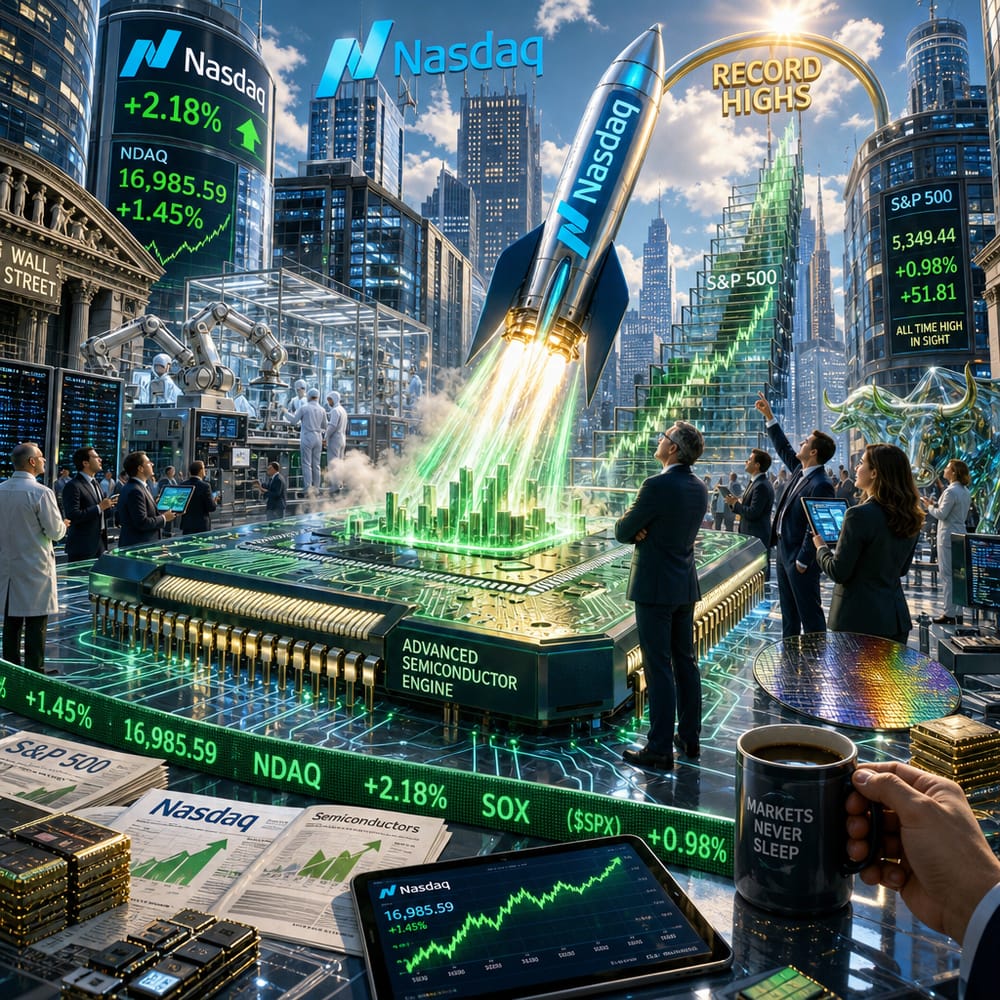
Don't blink or you'll miss it: the S&P 500 is almost touching the stars again. On Monday, it jumped 1.5%, flirting with its all-time highs, while the Nasdaq did its best impression of a caffeinated cheetah, leaping 2.3% and leaving investors with a peculiar sight to behold. The star of this market circus? None other than the semiconductor stocks, which seem to have swapped their silicon for rocket fuel. But what's powering this digital dynamo, and can it keep the party going for the S&P 500?
First, let's zoom in on the silicon superheroes. The semiconductor sector isn't just your average tech contributor; it's the backbone that holds the tech world's spine straight. Chips are involved in everything from smartphones to supercomputers, and when they perform well, it's like tech stocks have just downed a double espresso.
So, what's behind the semiconductors' sizzling success? A few factors are at play here. First, the AI boom continues to be a major driver. As companies race to integrate artificial intelligence into their operations, the demand for advanced chips capable of handling AI workloads is skyrocketing. It's like the gold rush, but instead of pickaxes, it's all about processors.
Then there's the supply chain recovery. After a bumpy few years where getting your hands on a semiconductor was like trying to find a unicorn, the supply chain is smoothing out. More chips mean more happy tech companies, which translates to rising stock prices. Add in some serious growth expectations surrounding AI infrastructure—think more data centers and faster processing power—and you've got a potent mix for semiconductor stocks.
But can this tech rally keep pushing the S&P 500 higher, or will it fizzle out as quickly as a toddler's attention span? Well, the tech sector does have a track record of pulling the broader market along for the ride, so there's optimism in the air. However, there's a caveat: it's not all sunshine and rainbows.
The bond market is throwing a bit of a wrench into the works, with 10-year Treasury yields climbing to their highest levels since 2007. High yields generally mean higher borrowing costs for businesses, which could pinch some of the profit potential out of tech companies down the line. Still, the current tech momentum seems to have enough fuel for now.
The rest of the market, however, isn't all in on the tech party. While tech stocks are doing the electric slide up the charts, other sectors are taking a more cautious approach. Energy stocks, for instance, are feeling the pressure from high energy prices and geopolitical tensions—a fancy way of saying no one's really sure what's going to happen next, but they're bracing for impact. Meanwhile, consumer staples and utilities are hanging back, waiting to see how the tech whirlwind plays out before making any moves.
So, what does this all mean for Joe and Jane Investor scrolling through their phones, wondering if they should join the semiconductor fan club or stay on the sidelines? The key takeaway here is diversification. Tech might be the toast of the town right now, but markets are notoriously fickle. What soars today could stumble tomorrow, especially with those pesky bond yields looming.
In a nutshell, the tech surge is real, and it's giving the S&P 500 a shot at new highs. But before you go all-in on tech stocks, remember that a balanced portfolio—one that includes a mix of sectors—is usually the best way to ride out the market's inevitable ups and downs. So, keep your eyes on the silicon prize, but don't forget about the rest of the market cast.
In the end, whether this rally is a blip or a long-term trend will depend on a delicate dance between tech's relentless innovation and the broader economic backdrop. So grab your popcorn, because the market show is just getting started.
This article is for informational purposes only and is not investment advice. Always do your own research or consult a licensed financial professional before making investment decisions.
© Copyright 2024. All Rights Reserved.
© Copyright 2024. All Rights Reserved.