

Tech Stocks Under Pressure from Rising Treasury Yields
Saturday, August 22, 2026
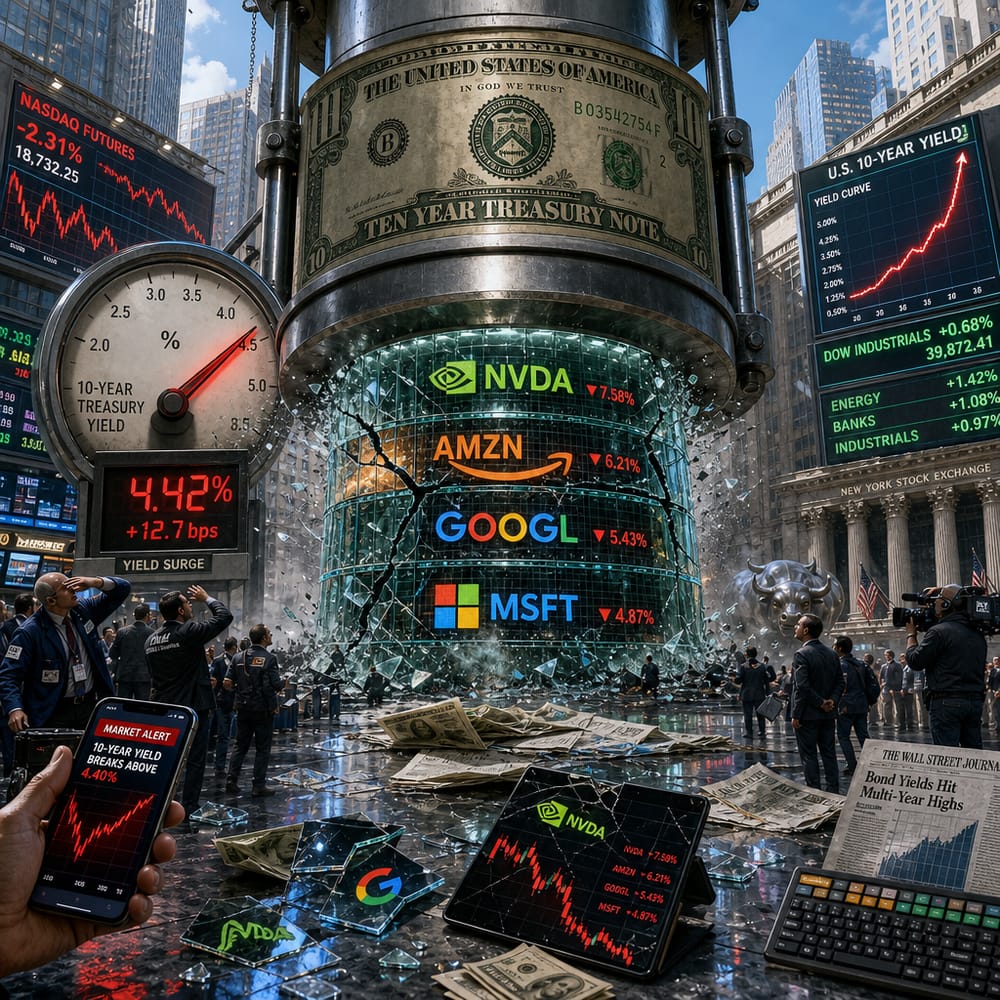
Rising Treasury Yields Are Taking a Bite Out of Tech Stocks
Ladies and gentlemen, gather 'round as we untangle the latest drama gripping Wall Street. This episode features your favorite tech giants—Nvidia, Amazon, Alphabet, and Microsoft—embroiled in a little wrestling match with, wait for it, rising Treasury yields. Yes, the financial equivalent of The Rock's eyebrow raise has the tech stock luminaries feeling the squeeze. Let’s dive into this plot twist and figure out what it all means for the market's high-flyers and the investors who adore them.
First off, let's get one thing straight: Treasury yields are basically the interest the government pays you for loaning Uncle Sam your cash. When these yields start climbing, they’re like your annoying friend who always asks for favors—demanding more of your attention and a whole lot more of your money. For tech stocks, which are famous for their growth potential, this becomes a problem because higher yields make those future profits look less attractive in today’s dollars. In finance speak, it’s all about the "discount rate," but let's keep it simple: as yields climb, tech stocks can get spooked and lose the allure of being a "sure thing."
It's not just a theoretical exercise, either. The tech titans are starting to feel the heat. Nvidia, the chip powerhouse, is about to report earnings, and all eyes are on whether they can continue their high-wire acrobatics in this tricky new environment. The stakes are high because any disappointment could spark a sell-off faster than you can say, "AI revolution."
Now, you might be asking, what happens if tech stocks really start to tank? Well, one word: rotation. No, not the kind you find at your local spin class. We're talking about sector rotation, a strategy savvy investors use to park their money in sectors that thrive in rising yield environments—think financials and energy. Investors might start shifting their dollars away from tech darlings toward these other sectors that don't break a sweat when yields rise. It's like swapping your designer sneakers for a pair of reliable hiking boots because, let's face it, the market terrain is looking rough.
And here's where it gets really juicy: Microsoft and Alphabet will also soon be revealing their cards with their own earnings reports. Imagine the collective holding of breath in boardrooms around the world. Will these companies reassure the market with continued strength, or will they face the wrath of investors looking for any excuse to jump ship? It's a cliffhanger worthy of the best binge-watching series.
But why should you, the everyday investor, care about any of this? Well, if you have skin in the game via a stock portfolio or retirement fund, these dynamics could shape your returns. If the tech titans start stuttering, it might be time to rethink your allocation and keep an eye on how the broader market is reacting. The tech-heavy Nasdaq is known for its roller-coaster ride, and let's just say the price of admission right now is a bit steep.
The upcoming Federal Reserve meeting adds another layer of intrigue. With Chairman Kevin Warsh set to address the nation from the economic mecca that is Jackson Hole, any hint about the direction of interest rates could turn the market on its head. If Warsh signals a hard stance on controlling inflation by allowing yields to keep rising, tech stocks might not be thrilled. After all, it's hard to keep that growth story alive when the cost of capital feels like it's wearing lead boots.
So, as you sip your morning coffee and scroll through your news feed, keep an eye on the headlines. The interplay between tech stocks and Treasury yields isn't just a story of numbers—it's a drama with real implications for your portfolio. Keep your ear to the ground, your eyes on the prize, and maybe even a little popcorn at the ready, because this financial soap opera is far from over.
This article is for informational purposes only and is not investment advice. Always do your own research or consult a licensed financial professional before making investment decisions.
© Copyright 2024. All Rights Reserved.
© Copyright 2024. All Rights Reserved.