

Tech Sector Faces Pressure as Chip Stocks Falter
Wednesday, August 26, 2026
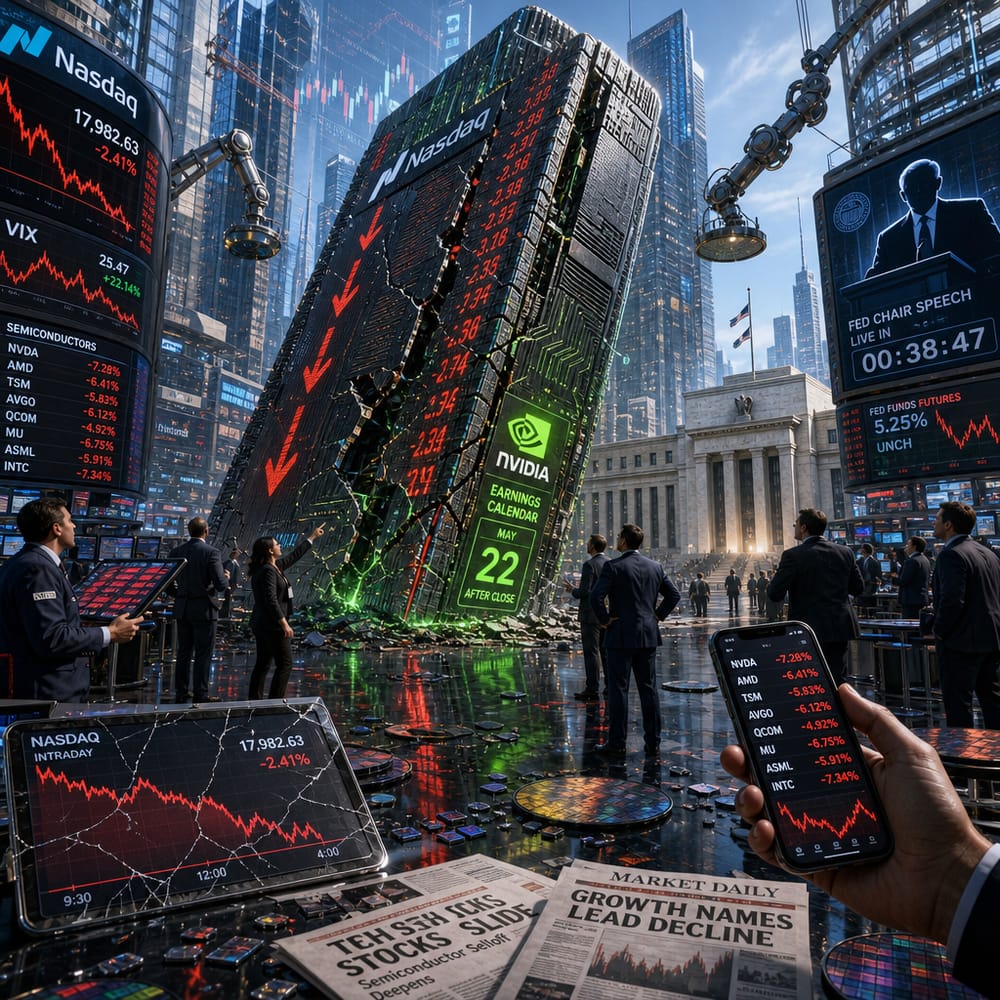
TECH SECTOR FACES PRESSURE AS CHIP STOCKS FALTER
Tech stocks, the beloved darlings of the modern investor's portfolio, are currently throwing a tantrum, and Nvidia is right at the heart of the drama. The Nasdaq's recent dip is a testament to the sector's jitters, highlighting a brewing storm of investor caution. With Nvidia's earnings around the corner and Fed Chair Jerome Powell gearing up for a speech, the market is collectively holding its breath.
So, what gives? Why are tech stocks acting like teenagers who just got their first bad grade? Well, if there's anything investors dislike more than a bad report card, it's uncertainty, and the tech sector is currently swimming in it. Thanks to sticky inflation numbers, geopolitical tensions, and the sheer unpredictability of the AI boom, investors are skittish.
First, let's talk semiconductors. These micro marvels might be tiny, but their impact on the tech sector is anything but. Semiconductor stocks have taken a hit recently, dragging down the Nasdaq like a stubborn anchor. With supply chain issues still causing headaches, and memory prices pointing in every direction except the right one, investor confidence is getting a little wobbly.
Now, enter Nvidia, the chip kingpin with all eyes on its earnings. Nvidia's report is as eagerly anticipated as the latest season of your favorite show. The company's results could be a make-or-break moment for the sector. If Nvidia reports strong data center results and guidance, especially in AI demand, it might just be the rallying cry the tech sector needs to regain its mojo. But if the numbers disappoint, brace yourself for more red on the Nasdaq.
But hang on, there's another player in this suspenseful drama: the Federal Reserve. Recently, the Personal Consumption Expenditures (PCE) price index gave investors a case of the jitters by revealing that inflation isn't going anywhere soon. With core inflation hanging stubbornly around 3.3%, the Federal Reserve's bark might just turn into a bite. And with the bond market playing a game of musical chairs, tech stocks are feeling the pressure.
The tech sector's current volatility isn't just a flash in the pan. It's got wider implications for the whole market. Tech has been the engine driving market gains for years, and when it sputters, everyone else feels it too. If chip stocks continue to falter and Nvidia doesn't deliver, the ripple effect could be felt across portfolios, from New York to New Mexico.
Investors are also grappling with the broader question of AI's impact. Even Bill Gates is sounding alarms about the "social, political, and economic upheaval" AI might cause. Those concerns aren't just philosophical; they're tied directly to market dynamics. Companies betting big on AI, like Nvidia, carry a lot of weight on their silicon shoulders. If AI doesn't meet the hefty expectations, tech stocks could be in for a rough ride.
So, what should the savvy retail investor be watching for? Besides Nvidia's earnings and any hints of inflation strategy from the Fed, keep an eye on geopolitical tremors as well. The recent hacking allegations against a Chinese state-sponsored group targeting U.S. infrastructure remind us that tech isn't just a domestic concern—it's global.
In the meantime, maybe don't panic just yet. Markets have weathered storms like these before, and opportunities often grow in the shadow of adversity. But do keep your eyes peeled and your investments nimble. The next few weeks could chart a course for tech stocks, and whether they fly high or fumble, you'd want to be ready for anything.
In the unpredictable theater of the market, the tech sector is playing the lead role. Whether it turns out to be a hit or a horror show, well, that's up to Nvidia and the Fed to decide. Until then, keep your popcorn handy, and maybe consider diversifying your portfolio just a tad.
This article is for informational purposes only and is not investment advice. Always do your own research or consult a licensed financial professional before making investment decisions.
© Copyright 2024. All Rights Reserved.
© Copyright 2024. All Rights Reserved.