

Tech Sector Drag Despite Treasury Buyback Moves
Thursday, August 20, 2026
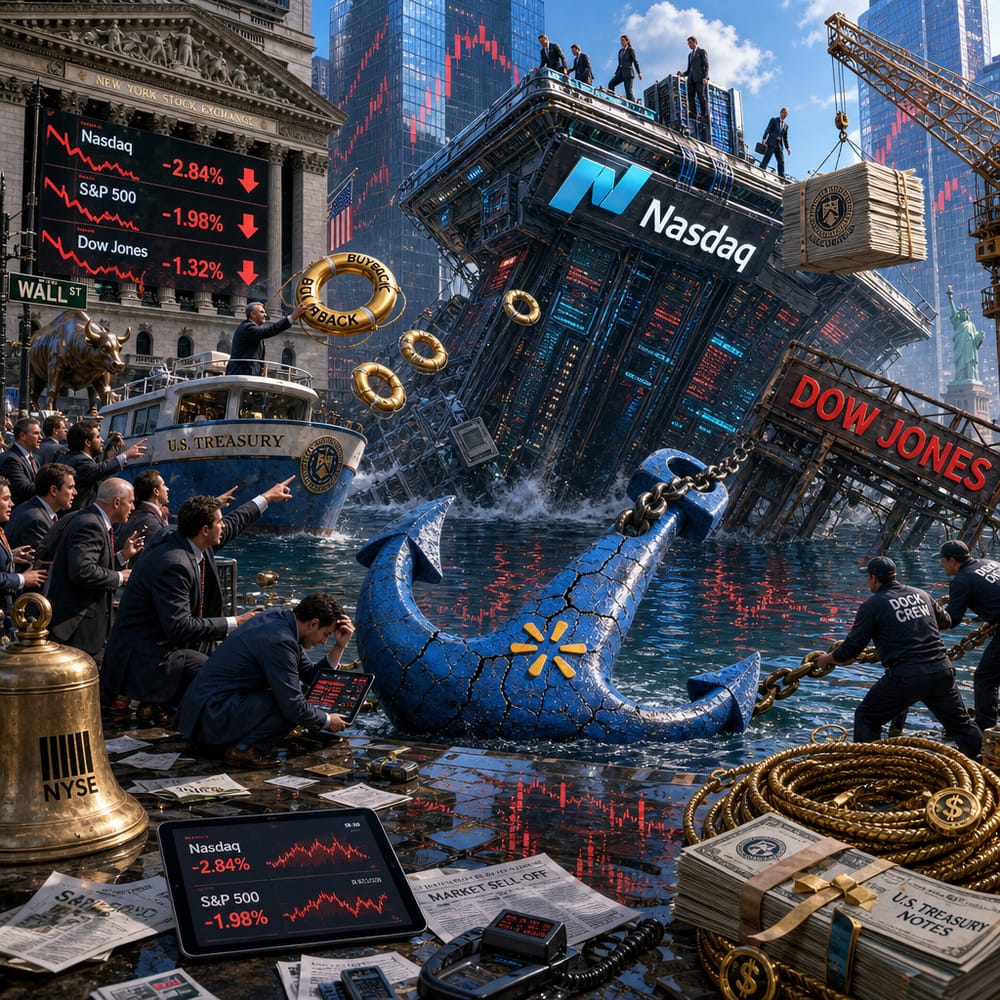
If you thought the Treasury's debt buyback was going to rescue tech and retail stocks from their current funk, think again. With a Fed-like bravado, the Treasury announced plans to supercharge its money-back operation on long-term bonds, hoping to sedate the soaring yields and maybe sprinkle a little fairy dust on a jittery market. But instead of a happy ending, we got a plot twist. Tech stocks took a nosedive, and Walmart dragged the Dow down like it was hauling discounted TVs on Black Friday. What's the deal with all this market mayhem?
First, let's unpack the bond market drama. In a nutshell, bond yields have been on a thrill ride, climbing to heights not seen since your favorite TV series finale. Rising bond yields mean higher borrowing costs, which is bad news for sectors like tech and retail. These industries thrive on cheap capital to fund operations, expand product lines, and, in the tech sector's case, keep the next-gen innovation engine humming. So when borrowing costs surge, it tightens the belt on these sectors, forcing them to reconsider investment plans and growth trajectories.
Why should you care about Walmart's rough day on the stock exchange? Well, for starters, Walmart is more than just a retail giant. It's a barometer for consumer sentiment and spending, a linchpin in the U.S. economy. Walmart’s shares took a 9% hit over concerns of slowing sales growth, especially after their pharmaceutical division stumbled. This swerve isn’t just another bump; it has broader market implications. As Walmart wobbles, it sends ripples through the Dow Jones, which tumbled 637 points. Investors start questioning if other retail juggernauts might be gearing up for similar turbulence, potentially leading to a domino effect across the market.
Enter the Treasury’s buyback plan, a strategy that sounds as inviting as a "buy one, get one free" sale. Secretary Scott Bessent's promise to at least double repurchases of 10-, 20-, and 30-year debt seemed like a masterstroke to cut borrowing costs. But, alas, the plan's effect was like throwing a bucket of water on a forest fire. Bond yields remained robust; for instance, the 10-year Treasury note yield brushed up against 4.706%, while the 30-year touched levels unseen since the mid-2000s. For those not fluent in bond-speak, these numbers translate into skepticism about the market's faith in the buyback's stabilizing power.
So, what did the buyback plan achieve? Well, it highlighted the Treasury's attempt to assert control over escalating borrowing costs. But the lukewarm market response underscores a truth: stabilizing the economy isn’t just about waving a financial magic wand. It requires cohesive policy actions and, importantly, a market that believes in those actions. With current strategies failing to fully anchor yields, the Treasury might need a more potent plan or risk watching as market volatility becomes the new norm.
The current bond yield saga isn't just a financial footnote—it's a peek into how sensitive sectors like tech and retail respond to interest rate fluctuations and economic headwinds. High yields make financing costly, stymieing growth and innovation in tech and trimming expansion budgets in retail.
As for Walmart, its slump might be a harbinger of broader caution in consumer spending, especially if sales slow across key divisions. Retail giants will need to reassess strategies, perhaps doubling down on competitive pricing and customer engagement to coax shoppers back through the doors.
The plot twist here is a stark reminder: in the world of finance, no plan is foolproof. The market is an unpredictable beast, responding not just to government measures but also to the broader narrative of economic stability and consumer confidence. As the Treasury navigates these turbulent waters, retail investors should keep a close eye on bond yields and sectorial shifts. After all, in the stock market rollercoaster, it's always wise to strap in and hold tight.
This article is for informational purposes only and is not investment advice. Always do your own research or consult a licensed financial professional before making investment decisions.
© Copyright 2024. All Rights Reserved.
© Copyright 2024. All Rights Reserved.