

Tech ETF Inflows Surge Amid Rising Yields
Monday, October 12, 2026
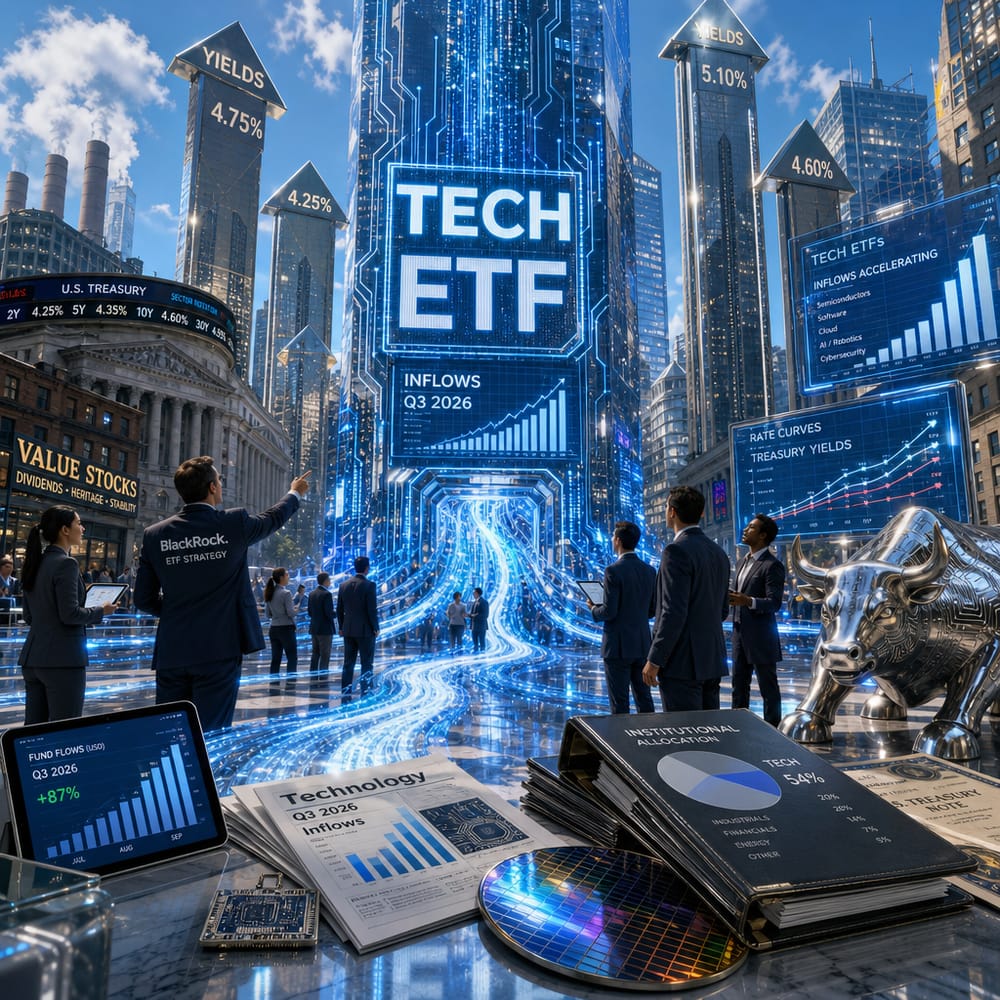
TECH ETF INFLOWS SURGE AMID RISING YIELDS: UNMASKING THE MARKET'S LOVE AFFAIR WITH TECH
You know that feeling when you see a real juicy plot twist in your favorite show that makes you sit up and go, "Wait, what?" Well, that's precisely what's happening in the market right now. Despite bond yields rising higher than a kite at a summer festival, investors are still flooding into tech sector ETFs like they're the last discounted iPads on Black Friday. The big question is: What gives?
Let's break it down. BlackRock recently released a report showing significant inflows into tech ETFs during Q3 2026. For those not fluent in finance speak, an ETF, or exchange-traded fund, is like a mutual fund but with the convenience of trading like a stock. Think of it as a way to buy a basket of stocks all at once—perfect for diversifying your portfolio without breaking a sweat.
Despite rising yields—which usually act like kryptonite for tech stocks by making their future cash flows less attractive—investors are still pounding the "buy" button. Why, you ask? Well, in the ever-evolving soap opera that is the stock market, tech continues to be the star character.
Let's zoom in on which sub-sectors are raking in the dough. There's been a frenzy for AI and cloud computing stocks, with investors betting big on the future of artificial intelligence and all things cloud-based. Honestly, it seems like if it involves AI, people are ready to throw money at it faster than you can say "robot revolution." Meanwhile, cybersecurity is also buzzing, probably helped along by recent headlines about hackers causing chaos in French supermarkets by… heating up fridges? Yeah, that happened.
Now, if you're curious about how these tech titans stack up against good ol’ value stocks—think staid, predictable companies that pay dividends—you might want to lean in a bit. Typically, you'd expect value stocks to attract more interest when yields rise, because they promise solid returns right now, as opposed to tech's promise of jam tomorrow. However, despite some interest, they're still taking a backseat. Why? It might be because tech is not just about tomorrow anymore; it's here today, embedded in everything from our morning coffee makers to the algorithms deciding what we binge-watch next.
So, what's the market's reaction to this tech lovefest? It's a mixed bag, but mostly it seems like the market is giving tech a sly wink and a nod. With investors treating tech like it's still the belle of the ball, it sends a signal that despite macroeconomic headwinds, people believe the sector will keep marching forward. It's like the market is collectively saying, "Rising yields be damned, have you seen what AI can do?"
But let's not get carried away on the tech train just yet. It’s crucial to remember that this is a high-stakes game, and tech's allure often belies a rollercoaster of volatility. The Federal Reserve is still doing its tightrope act with interest rates, and any sudden moves could tip this delicate balance. In other words, tech inflows could take a nosedive faster than you can spell "ETF" backward.
And while we're all sitting here sipping our morning coffee, Musk is out there playing politics—donating a jaw-dropping $276 million to Republican groups this political season. Now, how could this affect our tech-centric market? You tell me. From tax policies to regulatory hurdles, the whims of political winds could steer the sector's fate more than we like to admit.
So, where does this leave the everyday investor? If you’re considering splashing some cash in tech ETFs, tread carefully. Diversification remains your best friend, and staying informed is like having a map in a maze. As this tech saga unfolds, keep your eyes peeled and your ears to the ground. After all, the market is as unpredictable as ever—who knows what the next plot twist will be?
This article is for informational purposes only and is not investment advice. Always do your own research or consult a licensed financial professional before making investment decisions.
© Copyright 2024. All Rights Reserved.
© Copyright 2024. All Rights Reserved.