

Tech Earnings and AI CapEx Concerns
Thursday, July 30, 2026
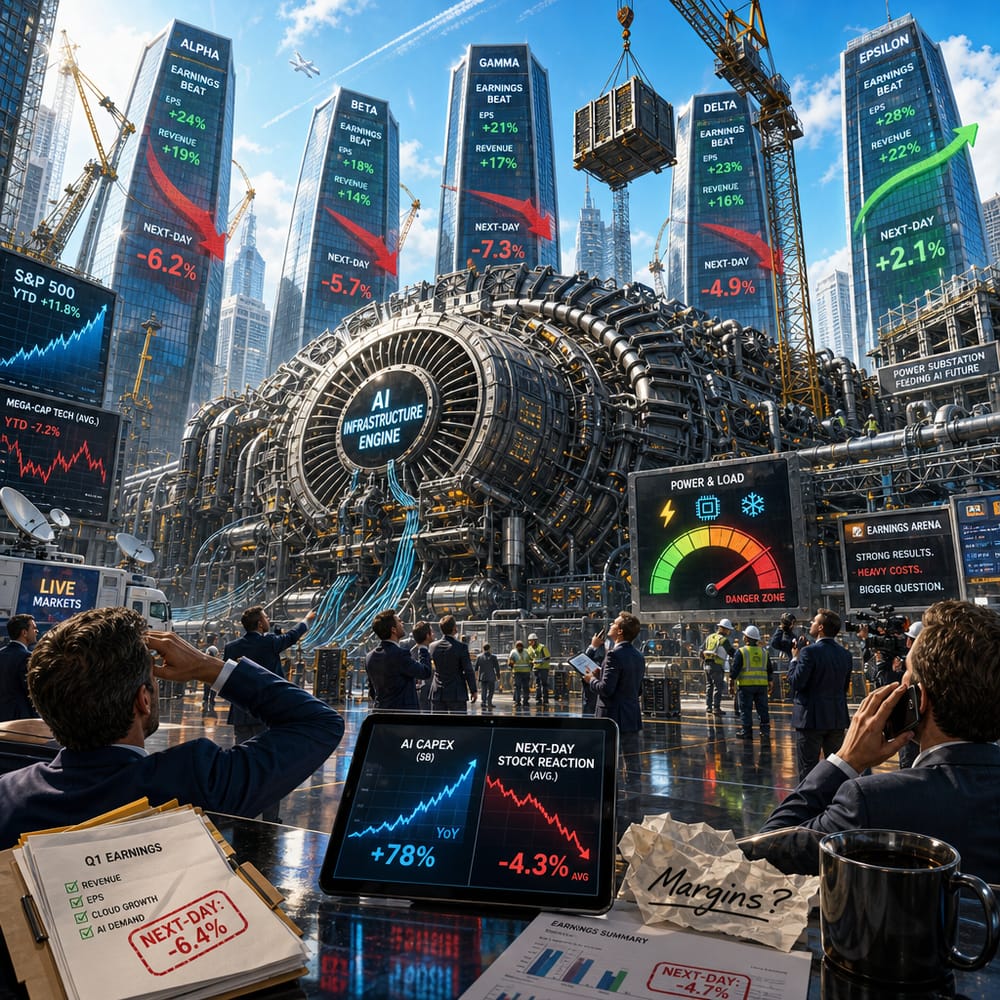
HEADING: Tech Titans Tumble: The AI Spending Conundrum That's Spooking Investors
Once upon a time, in a world where tech giants could do no wrong, a new villain emerged, and it’s not what you’d expect. It’s not a hacker, nor an economic downturn, but a friend-turned-foe: artificial intelligence spending. Yes, AI, that shiny new toy everyone was excited about, is now the monster in the closet for tech stocks.
This quarter, only one in five of the tech behemoths outshone the S&P 500 the day after dropping their earnings reports. Investors usually ready to pop the champagne are now eyeing AI capital expenditures (CapEx) with suspicion, like a parent examining their teenager's phone bill. So, what’s the deal?
Mega-cap tech stocks—think household names like Microsoft and Meta—have been flaunting their AI advancements like a new sports car. But with great power (and investment) comes great scrutiny. The market has been beset with concerns that these colossal investments in AI may not pay off as expected.
Let’s talk about the elephant in the room: Microsoft and Meta. Microsoft strutted in with its AI-driven growth, reporting a 43% leap in its Azure business. It’s like they found the golden AI goose, and investors are loving it. The stock soared 8% in premarket trading, as shareholders applauded Microsoft's roadmap to AI profitability, much akin to a show-stopping finale on a reality talent show.
On the flip side, Meta's stock plummeted around 9%. The social media giant is facing a classic “spend now, maybe gain later” dilemma. Its soft revenue forecast coupled with an alarming 91% drop in free cash flow left investors reaching for their red flags. Meta’s AI spending, rather than evoking a futuristic utopia, is currently just a black hole of expenses with no immediate payback.
This isn’t just about two giants battling it out. It’s a broader narrative about how tech titans are navigating the AI landscape. Investors are increasingly jittery about whether AI investments will yield substantial results or simply wind up being expensive science projects.
So, how are investors reacting? With a mix of optimism and apprehension. The stock market's response to the latest tech earnings shows a landscape fraught with both promise and peril. On one hand, you've got Microsoft’s narrative—confident, strategic, with a clear ROI path that feels like a victory parade. On the other, Meta’s story is a cautionary tale, a reminder that heavy spending doesn’t always equate to success.
The cautious investor is now asking tough questions, grilling these tech companies on their long-term AI strategies like a detective in an old noir film. Are these AI investments simply adding to the bottom line, or is there a measurable competitive advantage? Will these investments adapt to changing market dynamics, or will they become costly relics?
The impact of these AI CapEx concerns reaches beyond individual companies. It’s affecting market sentiment at large. The tech-heavy Nasdaq saw declines, and there's palpable tension in the air—tension that’s got retail investors, the kind who want to grow their portfolios while binge-watching their favorite shows, feeling uneasy.
For those diving into tech stocks, it might be wise to take a page out of the cautious investor's playbook. Scrutinize the AI spending strategies of these companies. Are they poised for growth, or are they just betting big on the next tech buzzword? The marketplace is an arena right now, where each tech giant must prove that their AI investments aren’t just shiny new gadgets but robust, revenue-driving innovations.
All in all, the world of mega-cap tech stocks is a dynamic stage, with AI spending stealing the spotlight. Like a dramatic soap opera, the plot thickens with every earnings report. Investors are left to choose their sides—cheering on Microsoft’s measured optimism or waiting for Meta’s potential redemption arc. Either way, this AI adventure has only just begun, and it’s set to be a blockbuster.
This article is for informational purposes only and is not investment advice. Always do your own research or consult a licensed financial professional before making investment decisions.
© Copyright 2024. All Rights Reserved.
© Copyright 2024. All Rights Reserved.