

Tech Drag: Nvidia Leads Losses
Friday, July 31, 2026
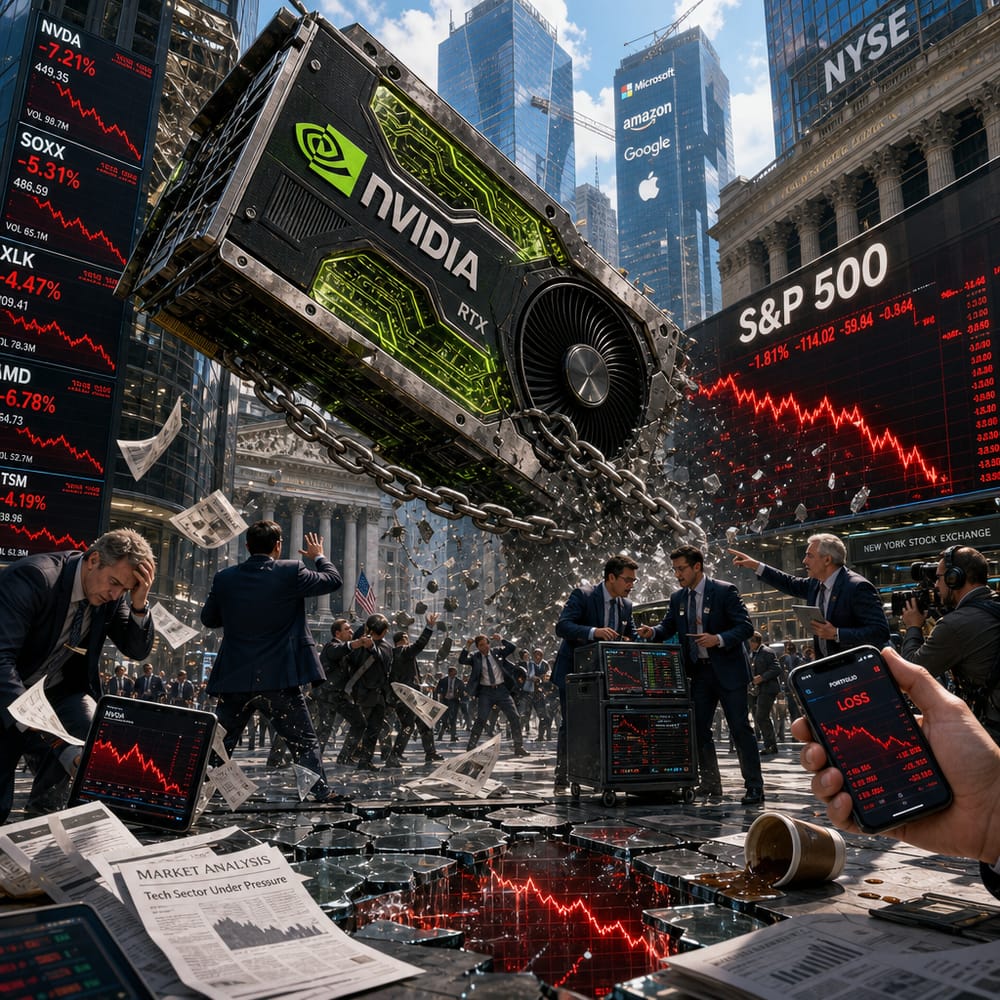
TECH DRAG: NVIDIA LEADS LOSSES
In the carnival of Wall Street, Nvidia just took a tumble off the trapeze, leaving investors gasping. On July 29, the tech titan saw its shares dip 3.6%, a plunge that sent ripples across the S&P 500 and served a not-so-gentle reminder of just how volatile the tech sector can be. But what caused this nosedive? And what does it mean for tech stocks across the board? Let's dig into the drama.
Nvidia, the graphics processing unit (GPU) juggernaut, isn't new to the highs and lows of the market rollercoaster. Its stock drop wasn't born out of thin air—it came amid a performance report that didn’t quite meet the sky-high expectations of the tech-hungry market. While Nvidia's earnings weren't a financial train wreck, they fell short of the explosive growth investors have come to expect from a company riding the AI tidal wave.
With AI tech shaking up industries from healthcare to autonomous vehicles, Nvidia has been seen as a golden goose, thanks to its powerful chips that are central to crunching massive data loads. But the golden goose laid a somewhat ordinary egg this time around, and the market wasn’t thrilled.
The spark for Nvidia’s latest flameout? A cocktail of cautious forecasts and an increased scrutiny over its valuation. Investors have been watching tech giants like hawks lately, and any sign of slowing momentum can trigger panic selling. Nvidia's guidance suggested a cooling off period, which for a company that thrives on rapid growth, is akin to Taylor Swift announcing a quiet year—it's not exactly what fans signed up for.
Nvidia’s performance ripple effect was felt far and wide. Its stumble contributed significantly to a broader decline in the tech-heavy S&P 500. When a behemoth like Nvidia sneezes, the market catches a cold. It's not just about one company; it's about the perceived health of the entire sector.
The fall of Nvidia also illuminates a larger narrative: the tech sector is a high-stakes game of musical chairs, and the music is constantly changing. Even the titans have to keep dancing to stay relevant. As Nvidia took a hit, peers like Microsoft saw their stars rise, proving that even within tech, not all players are dealt the same hand. Microsoft, buoyed by a robust growth in its Azure cloud business, showed that diversification within tech realms can be a life raft in stormy seas.
So, what does Nvidia’s dip mean for the average retail investor scrolling through their stock app? It's a reality check, a reminder to not put all eggs in the tech basket without a parachute. The sector is an adrenaline rush, yes, but with that comes risk. While some companies will soar on AI wings, others might flutter or even fall if their bets don't pay off as hoped.
Moreover, Nvidia’s recent hiccup mirrors a broader tech tension: the market’s split personality regarding AI investments. On one side, you've got companies like Microsoft, raking in the rewards of wise AI plays. On the other, firms like Meta find themselves on the losing end of investor sentiment. It's a tale of strategic splits, where only those with the most innovative and adaptable strategies will emerge victorious.
In the end, Nvidia’s recent dip serves as both a cautionary tale and a learning opportunity. For investors, it’s a moment to reassess portfolios and question whether the tech investments align with not just current trends but future certainty. While Nvidia’s long-term prospects remain strong, riding the waves of AI innovation, the short-term volatility is a reminder that all that glitters is not always gold—sometimes, it's just a really shiny tech stock in a temporary slump.
So, keep those eyes peeled and portfolios balanced, because the only thing certain in the tech market is uncertainty. And remember, in the high-flying world of Wall Street, what goes down can also go back up—if you’re willing to hang on for the ride.
This article is for informational purposes only and is not investment advice. Always do your own research or consult a licensed financial professional before making investment decisions.
© Copyright 2024. All Rights Reserved.
© Copyright 2024. All Rights Reserved.